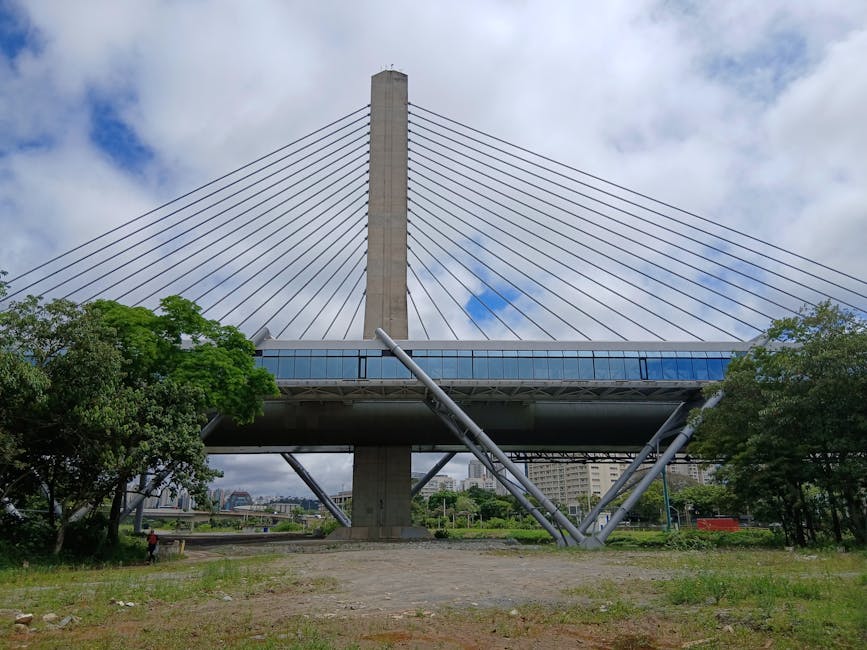


- A Dream Born in the Wilderness: The Genesis of Brasília
- The Masterminds: Lúcio Costa and Oscar Niemeyer
- Lúcio Costa's Plano Piloto: The City as an Airplane
- Oscar Niemeyer's Architectural Poetry
- The Urban Design Principles: A City for the Future
- Living in a Modern Utopia: Initial Challenges and Evolution
- Brasília Today: A UNESCO World Heritage Site
Imagine a city that wasn’t built organically over centuries, but rather sprung from the ground in just a few years, entirely designed to be a vision of the future. A city where every curve, every angle, and every urban block was meticulously planned to embody modern ideals. Welcome to Brasília, brazil‘s capital, a place that defies conventional urban development and stands as a monumental testament to human ambition and modernist genius.
Brasília isn’t just a city; it’s a living, breathing work of art, an architectural and urban planning marvel that continues to fascinate visitors and urbanists alike. Its audacious creation in the mid-20th century represents a pivotal moment in the history of architecture and city planning, a bold declaration of a nation looking forward.
A Dream Born in the Wilderness: The Genesis of Brasília
To truly appreciate Brasília, we must first understand its origins. For centuries, Brazil’s capital had been on the coast – first Salvador, then Rio de Janeiro. However, the idea of moving the capital inland to foster national integration and economic development in the country’s vast interior had been a constitutional aspiration since the late 19th century. It wasn’t until the election of President Juscelino Kubitschek in 1956 that this long-held dream began to take concrete form.
Kubitschek, a man known for his visionary slogan “50 years of progress in 5,” made the construction of Brasília a cornerstone of his presidency. He envisioned a new capital that would symbolize a modern, industrialized Brazil, pushing the boundaries of what was thought possible. The challenge was immense: build an entire federal capital from scratch in the remote, sparsely populated central plateau. Yet, with unwavering determination, Kubitschek launched an international competition to design the new city.
The Masterminds: Lúcio Costa and Oscar Niemeyer
The success of Brasília rests squarely on the shoulders of two extraordinary Brazilian talents: urban planner Lúcio Costa and architect Oscar Niemeyer. Their collaboration was symbiotic, a perfect fusion of spatial logic and artistic expression.
Lúcio Costa’s Plano Piloto: The City as an Airplane
Lúcio Costa’s winning design, the “Plano Piloto” (Pilot Plan), was nothing short of revolutionary. Instead of a traditional grid, Costa conceived a city shaped like an airplane or, as some prefer, a soaring bird with outstretched wings. This iconic form wasn’t merely aesthetic; it was a highly functional design intended to separate different urban functions and manage traffic flow efficiently.
- The Monumental Axis (Eixo Monumental): This grand central boulevard forms the “body” of the airplane, running from east to west. It’s home to the major governmental buildings, the National Congress, ministries, the Cathedral, and cultural institutions. It’s a vast, open space designed for grand ceremonies and public gatherings, reflecting the city’s role as the nation’s capital.
- The Residential Wings (Eixo Rodoviário): Extending north and south from the body are the “wings,” forming the residential areas. These are composed of “Superquadras” (superblocks), a unique urban planning concept that became a defining feature of Brasília.
- The Cross Axis: Intersecting the Monumental Axis, this vital artery connects the residential wings, acting as the primary route for local traffic and services.
Costa’s plan emphasized functionality and a clear division of zones: governmental, residential, commercial, and recreational. He prioritized green spaces, creating a seamless integration of nature into the urban fabric. His vision was a city where people could live, work, and move efficiently, a rationalist’s dream brought to life.
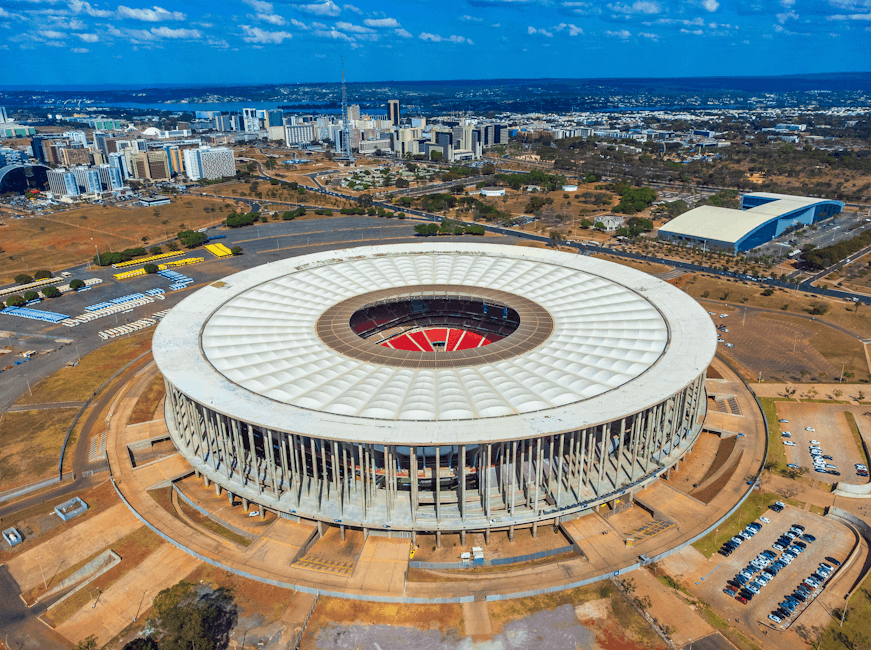
Oscar Niemeyer’s Architectural Poetry
While Costa laid out the city’s blueprint, it was Oscar Niemeyer, a long-time collaborator and friend of Kubitschek, who gave Brasília its distinctive architectural soul. Niemeyer, a staunch modernist and a pioneer in using reinforced concrete, embraced the opportunity to create a utopian landscape of soaring curves, daring cantilevers, and minimalist forms. His buildings are not just structures; they are sculptures, each telling a story of modernity and optimism.
Government Buildings: Symbols of a New Nation
Niemeyer’s most iconic works are found along the Monumental Axis, forming the core of Brazil’s federal government.
- The National Congress (Congresso Nacional): Perhaps the most recognizable, this complex features two towering vertical administrative blocks flanked by a large dome (the Senate) and an inverted bowl (the Chamber of Deputies). It’s a powerful visual metaphor for legislative balance, a striking image against the clear blue sky.
- Palácio do Planalto (Presidential Palace): With its elegant, slender columns and open, airy design, the presidential palace exudes a sense of lightness and transparency. The ramp leading to the entrance is a signature Niemeyer element, inviting and majestic.
- Supremo Tribunal Federal (Supreme Court): Mirroring the Planalto Palace in style, the Supreme Court building completes the trio of power, its clean lines and reflective pools creating a serene yet imposing presence.
Niemeyer’s architecture here is characterized by its grace, simplicity, and monumental scale. He masterfully used concrete to create seemingly weightless forms, defying the material’s inherent heaviness.
Cultural and Religious Landmarks: Curves and Light
Beyond the governmental heart, Niemeyer’s genius extends to cultural and religious spaces.
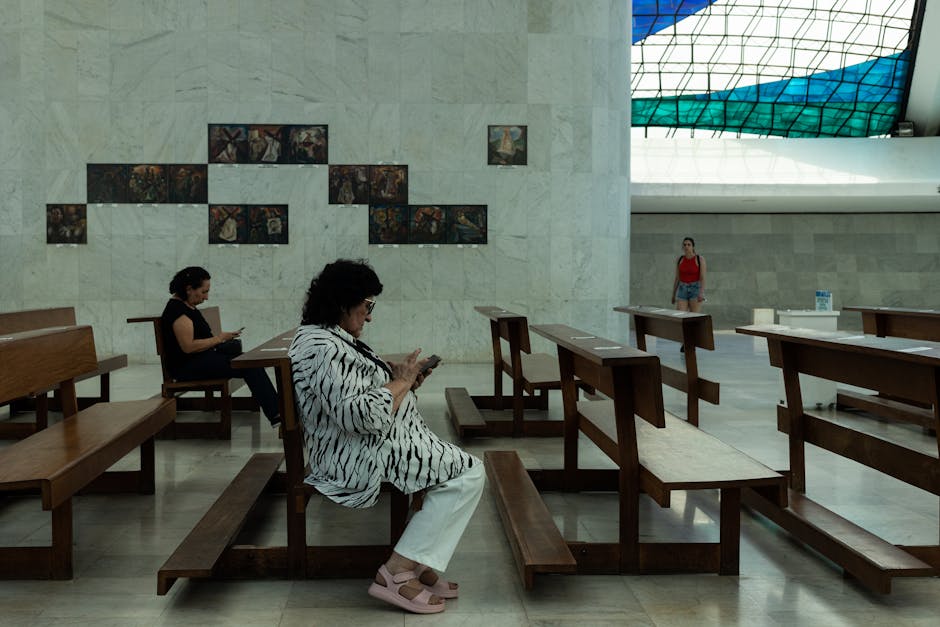
- Catedral Metropolitana Nossa Senhora Aparecida (Metropolitan Cathedral): This is arguably Niemeyer’s most stunning creation in Brasília. Composed of 16 hyperbolic concrete columns rising towards the sky, resembling hands reaching in prayer or a crown of thorns, its exterior is breathtaking. The interior, accessed via a dark tunnel, opens into a light-filled space with stained glass panels that bathe the altar in vibrant hues. It’s an experience, not just a building.
- Teatro Nacional Claudio Santoro (National Theater): With its distinctive truncated pyramid shape, the National Theater stands as a bold, sculptural statement. Its minimalist concrete façade gives way to an interior designed for dramatic arts, a true cultural hub for the city.
In these structures, Niemeyer experimented with light, shadow, and perception, creating spaces that evoke wonder and contemplation.
The Urban Design Principles: A City for the Future
Brasília’s design was deeply rooted in modernist urban planning principles popular in the mid-20th century, particularly influenced by Le Corbusier (with whom Niemeyer had worked). These principles aimed to create highly functional, efficient, and aesthetically pleasing urban environments.
- Segregation of Functions: Different zones for living, working, and leisure minimized congestion and maximized efficiency. This meant distinct areas for government, commerce, residential, and recreational activities.
- Automobile-Centric Design: Brasília was designed with the automobile in mind, featuring wide avenues, overpasses, and underpasses to ensure smooth traffic flow. Pedestrian zones were somewhat secondary in the initial concept, a point of critique over the years.
- Abundant Green Spaces: Despite its concrete structures, Brasília is remarkably green. Parks, gardens, and carefully integrated natural landscapes provide residents with ample open space, reflecting a commitment to quality of life.
- The Superquadras: A cornerstone of the residential areas, these “superblocks” are self-contained neighborhoods designed to house around 3,000 residents each. They typically feature residential apartment buildings, internal green spaces, schools, churches, and small commercial centers, fostering a sense of community within a larger planned environment.
This holistic approach aimed to create a city free from the chaos and overcrowding of older urban centers, a true emblem of progress.
Living in a Modern Utopia: Initial Challenges and Evolution
Building a utopian city from scratch in less than five years was an unprecedented feat, but it wasn’t without its challenges. The rapid construction drew thousands of workers (known as “Candangos”) from all corners of Brazil, creating an immediate and diverse population. The initial starkness of the landscape, the vast distances between different zones, and the somewhat limited street life compared to traditional Brazilian cities were early adjustments for residents.
Brasília was an ambitious social experiment. Could a city designed entirely from above truly foster vibrant community life? Over the decades, Brasília has evolved. While some critics argue it lacks the spontaneous charm of older cities, its residents have carved out their own culture and rhythm within its planned framework. The city has grown beyond its original “Pilot Plan” into surrounding satellite cities, creating a dynamic metropolitan area.
Brasília Today: A UNESCO World Heritage Site
In 1987, less than 30 years after its inauguration, UNESCO declared Brasília a World Heritage Site. This was a remarkable recognition, making it the only 20th-century city to receive such an honor based on its entire urban ensemble. UNESCO lauded Brasília as a “unique artistic achievement” and an “exemplary illustration of the ideas of the Modern Movement.”
Today, Brasília stands not just as Brazil’s political heart but as an enduring symbol of modernist architecture and urban planning. It’s a place where art, politics, and daily life converge in an extraordinary way. Walking through its wide avenues, admiring Niemeyer’s sculpted buildings, and experiencing the unique layout of Costa’s plan is like stepping into a vision of the future that, against all odds, became a dazzling reality. It challenges our perceptions of what a city can be, inviting us to imagine a world built on intentional design, grand visions, and a touch of architectural poetry.