

- The Tapestry of Brazilian Portuguese: Why So Much Variation?
- Northern Brazil: Amazonian Whispers and Unique Rhythms
- Northeastern Brazil: A Kaleidoscope of Expressions
- Southeastern Brazil: Urban Jingles and Subtle Differences
- São Paulo (Paulistano)
- Rio de Janeiro (Carioca)
- Minas Gerais (Mineiro)
- Southern Brazil: European Echoes and Gaúcho Spirit
- Rio Grande do Sul (Gaúcho)
- Santa Catarina / Paraná
- Central-West Brazil: The Heartlands and Pantanal Slang
- Beyond Slang: Pronunciation Peculiarities
- Connecting Through Language: Embracing Brazil's Linguistic Soul
brazil is a land of vibrant colors, infectious rhythms, and incredibly diverse landscapes. From the bustling metropolises of the Southeast to the tranquil Amazon rainforest, and the sun-drenched beaches of the Northeast to the European-influenced South, this continental nation offers a myriad of experiences. But beyond its visible beauty, Brazil also boasts a fascinating linguistic tapestry – a rich blend of regional dialects and slang that tell stories of history, immigration, and unique cultural identities.
If you’ve ever traveled across Brazil, you’ve likely noticed that the Portuguese spoken in one state can sound quite different from another. It’s not just a matter of accents; it’s a whole world of words, expressions, and even grammatical nuances that shift as you move from one region to the next. Let’s embark on a journey to uncover the captivating ways Brazilian Portuguese varies across this incredible country.
The Tapestry of Brazilian Portuguese: Why So Much Variation?
To understand the nuances of Brazilian Portuguese, it helps to glance back at its history. Brazil’s immense size, coupled with distinct patterns of colonization and waves of immigration, created pockets where language evolved independently. While Portuguese from Portugal forms the base, indigenous languages, African languages brought by enslaved people, and later, European immigrant languages (like Italian, German, and Arabic) all left their indelible marks. This fusion, combined with geographical isolation in some areas, led to the development of unique vocabularies, pronunciations, and idiomatic expressions that are distinct to each region.
Think of it like different threads woven into a grand tapestry. Each thread maintains its unique color and texture, yet together they form a cohesive and beautiful whole. This linguistic diversity isn’t just about fun words; it’s a profound reflection of regional identities and cultural heritage.
Northern Brazil: Amazonian Whispers and Unique Rhythms
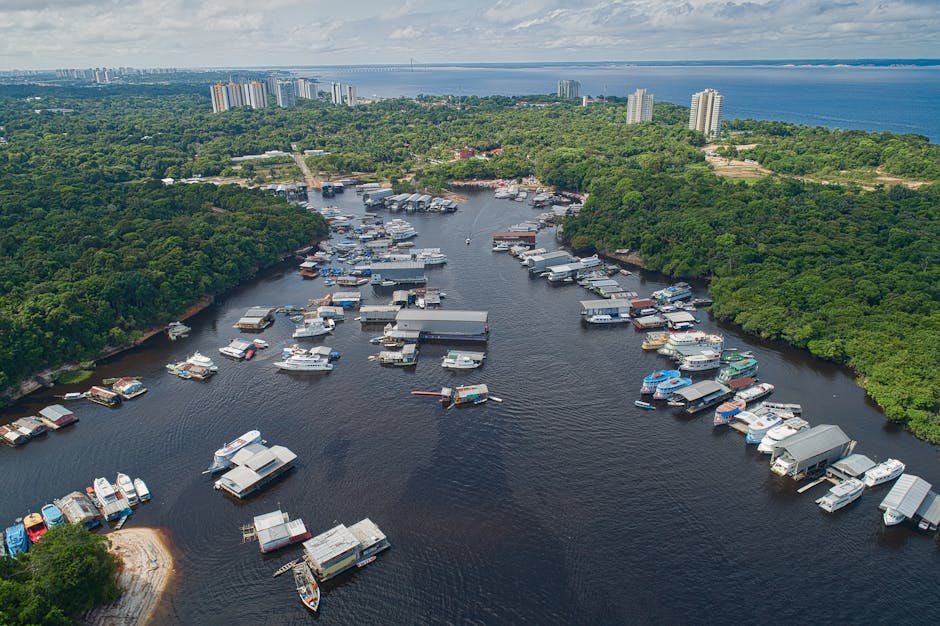
Venturing into Brazil’s vast North, particularly states like Amazonas and Pará, you’ll encounter a captivating dialect heavily influenced by indigenous languages. The Amazon region is a world unto itself, and its language reflects its deep connection to nature and its original inhabitants.
- “Égua!”: This exclamation, often pronounced with a drawn-out ‘e,’ is incredibly versatile. It can express surprise, joy, frustration, or even agreement, much like “wow” or “gosh.”
- “Curumim” / “Cunhã”: These Tupi-Guarani words are commonly used for ‘boy’ and ‘girl’ respectively, especially in Amazonas and Pará, rather than the more common “menino” and “menina.”
- “Mana” / “Maninho”: Affectionate terms for ‘sister’ and ‘brother,’ often used generally for friends, similar to “dude” or “sis.”
- “Refrigerante”: While standard Brazilian Portuguese uses this, in the North, you’ll often hear “gasosa,” a charming throwback.
The rhythm of speech in the North is often described as slightly slower, with a distinct intonation that sets it apart. It’s an accent that feels as expansive and mysterious as the Amazon itself.
Northeastern Brazil: A Kaleidoscope of Expressions
The Northeast is arguably one of Brazil’s most linguistically vibrant regions, a true melting pot of African, indigenous, and European influences, particularly Portuguese. States like Bahia, Pernambuco, and Ceará each have their own delightful quirks.
- “Oxe!” / “Oxente!”: This is perhaps the quintessential Northeastern exclamation, a contraction of “oh gente!” (oh people!). It’s used for surprise, disbelief, frustration, or just as a conversational filler, much like “oh my!” or “wow.”
- “Arretado”: Meaning ‘awesome,’ ‘great,’ or ‘furious’ depending on context. If something is “arretado,” it’s seriously good. If someone is “arretado,” they’re angry.
- “Massa”: Very popular, especially in Bahia, meaning ‘cool’ or ‘great.’ “Essa festa tá massa!” (This party is great!).
- “Cabra da peste”: A strong, often affectionate term for a courageous, resilient person, reflecting the toughness of the Northeastern interior.
- “Vixe!” / “Visse?”: “Vixe!” is another exclamation of surprise, similar to “Oxe!” “Visse?” is a shortened version of “você viu?” (did you see?), often used as a rhetorical question at the end of a sentence, like “ya know?”
- “Boy”: In some parts of the Northeast, particularly in Bahia, “boy” is used as an interjection to call attention or express surprise, similar to “ei!” (hey!).
The Northeastern accent often features open vowels and a melodic cadence, sometimes faster in certain areas. Bahia, with its strong African heritage, has a particularly unique rhythm and a plethora of unique expressions.
Southeastern Brazil: Urban Jingles and Subtle Differences
The Southeast, home to Brazil’s largest cities like São Paulo and Rio de Janeiro, showcases both distinct urban slang and interesting pronunciation variations. While these states are geographically close, their linguistic identities are surprisingly different.
São Paulo (Paulistano)
The ‘Paulistano’ accent is known for its strong, retroflex ‘r’ sound, similar to the ‘r’ in American English words like ‘car’ or ‘bird.’ This makes words like “porta” (door) or “Parque” (park) sound very distinctive.
- “Mano” / “Minha”: Widely used for ‘brother,’ ‘dude,’ ‘friend.’ It’s an all-purpose informal address. “E aí, mano!” (What’s up, dude!).
- “Trampo”: Short for “trabalho” (work). “Tenho um trampo amanhã cedo.” (I have work early tomorrow morning.)
- “Da hora” / “Massa”: Both mean ‘cool’ or ‘awesome,’ similar to the Northeastern “massa.”
- “Balada”: In São Paulo, this usually refers to a nightclub or a big party, whereas in other regions it might just mean a ‘ballad’ or a ‘stroll.’
Rio de Janeiro (Carioca)
The ‘Carioca’ accent is famous for its distinctive pronunciation of the ‘s’ and ‘z’ sounds, which often sound like ‘sh’ or ‘zh’ (e.g., “festa” sounds like “feshta,” “dez” like “desh”). This is often called the “chiado” (hushing) sound. The ‘r’ at the end of syllables often sounds like the ‘h’ in ‘hat’ (e.g., “porta” sounds like “pohta”).
- “Irado” / “Sinistro”: Both mean ‘cool,’ ‘awesome,’ or ‘incredible.’ “Essa música é irada!” (This song is awesome!). “Sinistro” can also mean ‘creepy’ in other contexts, but in Rio slang, it’s usually positive.
- “Caô”: Slang for ‘lie,’ ‘bullshit,’ or ‘exaggeration.’ “Essa história é puro caô.” (That story is pure bullshit.)
- “Marra”: Refers to a cocky or arrogant attitude. “Ele tem muita marra.” (He’s very cocky.)
- “Chopp”: While it means ‘draft beer’ everywhere, the Carioca often pronounces it more like ‘shoppi.’
Minas Gerais (Mineiro)
Minas Gerais has one of Brazil’s most endearing and distinctive dialects. Known for its charming habit of compressing words, the Mineiro accent is often perceived as soft and melodic.
- “Uai!”: The quintessential Mineiro exclamation. It’s an all-purpose interjection expressing surprise, confusion, agreement, or even just a pause. “Uai, você por aqui?” (Well, you here?).
- “Trem”: While literally meaning ‘train,’ in Minas Gerais, “trem” is a universal placeholder for ‘thing,’ ‘stuff,’ or ‘object.’ “Pega aquele trem pra mim.” (Grab that thing for me.) It can refer to anything from a remote control to an idea.
- “Pão de queijo”: The iconic cheese bread, a staple of Mineiro cuisine, is also a linguistic marker. Its name is pronounced with that soft, melodic Minas touch.
- Compressed Words: Mineiros often blend words, like “cê” for “você,” “num” for “não em,” “prondé” for “para onde é?” (where is it?). “Cê vai prondé hoje?” (Where are you going today?).
Southern Brazil: European Echoes and Gaúcho Spirit
The South of Brazil, particularly Rio Grande do Sul, Santa Catarina, and Paraná, has a strong European influence due to significant German and Italian immigration. This is reflected in both vocabulary and pronunciation.
Rio Grande do Sul (Gaúcho)
The ‘Gaúcho’ dialect, often associated with the cowboys of the Pampas, is rich with terms related to rural life, mate (chimarrão), and a strong sense of identity. The ‘r’ sound is often a rolled ‘r’ (like in Spanish or Italian), and the ‘l’ at the end of words often sounds like ‘u’ (e.g., “Brasil” sounds like “Brasíu”).
- “Tchê!”: Perhaps the most famous Gaúcho interjection, akin to “hey,” “pal,” or “mate.” It’s used to address someone, express surprise, or just as a conversational filler.
- “Guri” / “Guria”: Used for ‘boy’ and ‘girl,’ respectively, rather than “menino” and “menina.”
- “Bah!”: Another versatile exclamation, expressing surprise, frustration, or emphasis, similar to “wow” or “gosh.”
- “Chimarrão” / “Mate”: The traditional South American infused drink is not just a beverage; it’s a cultural cornerstone, and the terms surrounding its preparation and sharing are central to Gaúcho vocabulary.
- “Capaz!”: Meaning ‘no way,’ ‘impossible,’ or ‘of course not,’ often used to express disbelief or strong disagreement.
Santa Catarina / Paraná
These states also show European influences. In Santa Catarina, especially on the coast, you might hear the unique “manezinho” dialect, with its distinct rhythm and charming local terms. Paraná, being a melting pot, has influences from both the Southeast and the South, creating a more diverse linguistic landscape within the state itself.
Central-West Brazil: The Heartlands and Pantanal Slang
The Central-West region, including states like Mato Grosso, Mato Grosso do Sul, and Goiás, is Brazil’s agricultural heartland and home to the vast Pantanal wetlands. Its dialect reflects the rural lifestyle, the cowboy culture, and influences from neighboring regions, including indigenous languages and even Spanish from border countries.
- “Tchô!”: Similar to the Gaúcho “Tchê,” this is a common interjection or informal address.
- “Pantaneiro”: Refers to someone from the Pantanal region, often implying a hardy, resilient individual.
- “Guampudo”: Literally meaning ‘having big horns,’ it’s used to describe someone strong, courageous, or stubborn, often referring to a bull or, figuratively, a person with a strong will.
- “Pequi”: The name of a very distinctive and aromatic fruit native to the region, used in many local dishes, also becomes a cultural and linguistic marker.
The accent in the Central-West is generally considered more neutral by some, but it carries a distinct slower pace and clear pronunciation, often reflecting the vast, open landscapes.

Beyond Slang: Pronunciation Peculiarities
While slang words are fun, the real depth of regional variation lies in pronunciation. Here are a few examples:
- The ‘L’ sound: In many parts of Brazil, an ‘l’ at the end of a syllable or word sounds like a ‘u’ (e.g., “Brasil” sounds like “Brasíu,” “hotel” like “hoteu”). However, in parts of the South and some Northeastern areas, it’s pronounced more like a clear ‘l.’
- Vowel Openness: The pronunciation of ‘e’ and ‘o’ varies greatly. In some regions, they are more open (like ‘eh’ and ‘oh’), while in others, they are more closed (like ‘ee’ and ‘oo’).
- The ‘S’ sound: As mentioned, the Carioca ‘sh’ sound is famous, but elsewhere, ‘s’ is pronounced more typically.
- The ‘R’ sound: This is perhaps the most varied. From the retroflex ‘r’ of São Paulo, to the ‘h’-like ‘r’ of Rio, to the rolled ‘r’ of the South, and the softer ‘r’ in many Northeastern areas, it’s a constant adventure.
Connecting Through Language: Embracing Brazil’s Linguistic Soul
This journey through Brazil’s linguistic landscapes only scratches the surface. Each city, town, and even neighborhood can have its own unique expressions. For a traveler or a language learner, this diversity can seem daunting, but it’s truly one of Brazil’s greatest charms.
These variations are not just quirks; they are living proof of Brazil’s rich history, its melting pot of cultures, and the ingenuity of its people. They are how communities express their identity, their humor, and their particular way of seeing the world. Embracing these differences is key to truly understanding and connecting with the heart and soul of Brazil.
So, the next time you find yourself conversing with a Brazilian, pay attention not just to what they say, but how they say it. Ask about their local slang, notice their unique pronunciations, and you’ll unlock a deeper appreciation for the magnificent linguistic tapestry that makes Brazil so captivatingly unique. It’s an invitation to listen, learn, and fall even more in love with this incredible country and its people.