
I still remember the heat on my neck the first time I watched a September 7th parade in São Paulo. I had spent the morning wandering Parque da Independência, tracing the lane where the Ipiranga stream slips behind the Museu do Ipiranga, and by noon the avenue filled with a slow, deliberate swell of flags: school bands, municipal color guards, and families who had carried folding chairs for hours. A veteran with a crisp uniform walked past and tipped his cap at a boy wearing a paper cockade. The smell of grilled meat drifted from a corner where someone had opened a churrasco tarp. That small, noisy, heartfelt scene—history wearing itself in public—has stuck with me ever since.
September 7, 1822: the short sentence that made a country
On the bank of a small river outside São Paulo, a single act turned a colonial arrangement into a kingdom in waiting. Prince Pedro, later Emperor Dom Pedro I, rode down to the Ipiranga stream and declared what Brazilians still say aloud when they remember the day: “Independência ou Morte!” — Independence or Death. The phrase is often called the Grito do Ipiranga, the Cry of Ipiranga. That was September 7, 1822.
The story that precedes that scream is messy. The royal family had moved to Rio de Janeiro in 1808 when the Portuguese court fled Napoleon. For a decade Brazil functioned as the empire’s most important possession, not merely a colony. By 1815 Brazil was technically a kingdom within a united monarchy. In 1821, as the king returned to Portugal, political pressure and conflicting interests created a rupture; Portuguese demands to reverse Brazil’s elevated status pushed locals to ask for autonomy. The declaration at Ipiranga sealed a process that had been building up for years: an assertion that Brazil would chart its own path.
Why the date still matters
It’s not just an anniversary. September 7 is the moment Brazilians rehearse the country’s story in public: the heroic image of the horseback declaration, the later coronation of an emperor, and the early challenges of forging unity across a continent-sized land. Expect school plays, museum exhibits, and civic rituals that reach from Brasília to small inland towns.
How Brazilians actually spend the day
Think of it less as a stiff government ceremony and more as a national day with multiple moods. There are formal rituals—flag-raising ceremonies, speeches, and the big military parade in Brasília. There are also school parades, church services, barbecues, and family outings. Many people use the holiday as a chance to travel; public transport and highways get crowded. Many businesses stay closed because it’s a federal holiday.
Civic pride sits next to plain holiday fun. In the neighborhoods I work in, I see grandparents teaching grandchildren simple facts about the founding: the colors of the flag, the date, why the date is celebrated. In bigger cities you’ll notice three layers: the official state-organized events (suits and salutes), local amateur parades (students, samba schools, community groups), and leisure—bars and parks full of people catching up.
What the official parade looks like
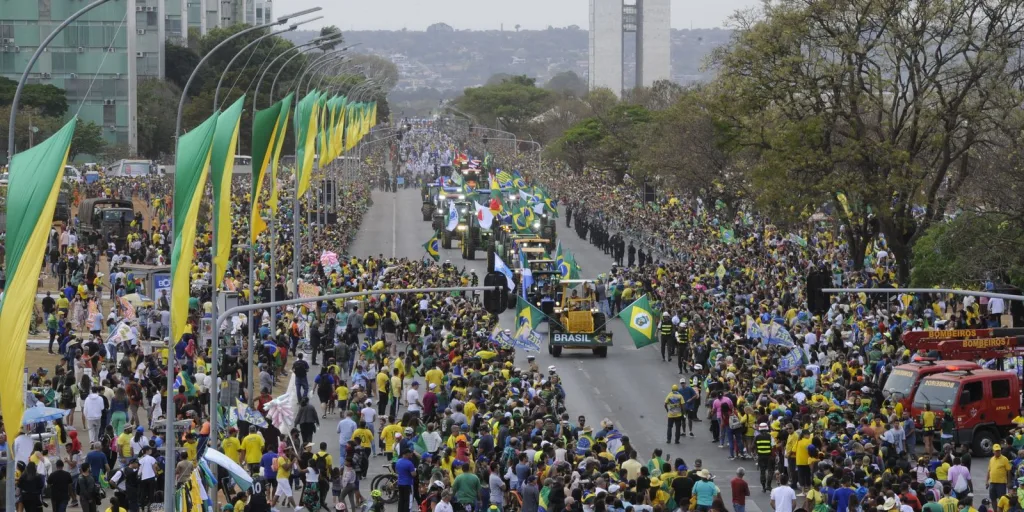
If you go to Brasília you’ll see the national ritual in its most polished form. The President attends. Military units of the Army, Navy, Air Force and police march in formation on the Esplanada dos Ministérios. There’s normally a flyover by the Brazilian Air Force demonstration squadron, the Esquadrilha da Fumaça, and music from the military bands. It’s loud. It’s precise. It’s also theatrical: uniforms shimmer, cadets drill, and the broadcast camera lingers on salutes.
Smaller capitals stage scaled versions with local troops, municipal bands and sometimes historic reenactments. Expect to hear the national anthem at the start, and to stand if you’re in the crowd. Brazilians do that out of habit and respect.
Where to choose if you want to celebrate (and why)
Pick a city depending on what you want. The options below are practical, tried-and-tested by travelers and expats I work with every year.
Brasília: for the full official spectacle
Why go: If you want to see the national ceremony, Brasília is the place. The parade on the Esplanada dos Ministérios is the central event. If you like precision, flyovers and the energy of an official state celebration, this is it.
What to expect: Tight security, road closures, and a morning that begins early. Bring a hat. Seats along the Esplanade fill quickly; locals arrive before sunrise to secure spots. The city’s wide avenues make logistics easier, and public transport runs on a special schedule for the holiday.
São Paulo: history and neighborhood life
Why go: The Ipiranga neighborhood anchors the national memory. Museu do Ipiranga—also called Museu Paulista—sits where the declaration happened, and the Parque da Independência is a living touchstone. São Paulo combines historical weight with street-level festivities: civic parades, school bands, and plenty of informal gatherings.
What to expect: The Museu do Ipiranga sometimes stages reenactments or special exhibitions, and Avenida Paulista often fills with local groups and people who use the holiday as a day out. If you prefer history plus city energy, São Paulo gives both.
Rio de Janeiro: beachside flags and urban ceremonies
Why go: Rio mixes ceremonial events in Centro with neighborhood gatherings and beachfront crowds. You’ll find municipal ceremonies downtown, and people heading to Copacabana or Flamengo Park to picnic and watch smaller parades.
What to expect: If you want a relaxed, scenic celebration, combine a morning civic ritual with an afternoon on the sand. Public transit is busier than normal and certain central roads close for parades.
Salvador and the Northeast: culture-heavy celebrations
Why go: The Northeast brings its own rhythm to the holiday. Expect Afro-Brazilian influences in music and dance; local bands and cultural groups often appear in parades. Food plays a strong role—look for regional specialties.
What to expect: A more musical celebration, often tied to municipal pride. If you want colors, drums, and local culture, head to a state capital in the Northeast.
Historical towns: a quieter, more intimate way
Why go: Small towns like Ouro Preto, São Luís, or coastal colonial towns run civic ceremonies that mix history with small-town warmth. These celebrations feel lived-in: you’ll see schoolchildren marching, local veterans, and municipal bands playing for relatives.
What to expect: Shorter parades, accessible local museums, and great opportunities to talk with people about local interpretations of independence. If you prefer a quieter day with authentic local color, choose a smaller municipality.
Practical advice for attending parades and events
These tips come from pacing dozens of events across Brazil and helping travelers plan their days so they don’t get cold feet—or a missed bus.
Book accommodation early
Because it’s a national holiday, Brazilians travel. Hotels and Airbnbs in capitals fill fast. If you want a front-row spot in Brasília or a centrally-located room in São Paulo, lock it in a month or more ahead, especially if your trip overlaps other events.
Expect closures and adjusted services
Federal, state and municipal offices close. Banks and many shops will be shut or on limited hours. Public transportation runs, but routes may be altered for parades. Check municipal transport websites for holiday timetables the week before.
Arrive early and use public transit
Road closures are common near parade routes. The metro, suburban trains and bus corridors usually handle crowds better than taxis. Carry a small daypack with water, sunscreen, and a photocopy of your passport if you’re a foreigner. If you rely on ride-hailing apps, plan for surge pricing and pick-up delays in crowded zones.
Safety and pickpockets
Crowds attract petty crime. Keep valuables in front pockets or inside zipped bags. Use a money belt if you’ll be in a dense crowd for hours. If you want a stress-free experience, pick a spot slightly off the main avenue rather than elbowing into the thick of the crowd.
Photography and filming
It’s normal to take photos of parades and public ceremonies. Stay aware of military zones: some areas near the official parade in Brasília are restricted. Don’t photograph soldiers in a way that could be perceived as intrusive, and comply with local police instructions.
Food, drink and festival moods
There’s no single Independence Day dish across Brazil, but a few patterns repeat.
- Barbecue (churrasco): Neighborhood barbecues are common. Expect skewers, beef, sausages and farofa on the side.
- Street vendors: In larger parades you’ll see vendors selling snacks, bottled water, and cold drinks. Bring cash in small bills; some vendors don’t take cards.
- Regional specialties: In Salvador you might find acarajé; in Minas Gerais, pão de queijo and regional sweets. Use the holiday to sample local street food.
For foreigners, the holiday is an excellent window into how meals and gatherings anchor public life: people often move from a formal morning event to an informal shared lunch and then an afternoon of leisure.
Politics, flags and being a respectful visitor
Patriotism on September 7 can be loud. Flags, slogans, and public speeches appear in full force. Some Brazilians will use the day for political protest or rallying; others simply frame it as a family holiday. As a visitor, be observant and think about context before joining a chant or stepping into a political rally. If you want to show respect, stand for the national anthem and remove hats during formal moments.
Wearing the national colors is common. I like to carry a small Brazilian flag when I attend parades—it’s an easy conversation starter—but I keep it neutral: no party banners, no slogans. Locals will appreciate the gesture more than you expect.
Practical checklists: quick and dirty
Carry this in your phone the morning you go out.
- Water bottle and sunscreen.
- Small cash in reais (notes under R$50). Banks closed.
- Phone charger or power bank.
- Light jacket for southern cities; morning can be cool in spring.
- Metro card loaded where applicable (São Paulo’s Bilhete Único, Rio’s Bilhete Único Carioca, Brasília’s TAG where used).
- Emergency contact numbers and hotel address in Portuguese written down.
What to expect if things go differently than planned
Sometimes big-city parades are canceled or scaled back because of weather or budget reasons. Smaller towns occasionally postpone official events. If you arrive expecting a big parade and find only a civic ceremony, pivot: museums often run special exhibits on independence, and local bars or community centers usually host post-ceremony gatherings.
Language can be a barrier. Many official announcements will be in Portuguese only. Use translation apps or ask staff at tourist information centers for help. I always print a short note in Portuguese explaining where my hotel is and a few key phrases—this has rescued me more than once.

Beyond the day: where to learn more about independence any time
If you want a deeper, quieter dive, visit these places outside the holiday crush.
- Museu do Ipiranga (Museu Paulista), São Paulo: Ground zero for the Ipiranga narrative. The museum’s collection and the park tell the layered story of Brazil’s formation.
- National Historical Museum, Rio de Janeiro: Naval and imperial artifacts that explain the diplomatic and military tensions of the era.
- Historic archives and municipal museums in state capitals: These often hold local documents, letters and objects that reveal how independence was experienced across Brazil’s regions.
If you prefer walking tours, look for programs that focus on the early 19th century and the independence process. I collaborate with a few local guides who run small-group historic walks—book them in advance, especially in September.
What a solo traveler should do
If you’re alone on September 7, choose a public, well-attended event and sit near families or school groups. They’re friendly and often happy to share snacks or explain the local angle. Bring headphones if you want a quiet moment; parades are loud and last several hours.
Consider joining a guided city tour in the afternoon. Many operators run Independence Day-themed tours that take you to monuments, museums and the best vantage points for parades.
One plan I recommend for first-timers
If you asked me where to go for your first September 7 in Brazil, I’d give you this simple itinerary: book a hotel in Brasília or São Paulo early, choose Brasília for spectacle or São Paulo for layered history, arrive before 8:00 a.m., take the metro, and plan to spend the morning at the parade. After the formal events, walk into a neighborhood and join a local barbecue or visit the nearest museum for a quieter afternoon. That mix—big ritual, small-table conversation—captures the day better than any single moment.
On that first day I described at the start, I walked away with a burned forearm from too much sun and a new sense of how living memory and public ritual overlap in Brazil. That’s the takeaway that sticks: September 7th isn’t a museum object. It’s people in the street, history in motion, and an easy excuse to celebrate the textures of this country.