
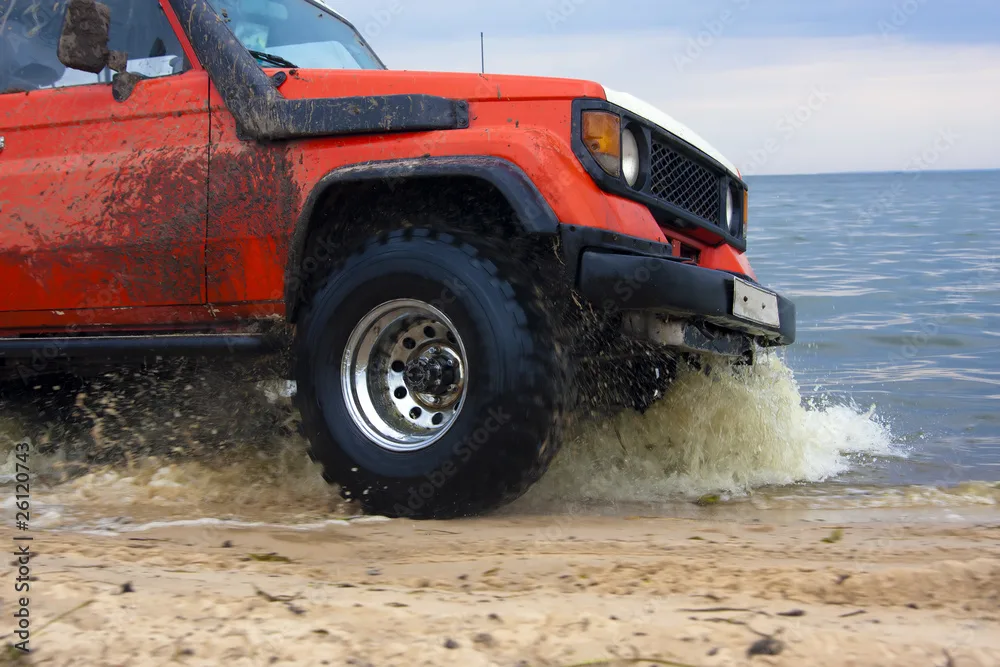
The tire screamed into a river of red clay and stopped. We all got out, laughed, cursed, and shoved. The sun hammered down; mosquitoes rehearsed for their next assault.
That stretch—sticky, bright, and impossibly remote—tells the truth about the Trans-amazonian Highway better than any glossy brochure: parts of it are gloriously wild, parts are brutally inconvenient, and every kilometer asks something of you. I say that as someone who has been on these tracks more than once: you show up prepared, you have a chance at something unforgettable. You don’t? You’ll be the one improvising in the middle of nowhere.
Why drive it at all?
Because the highway is where the Amazon stops being a postcard and becomes a functioning world. On a road trip here you meet truck drivers who know how to coax a Jenga stack of supplies across a flooded ford, fishermen who pilot skiffs through flooded forest like taxi drivers, and small-town mechanics who can build a usable axle out of scrap metal and patience. For a foreigner, that’s the real draw: the daily logistics of living in a place that isn’t designed for convenience, and the kindness of people who carve meaning out of inconvenience.
Not a pleasure cruise
Make no mistake: this is not a scenic motorway with service stations every 50 kilometers. Bring grit. Bring empathy. Bring a spirit for trading stories over coffee at tiny roadside restaurants run by families who’ve never met another foreigner. That’s the trade-off. The reward includes landscapes and human encounters you will not see elsewhere in Brazil.
The highway’s backstory, briefly and bluntly
Official name BR-230; started as a grand national project in the early 1970s during the military government. The idea was political and economic: open the Amazon to settlement and transport, integrate the country from coast to west, and claim territory. The reality? Construction raced ahead in places and stalled in others. Sections were paved, others were left as gravel, and enormous seasonal swings—rain and river floods—have always reshaped the route.
What that means today
Maps will show a continuous line. Your experience will be discontinuous. You’ll find paved stretches, gravel stretches, washed-away bridges, and communities that thrive off transience: travelers, loggers, and lorries. The road is a living thing; it changes year to year with repairs and new detours. That uncertainty is part of the road’s character—annoying when you’re late, intoxicating when you let it be.
Timing it right: the single biggest decision
Choose the dry season. I mean it. The Amazon’s wet season turns even the most confident 4×4 into a stuck sculpture. For most of the Trans-Amazonian corridor, the relative dryness runs roughly from May through November. Outside those months the road becomes unpredictable: mud, long delays at river crossings, and stretches that are passable only by boat.
Weather tactics
- Track local rainfall forecasts rather than broad national ones—conditions can vary dramatically across a few hundred kilometers.
- If heavy rains are forecast while you’re en route, stop and wait. Trying to push through a long slushy section wastes fuel and patience, and it risks damaging the vehicle.
What vehicle works (and what it demands)
You’ll hear every opinion under the sun: rental SUVs, modified pickups, campervans, old Land Cruisers. My position: a competent 4×4 with high clearance and low-range gearing is the practical minimum. It doesn’t have to be a new, extravagant rig, but it should be maintained, simple to repair, and fitted with a few critical upgrades.
Must-have vehicle kit
- Two full-size spare tires plus a repair kit and compressor.
- At least two spare fuel jerry cans (20L each) secured on the roof or in a safe rack. Distances between dependable fuel points can be long, and prices, when available, vary wildly.
- A sturdy winch and recovery straps. You will use them.
- A shovel, traction boards, and a hi-lift jack. Don’t be that person waiting for a stranger to appear with tools.
- Basic mechanical spares: belts, hoses, filters, points of failure common to your vehicle model.
- Good tires with deep tread—knobby all-terrain or mud-terrain designs—and an understanding of how to deflate and re-inflate for traction.

Navigation, communication, and telling the family you’ll be slow
Cell service is glorious when you have it and useless when you don’t. Plan for the latter. Offline maps—pre-downloaded OpenStreetMap or Gaia/Satellite tiles—are lifesavers. I carry both a smartphone and a dedicated GPS unit. Then I add redundancy: a satellite messenger (Garmin inReach or similar) for real-time check-ins and emergency messaging.
Practical navigation tips
- Download offline maps for the whole route and mark waypoints for fuel stops, towns, and river crossings.
- Carry paper maps. You won’t use them often, but when technology fails they become comforting and surprisingly useful.
- Set expectations with friends and family. Tell them realistic travel times and that delays are normal here.
Fuel, food, and resupply logistics
Resupply is a core skill on this road. You’ll plan fuel legs, but also food, water, and spare parts. Small towns along the route vary from decent convenience to nothing but a single store that sells crackers and soft drinks. For long stretches, you must be self-sufficient for 400–700 kilometers depending on repairs and detours.
Resupply checklist
- Water: bring far more than you think. Filter systems are great, but always carry bottled water as backup.
- Food: a mix of fresh provisions (buy when available) and long-shelf staples—rice, beans, pasta, canned fish, sausages, dried fruit, and nuts.
- Cooking: a small stove, basic pots, and fuel. Roadside feijão will happen; sometimes you’ll prefer to eat what you brought.
- Cash: ATMs are scarce outside larger towns. Carry enough cash in reais for fuel, tolls, ferries, and snacks. Cards work unpredictably.
River crossings and ferries: plan for wait time
Expect to meet ferries and improvised barges. At small river crossings, schedules are loose, and you might wait hours—or occasionally a day—for transport. At main crossings there may be a regular ferry and a more formal fee; at secondary ones you’re negotiating with a captain who will prioritize cargo and locals.
How to behave at crossings
- Have small bills. Barges often prefer cash and smaller denominations.
- Ask other drivers for the latest information. Drivers are the best source of real-time intel.
- If you can, avoid crossing during night hours. Loading and unloading in the dark adds measurable risk.
Paperwork, legalities, and insurance
Essential documents you should always carry: passport, driver’s license (and international driving permit if you prefer), vehicle registration, and insurance papers. If you’re driving a rented vehicle, ensure the rental company authorizes off-road use and trips into remote regions; many rental contracts forbid this. Check insurance coverage for remote recoveries—many basic policies exclude salvage in extremely remote areas.
Permits and indigenous territories
Sections of the Trans-Amazonian cross traditional and indigenous lands. Some areas have formal checkpoints or require permits; others have community protocols rather than legal paperwork. The correct approach is simple: respect. Don’t enter private community land without permission, avoid photographing people without asking, and steer clear of logging operations that are illegal or exploitative.
Health, vaccinations, and staying sane
Vaccinations: get current on yellow fever and routine shots. Malaria prophylaxis is a personal choice depending on the route—discuss with a travel clinic and make a plan. Bring a first-aid kit that includes basics and a few stronger items: a broad-spectrum antibiotic, strong pain medication, and supplies for wound care. I also carry an oral rehydration solution and antidiarrheal medicine; digestive issues are the most common health complaint on remote road trips.
Sleep and mental stamina
Expect nights that are noisy, hot, and sometimes insect-filled. A lightweight mosquito net and quick-dry sleeping bag will change the game. Take rest seriously. Driving tired on unfamiliar, torn-up roads is where accidents happen.
Where to sleep and what to expect
Options range from formal pousadas in the larger settlements to hammocks between trees. If you’re tight on time, focus on towns that reliably host travelers—those towns usually have at least one pousada or small hotel. Camping out on your vehicle’s rooftop or beside a quiet creek is often the cheapest and most flexible option, but choose a spot where a local will notice you if something goes wrong—and lock everything up when you sleep.
Safety in towns
Petty crime exists, as it does everywhere. Don’t flash valuables. Park where locals park, usually near other vehicles or under lights. Strike up a conversation with a shopkeeper; often they’ll point you to a safe guesthouse or let you charge devices behind the counter if you ask politely.
How to read the road: mud, ferries, and the art of patience
The skill set you develop here is part mechanic, part diplomat. You learn to read tire tracks, to pick a line through a rut, and to judge when a slope is recoverable or a truck is stuck because of cargo, not mud. Sometimes the solution is muscle and the right angle. Sometimes it’s patience and bartering for a local tractor to pull you free.
When to stop trying
If the mud rises past the axle and the vehicle lists, get out and reconsider. There are stories of vehicles that needed days and entire communities’ worth of effort to recover. You don’t want to be the person who blocks the road for everyone for 36 hours because of pride.
Interacting with communities — real examples
On one morning I walked into a tiny market where a woman selling farinha asked where I was from, then invited me to share coffee and a fried fish she’d just cooked. Moments like that are why you go. But there are also moments where the cultural gap is real: protocols in community territory, local expectations about bartering or hiring services, and language barriers if you don’t speak Portuguese. Learn a few phrases—greetings, thanks, and basic negotiation lines. A broken Portuguese and a smile will get you farther than a perfect English and a map.
Environmental responsibility and your footprint
The Amazon is fragile and resilient at once. Travel here with humility. Carry out what you carry in. Avoid buying wildlife products or participating in extractive activities that harm ecosystems. If you see illegal logging or wildlife trafficking, note the location and report to the appropriate authorities when you can, but avoid direct confrontation—your safety comes first.
Sample two-week plan for a realistic stretch
Here’s a practical micro-itinerary for people who want to push a coherent segment without pretending the entire BR-230 is a single, uniform experience. This assumes dry-season travel and a competent 4×4.
- Day 1–2: Enter the Trans-Amazonian corridor from the east. Use these days to get a feel for road conditions and to top up fuel and water.
- Day 3–5: Move into less populated territory. Keep daily legs conservative—200–350 kilometers depending on road quality. Stop early to check maps and ask local drivers about the next crossing.
- Day 6–8: Expect a long wait at a ferry or a complicated river crossing. Explore the nearest town, resupply, and meet locals. If you’re fortunate, a roadside festa or market will appear.
- Day 9–11: Continue. You’ll see changing vegetation: drier forest, flooded forest, and then open cattle-ranch mosaic where colonization took hold decades ago.
- Day 12–14: Reach a larger hub where you can service the vehicle, access medical supplies, and reflect. Plan the return or the push onwards depending on fuel and wear.
Costs—don’t expect a backpacker price
Driving here costs more than the same distance in southern Brazil, because of fuel availability, wear and tear, and the need for spare parts and recovery gear. Budget for higher fuel consumption, potential repairs, and unexpected ferry fees. If you’re renting, factor in excess charges and strict clauses—many companies will void the insurance if you go off the paved, signed route.
Stories that change your route
On another trip, a logging truck that had slid into a ditch closed a key section for hours. We shared coffee with the drivers, helped secure a tow line, and left with new friends and a slightly different timetable. That kind of improvisation is common here: communities adapt and travelers adapt back. Be flexible; often the best memories are the unplanned ones.

Final concrete takeaway you can use tomorrow
If you only remember three things, let them be these: travel in the dry season, bring a simple but well-equipped 4×4 with two spare fuel cans and a winch, and learn to ask for help—the people on this road will often surprise you with their skill and hospitality. Do that, and the Trans-Amazonian becomes less a hazard and more a passage to one of Brazil’s most honest, complicated, and human places.