

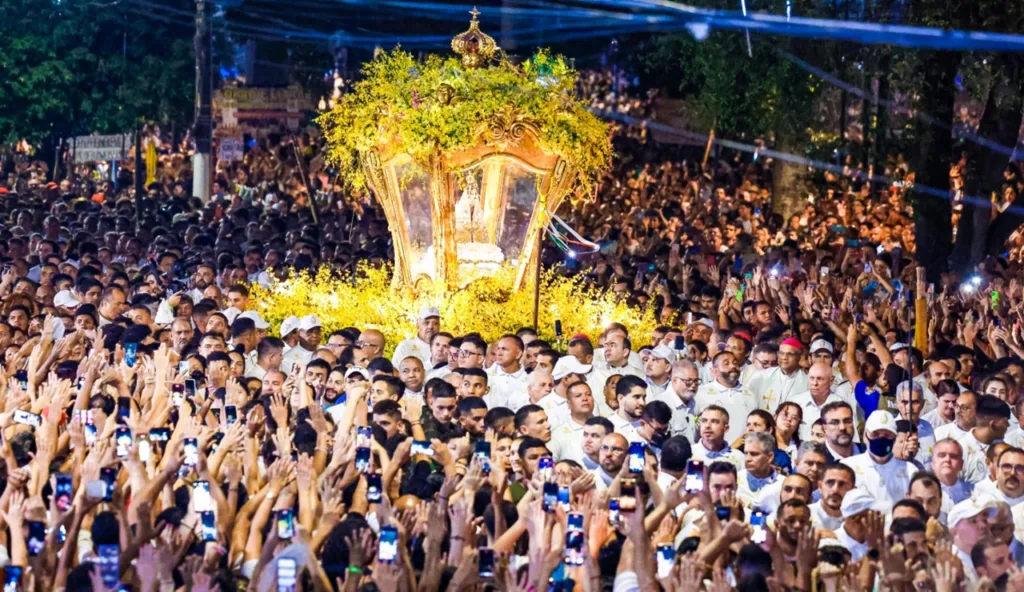
- Why that contrarian start actually makes sense
- How I’ll compare the options
- Alternative A — Walk the Procession with the Devotees (On Foot)
- Alternative B — Book Elevated Viewing: Balconies, Bleachers, or Private Stands
- Alternative C — Watch from the River: Boats, Piers, and the Waterfront
- Practical side of Círio logistics — the things no one puts on a postcard
- What I actually do, and why
- Local behavior and respect
- After the procession: where the day feels complete
- Money, timing, and booking checklist — specific actions to take
- Which option fits your travel personality?
- A final, concrete thing to remember about the Círio
You should not be at the very front of the Círio — and I mean that in the kindest possible way. The emotional rush up close is addictive: the brass, the smell of incense, the velvet canopy swaying above the image of Our Lady. But the front is also where you get crushed, queue for hours before dawn, and miss the rest of Belém that makes Círio worth the trip.
Why that contrarian start actually makes sense
The procession on the second Sunday of October pulls roughly two million people into Belém. That figure isn’t a tourism slogan; it’s what the city manages, breathes through, and recovers from every year. If you arrive determined to be shoulder-to-shoulder with the devotees in front of the Basílica Santuário de Nazaré, you should know three concrete things: the basilica sits in the Nazaré neighborhood; the main day is the second Sunday in October; and most hotels in Nazaré sell out months in advance. So the practical alternative is to choose a vantage that fits the kind of memory you actually want — devotional intimacy, elevated comfort, or a less-obvious riverside perspective — instead of assuming “front row” equals “best experience.”
How I’ll compare the options
I’ll run three real alternatives side-by-side: Walk the procession with the devotees; book an elevated seat or private balcony; watch from a boat or the riverfront. For each: the honest pros, the hard cons, and who should pick it. I’ve lived in Belém and covered Círio for years; these are not tourist-brochure hypotheticals but decisions I’ve seen travelers make in the square, on the pier, and over long cups of coffee at Ver-o-Peso.
Alternative A — Walk the Procession with the Devotees (On Foot)
What it is: You join the mass of people moving with the image from the Basílica Santuário de Nazaré in the Nazaré neighborhood and follow the central procession route into the city. Devotional groups, families, and confraternities move with ropes, candles, and banners. People often walk for hours.
Pros
- Raw emotion. You hear the chants, smell the incense, and get soaked in the communal energy nobody replicates on a balcony.
- Access to spontaneous moments: street altars, local brass bands, the small food stalls that appear because thousands need coffee and tapioca. Try a handheld açaí with farinha d’água at a vendor near the route after the procession; that’s a local pattern.
- It’s cheaper. No paid seats or private balconies. Your main cost is transportation and stamina.
Cons
- Crowd management is intense. Streets funnel tightly around Nazaré. Expect to be standing for long stretches, and to move slowly when the image stops for blessings.
- Logistics: bathrooms are scarce in the densest spots. Bring small change and use cafés in advance; lines form early.
- Safety concerns: pickpocketing rises in any mass crowd worldwide. Keep your passport in your hotel safe and carry only what you need.
Practical specifics and local tips
If you pick this option, plan to arrive the night before in Nazaré or Cidade Velha, because on the morning of the Círio streets fill by 5:00–6:00 a.m. The Basilica is the anchor point: Basílica Santuário de Nazaré on Avenida Nazaré. From Val-de-Cans/Júlio Cezar Ribeiro International Airport (airport code BEL), an Uber or taxi to Nazaré takes 20–35 minutes depending on traffic; plan for more time on Círio morning. Wear broken-in shoes, bring a lightweight waterproof poncho (sudden squalls are possible in this region even in October), and carry a small bottle of water. If you need to return to your hotel after the procession, coordinate a meeting point in a named place — for example, Estação das Docas or Ver-o-Peso — because streets near the basilica can be cordoned off.
Who should pick this
You, if you want devotion and don’t mind discomfort. This is the choice for people who want to feel the crowd’s rhythm, want to be in the living body of Belém for those hours, and are mobile enough to stand and walk for a long day.
Alternative B — Book Elevated Viewing: Balconies, Bleachers, or Private Stands
What it is: You purchase or rent a vantage point above street level — rented private balconies, official bleachers (arquibancadas), or hotels with rooftop terraces that overlook the procession route. These are limited and go fast.
Pros
- Comfort and security. You sit, you see, you don’t get crushed. Bathrooms and shade are usually available if you use a private rented balcony or a hotel rooftop.
- Photographs that look like they came from a professional press pack. If you want to document the procession with stable shots, this is the way.
- Predictability. You’re less subject to sudden route changes or street closures that can trap walkers.
Cons
- Cost and availability. Good viewpoints sell out. If you wait until September or October, expect very limited inventory.
- Less spontaneous contact. You’ll be separate from the main devotional mass — you observe rather than move with them.
- Scams exist. Locally offered “balcony seats” sometimes promise access they don’t have; book through a known hotel or established local tour operator.
Practical specifics and local tips
Start looking for a balcony or rooftop at least three months before Círio. Prime areas are along Avenida Nazaré and Avenida Almirante Barroso. Hotels with terraces around Nazaré and the Cidade Velha waterfront sometimes package viewing plus breakfast. If you book a private balcony, ask explicitly about toilet access, shelter in case of rain, and whether the host provides water. For safety, confirm the booking in writing and pay with a traceable method — locals I spoke with have seen last-minute reassignments by less-reputable middlemen. If your budget allows, pick a rooftop at Estação das Docas: you get river views and an easier exit after the event.
Who should pick this
Pick this if you want the spectacle without the physical hardship: families with small children, older travelers, photographers after clear shots, or anyone who values an exit plan at the end of the day. You sacrifice the raw friction of the crowd but gain a much calmer day.
Alternative C — Watch from the River: Boats, Piers, and the Waterfront
What it is: You view the procession from the banks of the Guajará Bay or from a rented riverboat. Belém is as much a riverside city as it is streets and markets; watching from the water gives you a lateral, cinematic perspective and a quieter day.
Pros
- Unique vantage. The procession by land translates differently when seen next to the water — the glitter, the crowns catching sunlight, the way music carries across water.
- Less crush, more comfort. Boats and piers mean you’re not in the middle of the crowd. You can anchor near Estação das Docas or the neighborhood of Cidade Velha and still feel close.
- Combine it with other sights: Ver-o-Peso market, Mangal das Garças, and a riverside lunch at Estação das Docas follow naturally.
Cons
- Logistics and weather. If the river is rough or rain comes, visibility drops. You also need to secure a reliable boat operator; informal offers at the pier may look cheap but lack safety checks.
- Distance from devotional core. You don’t get the tactile rituals and street altars; you’re a spectator looking inward.
- Limited space. Small private boats work best for groups of 6–12; anything larger needs a licensed operator and earlier booking.
Practical specifics and local tips
To attempt this, head to Estação das Docas on the Guajará Bay. It’s the riverside complex with restaurants, piers, and easy access to small boat operators. If you prefer a more official feel, hire a licensed riverboat through a known operator based at Estação das Docas or book a small private launch from Cidade Velha. Bring sunscreen and a hat: reflection off the water warms you quickly. If you want to combine a post-procession lunch, Mangal das Garças — a park with a café and observation tower near the waterfront — is an easy, 15–20 minute walk from Estação das Docas through Cidade Velha.

Who should pick this
Choose the river if you love photography from a distance, want fewer crowds, or plan to combine the day with visiting Ver-o-Peso market and Estação das Docas. It’s a good fit for small groups who want the pageantry without the push.
Practical side of Círio logistics — the things no one puts on a postcard
Belém becomes a city of slow arteries during Círio week. Buses run but schedules change; many locals switch to motorcycle taxis for short runs in crowded neighborhoods. Here are specific, verifiable tips that will save you time and frustration:
- When to be in the street: plan to be at your chosen vantage by sunrise on the second Sunday of October. The procession occupies streets for hours; late arrival means no easy access.
- Where to stay: Nazaré if your priority is proximity to the basilica; Cidade Velha or Estação das Docas if you prefer riverside walking and easy exit options. Nazaré hotels book out — reserve at least 2–3 months ahead in normal years, and earlier in years with higher expected attendance.
- Transport from the airport: Val-de-Cans/Júlio Cezar Ribeiro International Airport (BEL) is the arrival point. Expect 20–35 minutes by taxi or ride-hail to Nazaré and somewhat less to Cidade Velha in normal traffic — but add extra time during Círio week because the city clamps down on major junctions.
- Where to eat after the procession: Estação das Docas has a range of riverside restaurants. For a more local meal, look for duck in tucupi (pato no tucupi) at well-known places in the historic center; Remanso do Bosque is a high-end option for Pará cuisine if you want a guided, contemporary take, and Mangal das Garças offers a quieter riverside café with views.
- Money and essentials: ATMs work in the center, but lines thicken during the event. Carry small bills for street vendors and local transport.
What I actually do, and why
For the past few Círios I mix strategies. I book an elevated rooftop for the morning to get clear photographs and decent coffee, then later I slip into the streets with a friend who worships with a small confraternity. That gives me both crisp images and the human moments — the two ways the festival imprints itself on memory. If you only have one day, choose the rooftop and then walk to Ver-o-Peso for the afternoon. If you have two days, do the walk once and the riverside the next day with a casual boat ride on the Guajará Bay to decompress.
Local behavior and respect
Remember this: Círio is both religious and civic. People come from tiny river towns with offerings, from Belém’s own working-class neighborhoods, and from across Brazil. If you join the procession, keep your camera modest — many people prefer silent presence. If you watch from a distance, avoid snapping pictures of private acts of devotion without consent. The basilica and many nearby churches welcome visitors but observe quiet if a ceremony is running.
After the procession: where the day feels complete
Where you go after the procession matters. Some foreign visitors assume the day ends when the image returns to the basilica; in Belém, the day reshapes into food, music, and small reunions. Concrete suggestions:
- Walk to Ver-o-Peso market in Cidade Velha for late afternoon. Vendors sell smoked fish, cashews, herbs, and local sweets; the market is a sensory counterpoint to the morning’s crowded piety.
- Head to Estação das Docas for riverside dining and to avoid the chaos of street closures. It’s a short walk and it’s one of the most straightforward ways to move toward the airport or your hotel without getting trapped.
- If you want to sit with friends and talk about the day over something local, Mangal das Garças has an observation tower and a café; it’s a civil, calming stop after the festival’s emotional intensity.
Money, timing, and booking checklist — specific actions to take
- Book your Nazaré or Cidade Velha hotel at least 2–3 months ahead. If you want a rooftop or private balcony, start searching even earlier and confirm in writing.
- Reserve any riverboat or private launch through Estação das Docas-based operators. Ask for the operator’s registration and a written price quote.
- Carry photocopies of your passport and leave originals in the hotel safe. Keep small local bills for vendors, and an electronic map or offline directions because cell coverage can be spotty in tight crowds.
- Pack a lightweight poncho and a small first-aid kit. October weather in Belém can swing; sudden showers are normal.
Which option fits your travel personality?
Here’s the short decision guide, stripped of florid language:
- If you value devotion, sweat, and direct ritual: Walk the procession. Stay in Nazaré. Bring water, light rain protection, and patience.
- If you value comfort, clear photos, and a predictable exit: Book an elevated seat, a rooftop, or a hotel balcony; plan early and confirm details in writing.
- If you want something different — cinematic and less crowded: Watch from the river. Book a vessel through Estação das Docas or claim a riverside table and combine the day with Ver-o-Peso.
A final, concrete thing to remember about the Círio
If you only keep one practical fact in your phone: the main Círio procession is on the second Sunday of October and is centered at the Basílica Santuário de Nazaré. Everything else — where you stand, how you leave, whether you eat fish or duck in tucupi afterward — follows from the vantage you choose. Decide the vantage first; the rest of Belém will rearrange itself around that choice.
When you pick your vantage, you will also choose the rhythm the day will stamp on you. That choice is the travelable thing. Choose it with a little care, and Belém will do the rest.