
A postcard on the Brazilian highlands
Drive into the Serra Gaúcha and the change hits immediately: steep, green hills, pine trees, tidy houses with wooden trims, and bakeries that smell like butter and cinnamon. Gramado and Canela sit side-by-side in Rio Grande do Sul, a part of brazil where German and Italian immigration shaped architecture, food, and festivals. Visitors often arrive expecting a brazilian beach town; instead they find a cluster of cobbled streets, alpine chalets, and a slow, cool climate that feels more European than tropical.
First steps: getting there and settling in
The easiest international gateway is Porto Alegre (Salgado Filho Airport). From Porto Alegre, the road to Gramado and Canela takes roughly two hours by car, depending on traffic and weather. Regional flights to Caxias do Sul shorten travel time for those who prefer to skip the highway. Buses run often and towns are compact, so once you arrive you can get around on foot or with short taxi rides.
Accommodation ranges from cozy chalés and pousadas with wood-burning stoves to polished boutique hotels that lean into the European feel. If you want quieter nights, aim for a pousada in the hills surrounding Gramado; for nightlife and restaurants, pick a place near Rua Coberta or the central square in Gramado.
Seasons, weather, and what to pack
Serra Gaúcha has a temperate, oceanic climate: summers are mild and pleasant, winters are cool and sometimes crisp. Snowfall is rare but not impossible in the coldest months—locals treat a dusting like a holiday. For most foreigners, layering is the key: light sweaters for daytime, a warmer jacket for evenings, and waterproof footwear for rain-prone months. If you visit during winter festivals, bring a warm hat and gloves to enjoy outdoor events comfortably.
Why the towns feel so European
Architecture, cuisine, and cultural habits in Gramado and Canela reflect waves of German and Italian immigration from the late 19th and early 20th centuries. Streets lined with flower boxes, wooden balconies, and steep-roofed houses borrow directly from those traditions. Foodways blended: you’ll find polenta and risotto on menus alongside pretzels and strong cakes. But the towns aren’t replicas — Brazilian warmth reshaped every tradition into something local and joyful.
Signature sights you shouldn’t miss
Start in Gramado with a stroll down Rua Coberta, a covered pedestrian street lined with shops, cafés, and restaurants. It’s a social spine: locals meet there for coffee, visitors linger over chocolate, and at night lights make the street glow. Nearby, Lago Negro offers a park-like escape where you can rent pedal boats beneath towering pines planted from seeds brought from Germany. Mini Mundo, a charming open-air miniature park, delights adults and kids alike with painstakingly detailed tiny houses and scenes.
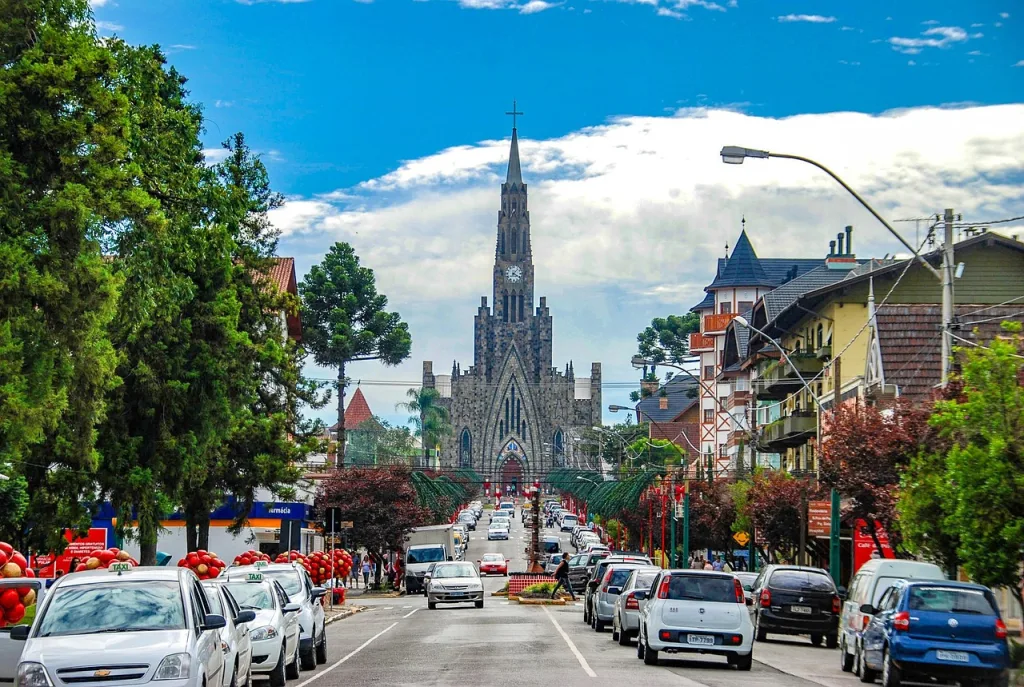
Cross into Canela and the mood shifts toward dramatic landscapes. The stone Gothic-style cathedral—set against a backdrop of eucalyptus and hills—dominates the town center. A short drive from town brings you to Parque do Caracol, home to Caracol Falls. Trails and viewpoints frame the waterfall in layers of green; on clear days the panorama is one of the best in the region.
Food, drink, and the chocolate obsession
Gramado is famous for its chocolate. Workshops, boutique stores, and small factories produce everything from truffles and brigadeiros to elaborate showpieces. Chocolate tasting is almost a formal pastime here: sample different cacao percentages, compare fillings, and watch artisan chocolatiers at work. Many chocolate businesses offer tours where you learn about the production process without corporate gloss—more craft than industry.
Dining leans toward hearty, comfort-driven fare. Fondue restaurants are popular—cheese, meat, and chocolate fondues are served with theatrical timing and sauces. Cafés and tearooms pour strong espresso and serve platefuls of cakes. For a more regional experience, search out a café colonial: a multi-course, family-style spread heavy on breads, cold cuts, cheeses, jams, cakes, and strong coffee—meant to be a leisurely meal, not a quick bite.
Nearby vineyards in the Vale dos Vinhedos and the greater Serra Gaúcha region produce excellent sparkling and still wines. Wine tours are easy to add to an itinerary; many vineyards offer tastings and cellars open to visitors. If you enjoy craft beer, look for small breweries working with cold-weather styles that pair well with the region’s food.
Festivals and the calendar of big moments
Natal Luz in Gramado is one of Brazil’s most famous seasonal events: a months-long Christmas festival with light shows, parades, and theatrical productions that run from November into January. It’s theatrical and family-friendly; book early if you plan to visit during the peak of the program. Outside of the holidays, the towns host cultural fairs, music events, and food festivals that celebrate local produce, chocolate, and regional crafts.
Outdoor adventures without the crowds
Beyond the well-trod parks there are quieter options for walkers and nature lovers. The ALPEN Park in Canela blends adrenaline with scenery—ziplines and alpine coasters thread through trees and give a unique perspective on the landscape. Hikers will find trails that move into native forest and past small waterfalls; many routes are well-marked and family-friendly.
Rent a bike to pedal along scenic backroads or join a guided tour that pairs a vineyard visit with a rural lunch in a small family-run establishment. Photographers will love the light at dawn and dusk, when fog settles into the valleys and the wooden houses glow in the soft sun.
Day trips and regional pairings
Gramado and Canela make great bases for exploring Serra Gaúcha. Bento Gonçalves and the Vale dos Vinhedos lie a short drive away and are the heart of the region’s wine scene; the town of Nova Petrópolis offers German-inspired plazas, gardens, and craft shops; small immigrant-founded towns dot the countryside, each with its own specialty—cheese, cakes, lace, or wooden crafts.
Practical tips: language, money, and manners
Portuguese is the national language; in tourism-heavy spots you’ll find staff who speak English or Spanish, but learning a few basic Portuguese phrases goes a long way. Say bom dia (good morning), por favor (please), obrigado/obrigada (thank you, male/female speaker), and desculpe (excuse me)—locals appreciate the effort and respond warmly.
Credit and debit cards are widely accepted, but smaller cafés and market stalls prefer cash (Brazilian real). Tipping is appreciated but not rigidly enforced—10% service is common in restaurants, and rounding up for small services is fine. For safety, Gramado and Canela are generally peaceful; keep usual travel precautions in mind—watch belongings in crowded spots and use licensed taxis or rideshare apps when possible.
Three sample itineraries: slow, classic, and offbeat
Slow: 4 days to breathe
Day 1: Arrive in Gramado, walk Rua Coberta, and settle into a chalet-style pousada. Day 2: Morning at Lago Negro and Mini Mundo, afternoon chocolate tasting and a relaxed fondue dinner. Day 3: Short drive to Canela for the stone cathedral and Parque do Caracol viewpoints; return for a café colonial. Day 4: Morning market browsing and a vineyard visit in the Vale dos Vinhedos before heading back to Porto Alegre.
Classic: 2-3 days for highlights
Day 1: Explore central Gramado, Rua Coberta, and the chocolate shops; evening show if visiting during festival season. Day 2: Canela’s cathedral and Caracol Falls, plus an optional adventure at ALPEN Park. Day 3 (optional): Day trip to Bento Gonçalves for wine tastings.
Offbeat: local markets and rural life
Spend mornings at neighborhood bakeries and local craft markets. Rent a car for a day to explore country roads, stopping at family-run wineries and small cheese producers. Join a rural lunch with a local family to learn recipes and stories about immigration and farmland life.
Shopping and souvenirs that matter
Skip mass-produced trinkets and focus on local craft: handmade chocolates wrapped in individual boxes, artisanal cheeses from the region, hand-stitched lace, and wooden kitchen tools carved by local craftsmen. Many small shops offer samples—use them to discover producers you’d like to support. If you’re bringing food back, check Brazilian customs and packaging rules for perishables, and pack chocolate so it survives the flight.
Practical safety and health notes
There are no unusual health risks specific to Gramado and Canela beyond standard travel precautions. Drink bottled or filtered water if you prefer; most restaurants serve safe tap water. If you have specific health concerns, check with your doctor before traveling. For travel insurance, choose a plan that covers theft, health care, and any adventure activities you may do.
Local culture: what to expect from conversations
Gaúchos (residents of Rio Grande do Sul) are proud of their culinary traditions, especially barbecue (churrasco) and mate drinking rituals. Expect friendly curiosity from locals—strangers may ask where you’re from and offer recommendations. Families and older residents often preserve immigrant traditions: festivals, dances, and folk music appear in community calendars and are open to visitors who want to watch respectfully.
When Gramado and Canela feel their best
Both towns shine at different times of year: autumn brings crisp air and vivid foliage; winter delivers the cozy, fire-lit atmosphere that suits fondue and chocolate; spring fills streets with flowers; summer is mild and suits late-afternoon walks. For festival crowds, book months ahead; for quiet stays, aim for shoulder seasons in late spring or early autumn.
How to make the most of a short stay
Prioritize one or two must-see sites and leave room for wandering. A successful short visit often pairs a chocolate experience with a nature highlight (Lago Negro + Caracol Falls, for example) and one long meal—sit down for a café colonial or a multi-course dinner rather than hopping from place to place. Reserve any special dinners or shows in advance during high season.
Final travel spirit: slow, sensory, and surprisingly Brazilian
Gramado and Canela reward the traveler who slows down. The streets invite lingering—cup of coffee in one hand, artisan chocolate in the other—while the hills insist on outdoor moments: a lookout at dawn, a waterfall trail, or a vineyard terrace at sunset. These towns are not escapes from Brazil; they are a different facet of it—one shaped by immigrant hands and Brazilian warmth that blends into something entirely local and distinct.
Photo by Leonhard_Niederwimmer via Pixabay
Resources and next steps
Before you go, check local tourism sites for festival calendars and opening hours of major attractions. If you plan to rent a car, reserve early during holiday periods. Consider downloading offline maps and a phrasebook app for Portuguese basics. Most of all, leave space in your schedule for a lazy afternoon—some of the best experiences in Gramado and Canela happen when you do nothing more than sit at an outdoor table and watch the world go by.