
Why Corpus Christi’s street carpets feel like a living painting
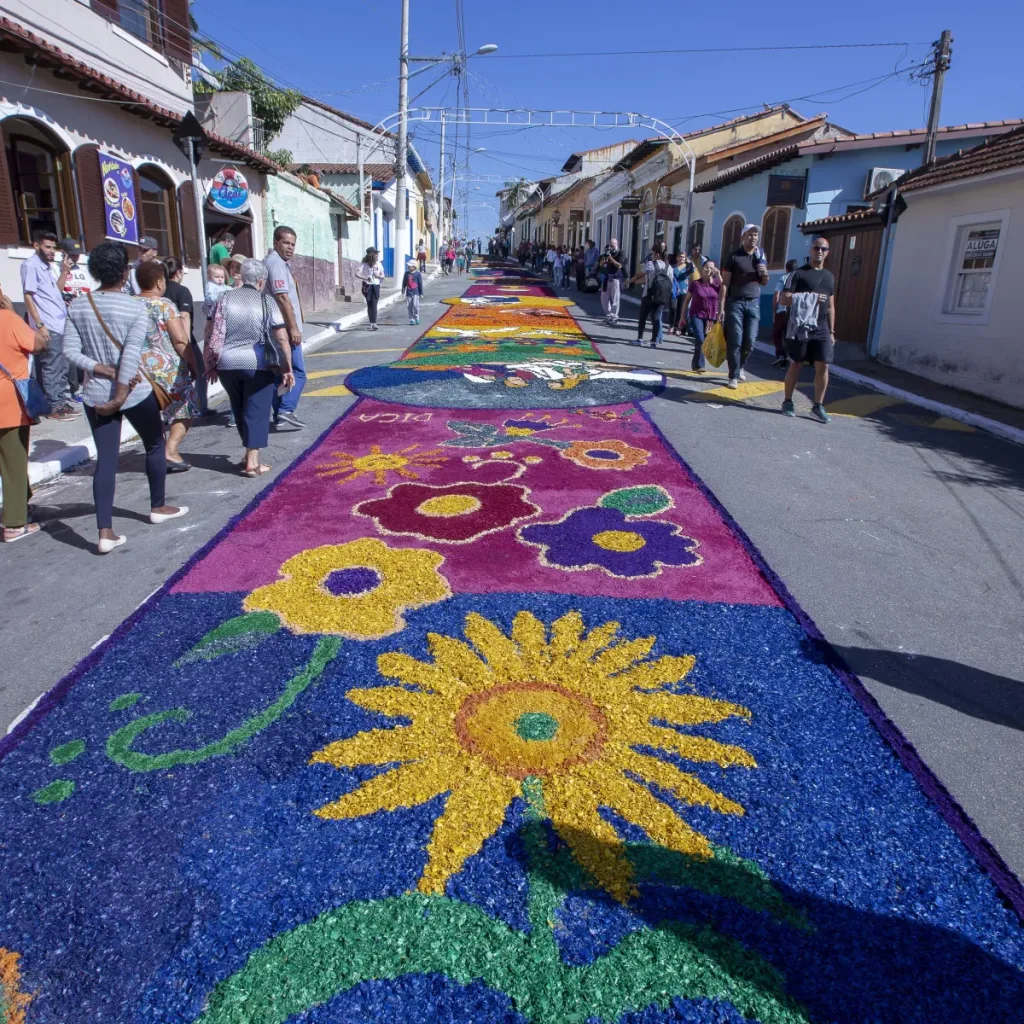
Corpus Christi in Brazil is not just a religious date on a calendar; in many towns it turns entire streets into temporary frescoes. For centuries local communities have transformed sidewalks and plazas into intricate carpets made of flowers, colored sawdust, coffee grounds, seed patterns and fresh greenery. The result is a handful of hours each year when churches, processions and streets become inseparable art—an immersive, tactile festival where craft, faith and neighborhood pride meet.
How the tradition works—and why timing matters
The carpets are usually built overnight or in the early morning hours before the Eucharistic procession passes. Neighbors, parish groups and visiting volunteers lay out cardboard stencils, trace designs, then fill them with dyed sawdust, flower petals and organic materials. The materials are often sourced locally: marigold petals, bougainvillea scraps, coffee husks or colored sand from roadside quarries. Watch closely and you’ll notice subtle regional choices—Minas Gerais towns favor dense floral mosaics that echo Baroque church interiors, while some coastal towns incorporate local shells and seaweed into the designs.
Because the carpets exist for only a few hours, planning your arrival time is essential. Most processes start before dawn and finish with the procession, so arriving late means missing both the building and the best light for photographs.
Where the carpets shine brightest: Minas Gerais cluster
If you have only a few days to dedicate to Corpus Christi 2026, head to Minas Gerais. The state is a reliable nucleus for this tradition: Baroque architecture and strong Catholic devotion mean serious regional commitment to making the carpets lush and densely patterned. Towns inside this cluster preserve colonial-era processions that move slowly through narrow stone streets—exactly the sort of setting where a carpeted route becomes spectacular.
Ouro Preto
Ouro Preto’s steep, cobbled streets and gilded church interiors make it an instinctive match for elaborate carpets. When the floral designs run beneath carved Baroque altarpieces, the effect is cinematic: color and texture at street level, gold and narrative above. Visitors should plan for altitude (the town sits at ~1,100 meters) and expect crowds near Praça Tiradentes and the main churches.
Tiradentes and São João del Rei
Tiradentes offers a more intimate carpet experience, with narrow lanes that become galleries of color. Nearby São João del Rei tends toward processions with historical brass bands and colonial costumes; carpets there often incorporate religious iconography adapted to the scale of small-town streets. Both towns are walkable, making it easy to hop from one carpet to another on the same morning.
Mariana and smaller parish towns
Mariana, a short drive from Ouro Preto, combines large public carpets with parish-level displays in quieter neighborhoods. Smaller towns in the mining region—often less crowded—can offer surprisingly elaborate carpets that are easier to view up close.
Other regions worth traveling to in 2026
While Minas Gerais is the best-known cluster, you’ll find worthy displays outside the state. Interior São Paulo towns and some coastal cities stage their own versions each year; the materials and pace change, but the core experience does not. If you prefer a bigger urban spectacle, look for parish-organized carpets in larger cities where neighborhood groups still maintain the craft tradition.
São Paulo (city and interior parishes)
In São Paulo state, several historic parishes in both the capital and interior towns keep the sawdust-and-flower tradition alive. These carpets often sit alongside civic processions that include marching bands and folk groups. The urban setting brings interesting contrasts: modern skyscrapers and classic sanctuaries framing ephemeral street art.
Northeast and coastal pockets
On the coast, expect carpets that creatively incorporate local materials—tropical flower petals, palm fronds and occasionally shells. These versions have a lighter, beach-adjacent palette and a more casual atmosphere than the densely worked carpets of Minas Gerais.
Practical travel advice for Corpus Christi 2026
Plan early: hotels in popular towns often sell out. Book two to three months ahead if you want a central room in Ouro Preto or Tiradentes. Many visitors choose to stay the night before so they can join or watch the overnight assembly; others prefer to rise at 3–4 a.m. and watch the finishing touches under dawn light.
Transport logistics: fly into Belo Horizonte (Confins) for Minas Gerais towns. From BH, buses and rental cars connect to Ouro Preto, Tiradentes and São João del Rei—expect drives of one to three hours depending on your destination. If you’re visiting the São Paulo cluster, use Campinas or São Paulo–Guarulhos as arrival points, then connect by regional bus or car. Smaller coastal towns might have limited transport options; check local bus schedules and consider renting a car for flexibility.
Where to stand, photograph, and behave
Respect matters. The carpets are religious offerings and community labor; stepping on them casually would be offensive. Photograph from the sidewalks, balconies or public squares. If you’re offered a chance to walk behind the procession to view carpets from the reverse side, ask permission first—parish volunteers often organize guided paths for photographers, especially early in the morning.
For photography: shoot during golden hour (dawn is best) for saturated colors and soft shadows. Use a low vantage point for detail shots and a wider lens from a balcony or higher ground to capture an entire street. Bring a small tripod for low-light work and a lens cloth—early mornings in historic towns can be dusty or dewy.
What to taste and where to stay nearby
Pair the street spectacle with local food. In Minas Gerais, look for classic dishes: pão de queijo from a neighborhood bakery, feijão tropeiro at a family-run restaurant, and warm doce de leite desserts. Many small pousadas (guesthouses) offer breakfast early for pilgrims and photographers—this is common and appreciated by visitors.
In larger towns like Ouro Preto and São João del Rei, consider historic pousadas near the main squares. They get booked early for Corpus Christi; if you want convenience and character, prioritize central locations even if they cost a little more.
How carpets are made: materials, teams and secrets
The building process is practical art. Teams sketch designs on cardboard or chalk, then fill outlines with dyed sawdust, layered petals, seeds and sometimes coffee husks or peels to create texture. In many towns, parish volunteers begin laying out carpets after midnight and work until dawn; that communal rhythm—conversations, coffee, and slow concentration—is as integral to the experience as the finished carpet.
Tips if you want to help: bring gloves, a small hand broom and dark clothes you don’t mind soiling. Local groups are usually welcoming to visitors who ask politely and offer to help, but always coordinate with parish leaders to avoid disrupting patterns or sacred elements.
Timing your visit and pairing with other attractions
Corpus Christi moves around the liturgical calendar each year, so check 2026 dates early. The festival is often a long weekend in Brazil, which means roads and hotels fill up quickly. Combine your visit with nearby attractions: in Minas Gerais you can add colonial museums, in São Paulo state consider a day trip to historic towns or natural parks, and coastal trips can be paired with beach time and colonial centers.
Examples of good pairings: take a two-day trip centered on Ouro Preto and Mariana to experience two different scales of carpet-making; or combine Tiradentes with a jazz night—Tiradentes hosts cultural events year-round that pair well with morning religious festivities.
Practical checklist for Corpus Christi carpets
Carry a small daypack with these essentials: a lightweight waterproof layer (dawn can be cool in some highland towns), comfortable walking shoes for cobbles, a portable battery for your phone, cash for small parish donations or market stalls, and a reusable water bottle. Respect local customs: dress modestly if you intend to enter churches, and keep voices low near processions.
If you want a quieter experience
To avoid crowds, visit smaller parishes or the periphery of larger towns. Arrive the evening before and ask local shopkeepers where parish groups gather to work. Often the less-trafficked alleys produce the most surprising designs because they’re made by dedicated neighbors rather than tourist-focused committees.
Final travel nudges for 2026
Corpus Christi offers an unusually tactile way to experience Brazilian local culture: it’s less about spectacle for tourists and more about community putting something beautiful into the public realm. If you go with curiosity, patience and respect, you’ll witness designs that last only hours but linger in memory. Book early, pick a town that matches your tolerance for crowds and altitude, and plan to be up before dawn—those quiet hours are when the carpets truly come alive.