

Getting the invite right: what the host expects
When a Brazilian friend invites you to a churrasco, accept with enthusiasm and clarity. A churrasco is more than meat on a grill; it’s a social ritual that unfolds over hours. Reply promptly, confirm arrival time, and ask whether the event has a particular theme or dietary considerations. Hosts appreciate simple, direct answers rather than vague commitments that leave planning uncertain.
Bring something thoughtful — not extravagant
Most hosts won’t expect an expensive gift. Bring something practical and shareable: a bottle of decent caipirinha-ready cachaça, a bag of quality coffee, artisanal bread, or a simple dessert. Flowers are fine if wrapped simply. If the invitation explicitly says “no gifts,” respect that. A small contribution packs meaning when it’s chosen with care and fits the tone of the gathering.
Arriving: timing, greetings, and immediate etiquette
Arrive within a 15- to 30-minute window of the stated start time unless the host indicates otherwise. In Brazil, social events often have a relaxed tempo; still, show respect for the start by not appearing hours late. Knock or ring the bell. Greet the host warmly, offer your gift if you brought one, and introduce yourself to anyone you don’t know with a handshake or a cheek kiss if the group is doing that. Keep your voice steady — churrascos are lively, but initial greetings should be calm and friendly.
Where to sit and how the space is organized
Hosts will typically set up tables and a serving area. If seating isn’t assigned, ask where you should sit. Brazilians are social and shift seating naturally; follow their lead. Avoid immediately rearranging chairs or plates. If the family uses a specific area to place purses or coats, use it. Respect the host’s layout: moving things around can signal discomfort or imply that the setup is inadequate.
Understanding the flow: the churrasco rhythm
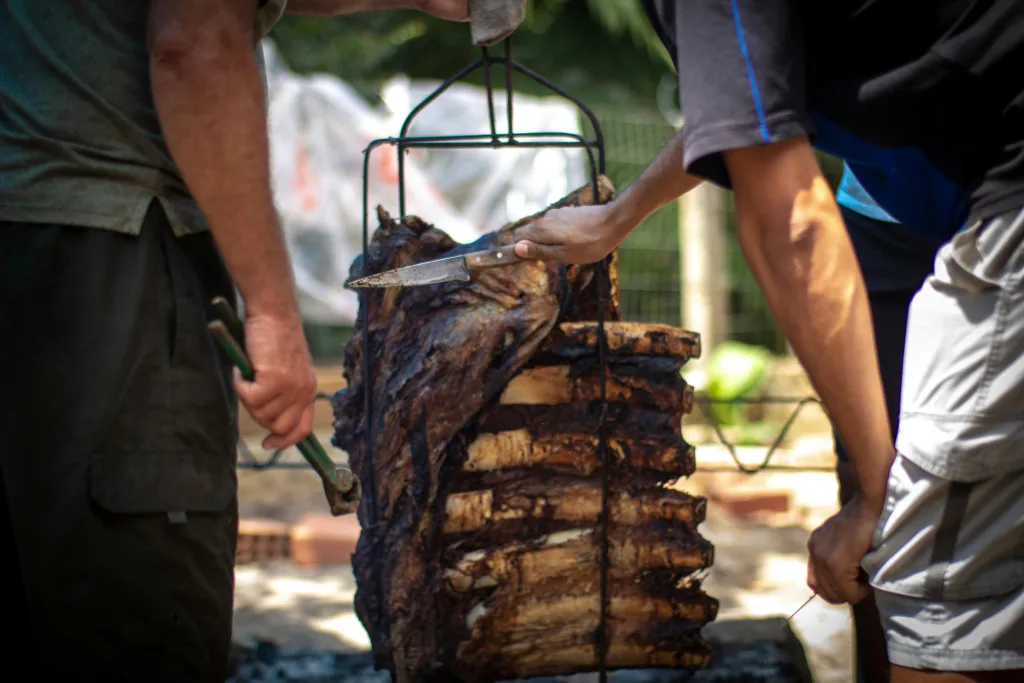
Churrascos have a distinct rhythm: conversation, appetizers, grilled meats arriving in waves, side dishes, and more conversation. The grilling team — often the host or a designated churrasqueiro — brings skewers and cuts directly to guests. The meat comes hot and sliced at the grill or at the table. Watch for signals: when the churrasqueiro approaches, they will usually offer a cut to everyone in line. Step forward when you want a particular piece and step back when you don’t.
When it’s your turn, indicate how you want your portion. If you prefer thin slices, say so; if you want only a little, say that too. Brazilians are direct about preferences in this setting: making a clear request is easier than trying to guess. If you are unsure what a particular cut is, ask briefly; people enjoy explaining the differences and often take pride in their selections.
How to take meat without being rude
Never reach across the parrilla or into another guest’s plate. Wait your turn and accept the skewer when offered. If a cut isn’t to your taste, a gentle “no, thank you” is perfectly fine; the churrasqueiro will keep going and offer the next item. Don’t point at the grill; use hand gestures or a soft voice to ask for a specific cut. If multiple grills are running, avoid crowding the cooking area — it’s the churrasqueiro’s domain and also a high-temperature zone where accidents happen.
Tipping and paying: what matters most
At private home churrascos, tipping isn’t expected, but offering to help with grocery costs is common. If the host declines, accept their refusal graciously. At a rented space or a commercial churrascaria (restaurant-style), follow local practice and check whether service is included. When tipping is customary, 10–15% is reasonable for group service. If friends have pooled money for a party, contribute what was asked, and avoid last-minute renegotiations unless the host requests help.
Serving yourself from shared dishes
Side dishes and salads are usually communal. Use the serving utensils provided; never use your personal fork or knife to scoop food. Take a reasonable portion the first time and return for seconds later. Try a bit of everything: sides like farofa, vinaigrette, rice, and grilled vegetables complement the meat and show appreciation for the host’s effort. If you have dietary restrictions, let the host know early — they will often prepare or point out suitable options.
Drinks, toasts, and the caipirinha etiquette
Drinks are central to the social experience. If you’re offered a caipirinha, accept politely; it’s a cultural touchstone. Drink pace matters: sip, savor, and match the group’s tempo. When someone proposes a toast, stand and join in if appropriate. A simple “Saúde!” said confidently matches the friendly spirit. If you don’t drink alcohol, hold your glass up with the others — participation matters more than the beverage.

Conversation: topics that warm a gathering
Churrascos thrive on lively, casual conversation. Topics like travel, local food culture, family stories, and light sports banter keep energy high. Steer clear of heated political debates or deeply personal financial questions unless you already know the group tolerates them. If someone pushes into sensitive territory, deflect with a neutral anecdote or suggest a lighter topic. Humor works well, but avoid sarcasm that might not translate across cultural lines.
How to behave when kids are present
Children at Brazilian churrascos are included in the event rather than set aside. Expect them to move around, chat loudly, and join the food line. If you’re uncomfortable around children, position yourself where you can interact briefly without taking responsibility. If you’re asked to help with a child, say yes if you’re comfortable. Minor chaos is part of the charm; adapt rather than resist.
Handling dietary restrictions and allergies with grace
If you have food restrictions, tell the host when you RSVP. At the party, discreetly remind them if necessary. Most hosts will have or create safe options; if nothing is available, politely explain and accept alternatives. Never make the host feel defensive or guilty about your needs. Instead, offer to bring an appropriate dish — this helps you eat comfortably and relieves pressure on the host.
Cell phone and photography manners
Photos are common at social gatherings, but ask before snapping pictures of people. Share photos with the host before posting on social media if the event is private. Keep phone volume low and step aside for important calls. If someone is giving a toast or speaking to the group, put your phone away. Presence matters more than documenting every moment.
When to eat, when to wait
Don’t rush to fill your plate the moment you arrive. Let the flow settle and follow the group’s rhythm. If the meat is coming in waves, pace yourself: take small portions of a few cuts, sample the sides, and return for favorites. Eating too quickly shows a lack of finesse; savoring food and conversation shows appreciation. If you’re unsure when to start, match the host’s pace — they’ll usually indicate when the meal is officially underway.
How to say no gracefully
Declining a offered plate or drink is acceptable if handled politely. Use short, clear phrases: “Obrigado, not hungry right now,” or “No, thank you — I’ll have a little later.” The churrasqueiro won’t take offense; they understand preferences and appetites vary. Avoid long explanations or excuses that make the interaction awkward. Keep it simple and sincere.
Help without taking over
Offer assistance with clearing plates, refilling drinks, or light prep like chopping bread. If the host refuses, accept graciously — insisting can be rude. If they accept, follow their directions. Watch how the host prefers help: some will hand you a job to run with; others like you nearby but only if asked. Never rearrange a grill or take over cooking unless explicitly invited; the churrasqueiro oversees the fire for a reason.
End-of-party cues and departures
Parties wind down naturally. When you notice the group thinning, tidy your area and thank the host personally. Express appreciation for the hospitality and the food. Offer to help with last-minute cleanup; often the host will politely decline, but the offer matters. If you plan to leave early, mention it when you arrive or discreetly tell the host during the event so they know you enjoyed your time.
Follow-up: a message that makes a lasting impression
Send a thank-you message the next day. Keep it short and specific: mention a stand-out dish, a funny moment, or the host’s warmth. A handwritten note is rare but memorable. If you accepted a shared cost, settle it promptly. Thoughtful follow-up solidifies friendships and signals that you’ll happily accept future invitations.
Common faux pas and how to avoid them
Don’t arrive empty-handed and then ask the host for a recipe or the identity of every cut while they’re busy serving. Don’t monopolize the grill area or the host’s time with long stories. Avoid comparing the host’s food unfavorably with other experiences; even constructive critiques are best saved. And never take a whole cut meant for everyone; ask for a slice or a portion. Small missteps are forgiven when corrected politely and quickly.
What to do if you accidentally offend someone
Apologize sincerely, without drama. A short apology — “I’m sorry, I didn’t mean to offend” — goes a long way. If a deeper conversation is needed, ask to speak privately later. Avoid defensiveness. Hosts and guests value direct, calm communication. Most miscommunications at social events stem from cultural differences or mismatched expectations rather than ill will.
Dress code: comfortable but respectful
Wear something relaxed and clean. Churrascos are casual affairs, often outdoors and warm. Closed-toe shoes protect you near the grill. Bring a light layer for cooler evenings. Avoid anything that suggests you expect formal dining; the vibe is friendly and low-key. If the invitation specifies a theme or dress code, follow it — it shows attention to detail and respect for the host’s plans.
Language tips if you’re not fluent in Portuguese
Learn a handful of phrases: thank you (obrigado/obrigada), cheers (saúde), it’s delicious (está delicioso), and excuse me (com licença). Use what you know, and don’t apologize for imperfect pronunciation. Hosts will appreciate the effort. If you misunderstand something, ask politely for clarification — most people will happily translate or repeat slowly.

How to enjoy the food like someone who belongs there
Eat with curiosity. Taste unfamiliar cuts, try condiments like chimichurri or vinaigrette, and balance fatty meats with sides. Ask questions about cooking techniques and regional preferences. People appreciate genuine interest. Remember: participating in the ritual — standing in line for meat, chatting at the table, toasting, and lingering after the meal — marks you as a good guest more than any single action.
When you should host a churrasco yourself
After you’ve attended a few, try hosting. It’s the best way to repay hospitality and deepen friendships. Start small: a few trusted guests, simple cuts, a reliable side or two. Share the responsibility by asking guests to bring a side or drinks. Hosting teaches you the choreography of the event — timing the fire, pacing the meat, and creating the relaxed atmosphere that makes churrascos special.
Final thoughts on being a standout guest
Be present, be polite, and match the group’s rhythm. Offer help, accept hospitality, and return appreciation. Small gestures — arriving thoughtfully, offering a modest gift, following serving etiquette, participating in toasts, and sending a timely thank-you — create a warm exchange that hosts remember. A churrasco is a communal celebration of food and friendship; contribute to it with respect, curiosity, and good humor.