
More Than Just a Meal: The Spirit of the Churrasco
If you have been invited to a Brazilian barbecue, or churrasco, you haven’t just been invited to lunch; you have been welcomed into a sacred social ritual. In Brazil, the churrasco is the heartbeat of the weekend. It is where birthdays are celebrated, deals are struck, and families reconnect over the intoxicating aroma of slow-roasted beef and smoldering charcoal. Unlike a quick backyard burger flip in other parts of the world, a Brazilian churrasco is an endurance sport. It is a marathon of eating, drinking, and talking that can easily span from early afternoon until the stars are high in the sky. To navigate this cultural cornerstone with grace, you need more than just an appetite; you need to understand the unwritten rules of the backyard.
The first thing to realize is that the environment is intentionally informal. Whether it is held at a fancy apartment’s espaço gourmet or a simple backyard in the suburbs, the vibe is always one of relaxed hospitality. Brazilians are famous for their warmth, and the churrasco is the ultimate expression of that openness. You will likely be greeted with hugs, loud music—often samba, pagode, or sertanejo—and an immediate offer of a cold drink. Embracing this energy from the moment you step through the door is the first step toward being the perfect guest.
The Fashionably Late Rule (And When to Break It)
Punctuality in Brazil is a nuanced concept, particularly when it comes to social gatherings. If the invitation says the party starts at 1:00 PM, showing up exactly at 1:00 PM might find your host still in the shower or just getting the charcoal started. In the world of churrasco, the ‘official’ start time is more of a suggestion. Arriving 30 to 60 minutes after the stated time is generally considered perfectly punctual. It gives the host time to finish the prep work without the pressure of entertaining guests while they are still chopping onions for the vinaigrette.
However, there is a limit to this flexibility. You don’t want to arrive three hours late when the best cuts of meat have already been served and the party is shifting into its second phase. A good rule of thumb is to check in with the host via WhatsApp a bit earlier. A simple “Hey, what time are people heading over?” usually yields the ‘real’ start time. Once you arrive, don’t expect to sit down at a formal table immediately. The churrasco flows in waves, and the best way to enjoy it is to find a comfortable spot near the action and settle in for the long haul.
The Contribution Question: What Should You Bring?
One of the most common questions for any guest is what to bring to the party. In Brazil, the protocol often depends on how well you know the host and the nature of the event. For a casual gathering among friends, the most common practice is for the host to provide the meat and side dishes, while guests bring their own beverages. This usually means a cooler or a bag filled with your beer of choice, soda, or perhaps the ingredients for caipirinhas. If you are unsure, simply ask, “What can I bring?” (O que eu levo?). The answer will likely be “Bring what you’re going to drink.”
If the host insists you don’t need to bring anything, it is still a polite gesture to bring a small offering. A high-quality bottle of cachaça, a pack of premium beer, or even a nice dessert (like a brigadeiro cake or a pudim) will always be appreciated. Avoid bringing raw meat unless specifically asked to do so; the churrasqueiro (the person at the grill) usually has a very specific plan for the cuts and the timing of the fire. Bringing an unannounced rack of ribs might throw off their entire flow. Stick to drinks or sweets, and you’ll be the guest everyone wants to invite back.
Navigating the Grill: Respecting the Churrasqueiro
In every Brazilian churrasco, there is one undisputed king or queen: the churrasqueiro. This is the person standing over the heat, expertly wielding the tongs and the knife. This role is a position of honor, and as a guest, your primary job is to show respect for their craft. It is common for guests to congregate around the grill—it’s the social hub of the party—but never, under any circumstances, should you try to flip the meat or tell the churrasqueiro how to do their job. Even if you fancy yourself a pitmaster back home, keep your tips to yourself unless specifically asked.
The churrasqueiro will often slice small pieces of meat directly from the skewers and offer them to those standing nearby. This is the ‘tasting’ phase, and it can last for hours. When a piece of picanha or a linguiça (sausage) is offered, take it! It’s a compliment to the cook. If you have specific preferences for how done your meat is, it’s okay to mention it quietly if they ask, but generally, Brazilians serve meat ao ponto (medium-rare to medium). If you prefer your meat well-done, you might have to wait a bit longer for the thinner ends, and that’s perfectly fine.
The Holy Trinity of Sides: Farofa, Vinaigrette, and Rice
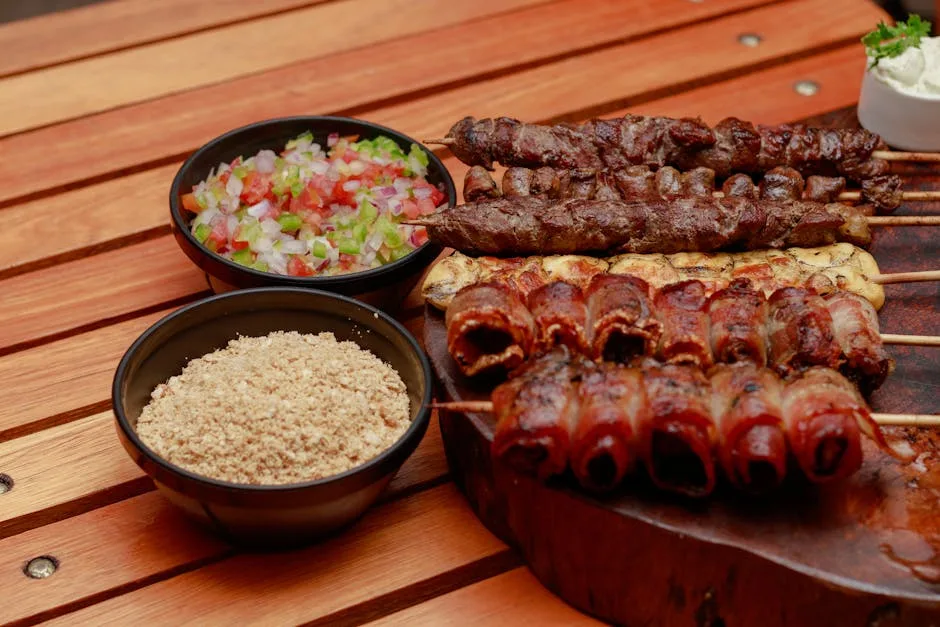
While the meat is undoubtedly the star of the show, a Brazilian barbecue is incomplete without its supporting cast of side dishes. You will almost always find a spread consisting of white rice, farofa, and vinagrete. Understanding how to eat these is key to looking like a local. Farofa is a toasted cassava flour mixture, often sautéed with butter, garlic, and sometimes bits of bacon or egg. It has a crunchy texture that is designed to soak up the juices from the meat. Don’t be afraid of it; it’s the ultimate comfort food.
The vinagrete (a Brazilian salsa made of finely diced tomatoes, onions, bell peppers, vinegar, and oil) provides the necessary acidity to cut through the richness of the fatty meats. You’ll also often see pão de alho (garlic bread), which is usually grilled until crispy on the outside and gooey on the inside. This is often served as an appetizer and is highly addictive. When filling your plate, remember that the side dishes are meant to be eaten alongside the meat, not as a separate course. A little bit of everything on the plate creates the perfect balance of flavors and textures.
The Art of the Slow Feast: Pace Yourself
One of the biggest mistakes a newcomer can make at a churrasco is eating too much too fast. Because the meat comes out in stages—starting with sausages, chicken hearts (a local delicacy you should definitely try!), and drumsticks, before moving on to the premium cuts like picanha or fraldinha—it is easy to fill up before the best stuff even hits the cutting board. The secret is to take small portions. A slice here, a spoonful of farofa there. The goal is to keep a steady level of satisfaction without reaching a ‘food coma’ in the first hour.
This slow pace also facilitates the most important part of the churrasco: the conversation. You aren’t just there to eat; you’re there to jogar conversa fora (throw away talk, or small talk). You’ll find people moving between groups, debating soccer scores, discussing politics, or sharing jokes. The food is the glue that holds these social interactions together. If you find yourself sitting alone with a mountain of food, you’re doing it wrong. Stand up, grab a fresh drink, and join a circle near the grill. That is where the real magic happens.
Beverage Etiquette: Keeping the Drinks Flowing
In the tropical heat of Brazil, keeping drinks cold is a high priority. Beer is the most common accompaniment to a churrasco, and it is served estupidamente gelada (stupidly cold). You will often see large 600ml bottles served in insulated holders, with small glasses (known as copo americano) shared among the group. This ensures the beer never stays in the glass long enough to get warm. It is a communal way of drinking; you pour for your neighbor before you pour for yourself.
If you are drinking caipirinhas, be careful—they are delicious but deceptively strong. The combination of lime, sugar, ice, and cachaça is the perfect palate cleanser for a salty barbecue, but it can catch up to you quickly in the sun. It’s also important to stay hydrated with water or guaraná (a popular Brazilian soda). As a guest, if you see the ice running low or the cooler looking empty, offering to run to the corner store for a refill is a gesture that will earn you legendary status among your Brazilian friends.
The Long Goodbye: Closing Out the Afternoon
As the sun begins to set, the pace of the churrasco usually slows down, but the party is far from over. This is the time for coffee, perhaps some more dessert, and what Brazilians call the saideira—the ‘one for the road’ drink that often turns into three or four more. Leaving a churrasco is not a quick process. There is a specific etiquette to the ‘long goodbye.’ You must go around and say goodbye to everyone individually. A wave from the door is considered a bit cold; instead, expect more hugs and promises to do this again next weekend.
Being a guest at a Brazilian churrasco is about more than following rules; it’s about embracing a philosophy of abundance and friendship. It’s about the smoke in your hair, the salt on your tongue, and the warmth of a community that knows how to celebrate life’s simple pleasures. By arriving with an open heart (and a cold six-pack), respecting the churrasqueiro, and pacing your appetite, you won’t just be a guest—you’ll be part of the family. So, grab a plate, find some farofa, and enjoy the feast. You’re in for an unforgettable afternoon.