
Choosing Your Wild Adventure
Deciding between the Amazon Rainforest and the Pantanal is like choosing between two masterpieces of nature, each with a completely different palette. For years, travelers have flocked to the Amazon, drawn by its legendary name and the mystery of its dense, emerald canopy. It represents the ultimate frontier, a place where life thrives in every square inch. However, if your primary goal is to actually see the animals rather than just knowing they are there, the conversation shifts significantly toward the Pantanal.
The Amazon is a vertical world. It is vast, humid, and thick with vegetation that provides infinite hiding spots for its inhabitants. In contrast, the Pantanal is a horizontal world. As the world’s largest tropical wetland, its open marshes and sprawling floodplains act as a natural stage. Because the trees are shorter and the landscape is more open, wildlife has fewer places to hide, making it the undisputed champion for photographers and those who want a front-row seat to nature’s rawest moments.
The Majesty of the Jaguar
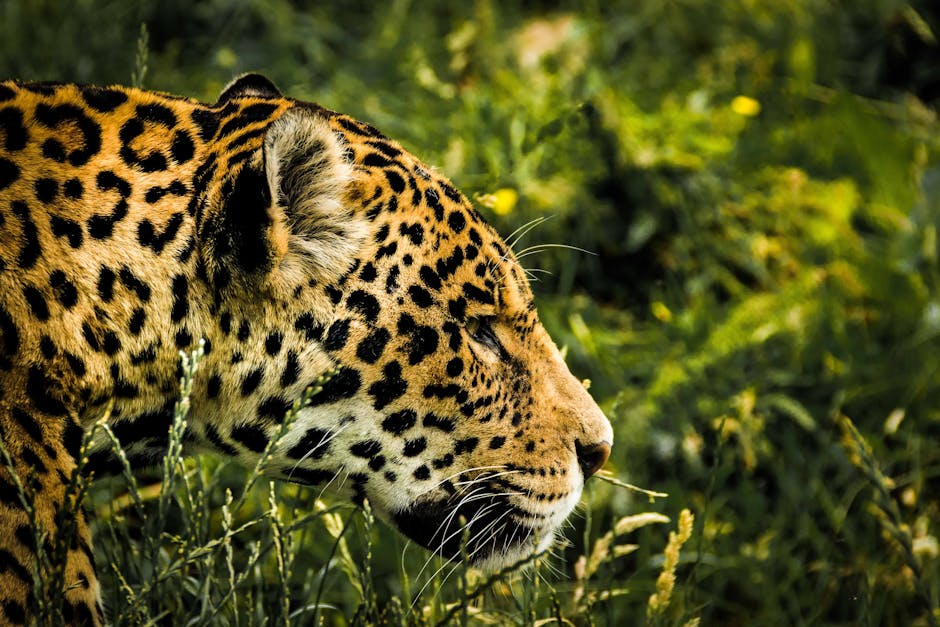
If you have your heart set on seeing a jaguar, the Pantanal is your best bet by a wide margin. In the Amazon, jaguars are ghosts. They move through the thick undergrowth with a silence that defies their size, and while they are present, sightings are rare and usually fleeting. In the Pantanal, specifically in regions like Porto Jofre, jaguars have become somewhat accustomed to boat traffic along the riverbanks. They hunt, mate, and sleep in plain sight, often just a few yards from the water’s edge.
Seeing a jaguar in the wild is a visceral experience. It isn’t just about the visual; it’s the way the air seems to still when one of these apex predators appears. They are heavier and more muscular than leopards, built for power rather than just speed. In the Pantanal, you might watch a jaguar stalk a caiman—a behavior unique to this region—diving into the water to wrestle a prehistoric reptile twice its size. This level of visible action is simply unparalleled elsewhere in the Americas.

Life in the Canopy vs. Life in the Wetlands
The Amazon’s biodiversity is technically higher, but much of it happens 100 feet above your head. To truly experience the Amazon, you have to look small. It’s about the iridescent wings of a butterfly, the intricate architecture of a leafcutter ant colony, or the distant, haunting roar of a howler monkey echoing through the mist. It is a place of textures and sounds, where the forest feels like a single, breathing organism. If you enjoy the feeling of being completely enveloped by nature, the Amazon offers a spiritual immersion that is hard to find anywhere else.
The Pantanal offers a different kind of thrill. It is the land of abundance. During the dry season, as water holes shrink, animals are forced into closer proximity. You don’t have to search for wildlife; it surrounds you. Thousands of caimans sun themselves on the banks, while families of giant river otters—affectionately known as ‘water wolves’—frolic and scream as they hunt for fish. The sheer density of life is staggering. It is one of the few places on Earth where you can see dozens of different species in a single afternoon without even trying.
Birdwatching Paradise
For birders, both regions are world-class, but the experience differs. The Amazon is home to iconic species like the Harpy Eagle and various colorful macaws, but they are often silhouettes against a bright sky, hidden by branches. You need patience and a good pair of binoculars. In the Pantanal, the birds are everywhere and remarkably bold. The Hyacinth Macaw, the largest and most stunning of all parrots with its deep cobalt feathers, is a common sight near the lodges. You’ll also find the Jabiru stork, the symbol of the Pantanal, standing nearly five feet tall in the shallow waters. The lack of dense foliage means you can observe their behaviors—nesting, feeding, and dancing—with incredible clarity.
The Rhythm of the Seasons
Timing is everything when planning a trip to these biomes. The Pantanal is governed by a dramatic cycle of flood and drought. From May to September, the waters recede, leaving behind nutrient-rich pockets of water that attract every creature in the vicinity. This is the peak time for wildlife viewing. During the wet season, the Pantanal transforms into an inland sea, and while beautiful, the animals disperse, making sightings much more difficult.

The Amazon, while also having wet and dry seasons, is more consistent in its challenges. Even in the ‘dry’ season, it rains frequently. However, the high-water season in the Amazon (December to May) offers a unique perspective: you can navigate the flooded forest (igapó) by canoe, gliding through the treetops. This brings you closer to the canopy dwellers, like sloths and monkeys, who are suddenly at eye level. Both regions require a respect for the elements, but the Pantanal is far more sensitive to the calendar if your goal is seeing big mammals.
Giant Otters and Caimans
One of the most underrated stars of the Pantanal is the Giant River Otter. These social, highly intelligent predators are a joy to watch. They live in tight-knit family groups and are incredibly vocal, often ‘talking’ to one another as they navigate the waterways. Seeing them hunt together is a display of tactical brilliance. In the Amazon, these otters are much shyer and harder to spot due to the vastness of the river systems and the density of the shoreline cover.
Then there are the caimans. In the Pantanal, the sheer number of Yacare caimans is mind-boggling. During the height of the dry season, you might see hundreds of them packed into a single shrinking pond. It looks like something out of a prehistoric era. While the Amazon has the Black Caiman, which can grow to much larger sizes, they are more solitary and elusive. If you want to feel like you’ve stepped back into the age of reptiles, the Pantanal delivers that sensation daily.
Human Connection and Conservation
The human history of these areas also shapes the visitor experience. Much of the Pantanal is comprised of private ranches (fazendas). This has led to a unique coexistence between traditional cattle ranching and ecotourism. Many ranchers have realized that a live jaguar is worth far more than a dead one, leading to a surge in conservation efforts. Staying at a lodge that was once a working ranch gives you a sense of the local ‘pantaneiro’ culture—their music, their food, and their incredible horseman skills.
The Amazon is home to thousands of indigenous communities who have lived in harmony with the forest for millennia. Visiting the Amazon often involves learning about traditional medicine, sustainable foraging, and the complex social structures of these tribes. It’s a more culturally profound experience for many, offering a glimpse into a way of life that is increasingly under threat. Choosing which to visit often depends on whether you want to focus on the animals or the broader human-nature relationship.
Practicalities and Accessibility
Logistically, the Pantanal is often easier to navigate for those focused on photography. Most tours operate out of Cuiabá (Northern Pantanal) or Campo Grande (Southern Pantanal). The Transpantaneira highway, a dirt road with over 120 bridges, cuts through the heart of the northern wetlands, providing a DIY-style safari experience that is rare in South America. The Amazon, by contrast, usually requires flying into hubs like Manaus or Iquitos and then taking long boat journeys deep into the jungle to reach the most pristine areas.
Comfort levels vary as well. Because the Pantanal is more open, it can get incredibly hot during the day, but it often cools down at night. The Amazon is consistently humid, a ‘wet heat’ that never really lets up. Mosquitoes are a factor in both, but many find the bugs in the Amazon to be more persistent. However, the Amazon offers more luxury ‘jungle cruise’ options, allowing you to see the rainforest from the comfort of a high-end cabin, whereas the Pantanal is generally more about lodge-based exploration and small-boat excursions.
Finding Your Own Path
Ultimately, the choice doesn’t have to be an ‘either-or’ if you have the time, but most travelers find they lean toward one or the other based on their personality. If you are an avid photographer who wants a checklist of iconic species and high-action sightings, book your flight to the Pantanal. The visibility and the concentration of life will leave you breathless. The thrill of tracking a jaguar for three hours and finally seeing it leap into a river is a memory that sticks with you forever.
If you are a dreamer, a hiker, and someone who finds joy in the subtle details of a complex ecosystem, the Amazon is calling. It is a place to lose yourself in the scale of nature, to listen to the symphony of the jungle at night, and to appreciate the mystery of what remains undiscovered. Both landscapes are vital to the health of our planet and offer some of the most profound wildlife encounters available today. Whichever you choose, you are stepping into a world where nature still reigns supreme, reminding us of the beauty and ferocity of the wild.