
The Geography of a Desert Unlike Any Other
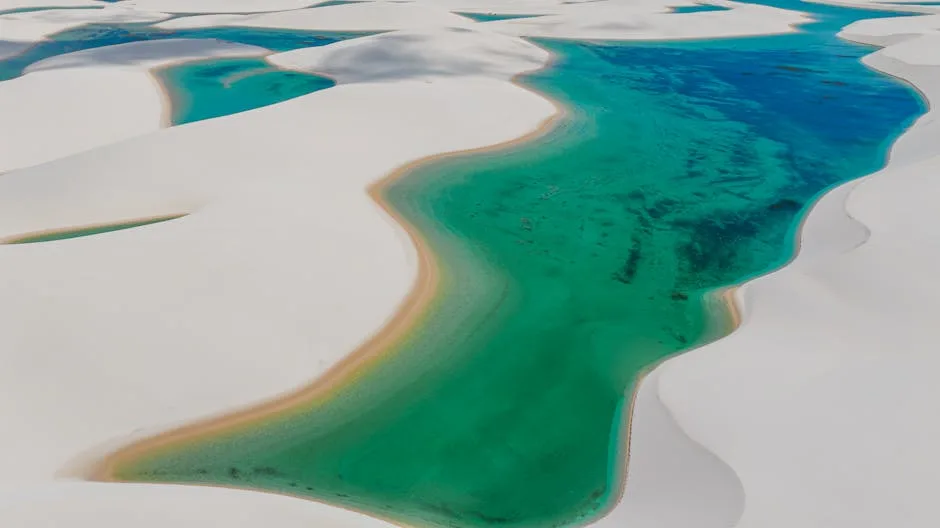
Imagine standing atop a white sand dune that stretches as far as the eye can see. To your left, a turquoise pool of crystal-clear rainwater ripples under a gentle breeze. To your right, another dune rises, sculpted by the constant Atlantic winds into a perfect, sharp ridge. This isn’t a mirage, and despite appearances, it isn’t a traditional desert either. Lençóis Maranhenses National Park, located in the northeastern state of Maranhão, Brazil, covers over 150,000 hectares of protected landscape. Unlike the Sahara or the Atacama, this region receives significant annual rainfall. It is this peculiar combination of massive sand deposits and heavy tropical rains that creates the world’s most unique lagoon system.
Understanding the geography is the first step in planning your journey. The park sits on a transitional zone between the Amazon Basin and the Caatinga (semi-arid) region. This means the biodiversity is surprisingly rich for a place that looks like a sandbox. You’ll find mangroves along the rivers, palm trees dotting the fringes, and a coastline that remains one of the most rugged and beautiful in South America. The sand itself is composed of quartz, which explains its blindingly white color and its ability to remain relatively cool to the touch even under the midday sun.
The Rhythm of the Rain: When to Book Your Trip
Timing is everything when it comes to Lençóis Maranhenses. If you arrive at the wrong time of year, you might find yourself staring at beautiful but bone-dry basins of sand. The lifeblood of this park is the rain. Generally, the rainy season runs from January to May. During these months, the depressions between the dunes fill up, creating the famous lagoons. However, visiting in February or March might mean dealing with heavy downpours that can disrupt travel and cloud the water.

The sweet spot—the absolute prime time—is usually between June and August. By June, the rains have tapered off, the lagoons are at their maximum capacity, and the sun is out in full force. The water is warm, clear, and perfectly still. By September, the lagoons begin to evaporate. By November and December, many of the smaller lagoons have vanished entirely, leaving only the permanent ones like Lagoa do Peixe, which are deeper but lack the pristine ‘infinity pool’ aesthetic of the seasonal ones. If you are a photographer or someone who wants that quintessential Brazilian experience, aim for the mid-year window.
Your Gateway Cities: Barreirinhas, Atins, and Santo Amaro
There are three main hubs used to access the park, each offering a distinct vibe and level of accessibility. Barreirinhas is the primary gateway and the most developed. It’s where most tours originate and where you’ll find the widest range of hotels and restaurants. It sits on the banks of the Preguiças River, and while the town itself isn’t on the dunes, it serves as the logistical heart of the region. It’s bustling, sometimes a bit noisy, but incredibly convenient for first-timers.
Then there is Atins. Atins is the bohemian choice. Located where the river meets the sea, it has unpaved sandy streets, no streetlights, and a slow, barefoot luxury feel. It has become a hotspot for kitesurfers and travelers looking to disconnect. Staying in Atins allows you to walk to the edge of the park or take shorter 4×4 rides to some of the most beautiful lagoons without the crowds of Barreirinhas. Lastly, there is Santo Amaro. For a long time, this was the ‘hidden’ entry point. It sits right on the edge of the park, and many locals argue it has the most spectacular lagoons. The dunes here are taller, and because it’s harder to reach, it feels more exclusive and untouched. If you have the time, try to split your stay between at least two of these locations to get a full sense of the park’s diversity.
Navigating the Journey from São Luís
The journey begins in São Luís, the capital of Maranhão. São Luís has an international airport (SLZ) with frequent connections to São Paulo, Brasília, and Fortaleza. Once you land, you have a few choices for the 250-kilometer trip to Barreirinhas. The most common method is a shared van (van de turismo), which picks you up at your hotel or the airport. The drive takes about four to five hours. The road is paved and generally in good condition, though the local driving style can be a bit ‘energetic’ for some tastes.
For those who prefer more comfort, private transfers are readily available. If you’re heading straight to Santo Amaro, the logistics are slightly different. You will take the same highway but turn off earlier. In the past, you needed a 4×4 for the final stretch into Santo Amaro, but a new paved road has made it much more accessible. To reach Atins, you usually go to Barreirinhas first and then take a ‘voadeira’ (a fast motorboat) down the Preguiças River. This boat trip is an experience in itself, passing through mangroves and stopping at small riverside communities along the way.

Life on the Dunes: What to Expect Daily
A typical day in Lençóis involves an early start. The sun in Maranhão is relentless, and there is zero shade once you are out on the sand. Most tours leave either in the early morning or the mid-afternoon to catch the sunset. You’ll board a 4×4 vehicle—usually a Toyota Hilux modified with benches in the back—and head out over bumpy, sandy trails. The ride is part of the fun, feeling a bit like a slow-motion roller coaster as the driver navigates the undulating terrain.
Once you reach the lagoons, the routine is simple: swim, sunbathe, hike to the next dune, and repeat. The water is fresh, not salty, and incredibly buoyant. It’s a surreal sensation to be swimming in a pool of rainwater surrounded by miles of sand. Most guides will lead you to a circuit of three or four lagoons, each with its own character. Some are deep blue, others emerald green. Some are shallow and warm like a bathtub, while others are deep enough for diving from the top of a dune. Always remember to pack a high-SPF sunscreen, a wide-brimmed hat, and plenty of water. The reflection of the sun off the white sand can lead to a sunburn faster than you’d think.
The Culinary Delights of the Maranhão Coast
Eating in this region is a highlight that many travelers overlook. The local cuisine is heavily influenced by the sea and the unique flora of the area. One word you need to memorize is ‘Cuxá’. Arroz de Cuxá is a signature dish made with hibiscus leaves (vinagreira), dried shrimp, and manioc flour. It’s savory, slightly sour, and perfectly complements fresh grilled fish. Speaking of fish, the shrimp in Atins is legendary. There’s a famous rivalry between two restaurants there—Luzia and Antonio—over who serves the best grilled shrimp. Both are tucked away in the dunes and serve simple, incredibly fresh seafood that will likely be the best meal of your trip.
Don’t forget to try the local fruits. Buriti and Bacuri are everywhere. You’ll find them in juices, ice creams, and sweets. Buriti, in particular, comes from the ‘tree of life’ that grows in the swampy areas of the park. Its oil is used for everything from cooking to skincare, and the fruit has a deep, earthy flavor that is uniquely Brazilian. For a quick snack, look for ‘beiju’ or ‘tapioca’ made fresh on a griddle, filled with coalho cheese or coconut. It’s the perfect fuel for a day of hiking over sand dunes.
Sustainable Exploration and Respecting the Park
Lençóis Maranhenses is a delicate ecosystem. As its popularity grows, so does the pressure on the environment. It’s vital to follow the rules of the National Park. This means no motorized vehicles are allowed on the dunes themselves except for authorized tour operators on designated paths. Avoid leaving any trash behind; the wind moves everything here, and a plastic bottle can easily end up buried or washed into a lagoon. Swimming is perfectly fine, but avoid using heavy sunscreens or oils right before jumping in, as these can create a film on the still water of the smaller lagoons.
Supporting the local communities is also a key part of sustainable travel. Hire local guides—not only do they know the best hidden spots that aren’t on the maps, but they also provide invaluable insight into the history and folklore of the region. Many guides grew up in the small villages (povoado) within or bordering the park. They can tell you about how the landscape shifts every year and how the lagoons are named. Engaging with the local economy ensures that the benefits of tourism reach the people who have lived in harmony with this strange, beautiful landscape for generations.
Packing Essentials for the Sandy Trek
Packing for Lençóis Maranhenses is different than packing for a beach holiday in Rio. First, forget the fancy shoes. You will spend 90% of your time barefoot or in flip-flops. However, a pair of sturdy sandals with straps (like Tevas or Chacos) is helpful for the boat transfers and walking around the dusty streets of Barreirinhas. A long-sleeved UV-protection shirt (rash guard) is a lifesaver. Even if you don’t burn easily, the wind-chill on the back of a moving 4×4 combined with the intense sun can be deceptive.
A dry bag is another essential. Whether you’re on a ‘voadeira’ on the river or trekking between lagoons, things will get wet or sandy. Keeping your camera, phone, and extra clothes in a waterproof bag is non-negotiable. Finally, bring a reusable water bottle. Most pousadas provide filtered water, and reducing plastic waste is a major priority in this remote region. If you plan on doing the multi-day trek across the park—a 3 to 5-day journey on foot—you’ll need specialized gear, but for the average visitor, light, breathable clothing and sun protection are the golden rules.