
The Golden Light of the Pelourinho
If you stand at the top of the Lacerda Elevator just as the sun begins to dip behind the Bay of All Saints, you catch a glimpse of something that words often struggle to capture. It is a specific kind of gold—not just the reflection of the sunset on the water, but the warm, honeyed glow that settles over the pastel-colored buildings of the Pelourinho. This is the heart of Salvador, Bahia, a city that breathes through a history so deep and a culture so vibrant that it feels less like a geographic location and more like a living, rhythmic pulse. To walk these cobblestone streets is to step into a world where Africa and the Americas didn’t just meet; they fused, collided, and ultimately gave birth to a soul that is uniquely, unapologetically Afro-Brazilian. Salvador is often called the largest African city outside of Africa, and it doesn’t take long to see why. The air smells of dendê oil and sea salt, and the sounds of distant drums are as constant as the humidity. But to understand the true depth of this place, you have to look past the surface-level beauty of the colonial architecture and dive into the three pillars that hold this society together: the sacred spirituality of Candomblé, the defiant grace of Capoeira, and a heritage of resistance that has turned survival into an art form.
Whispers of the Orixás
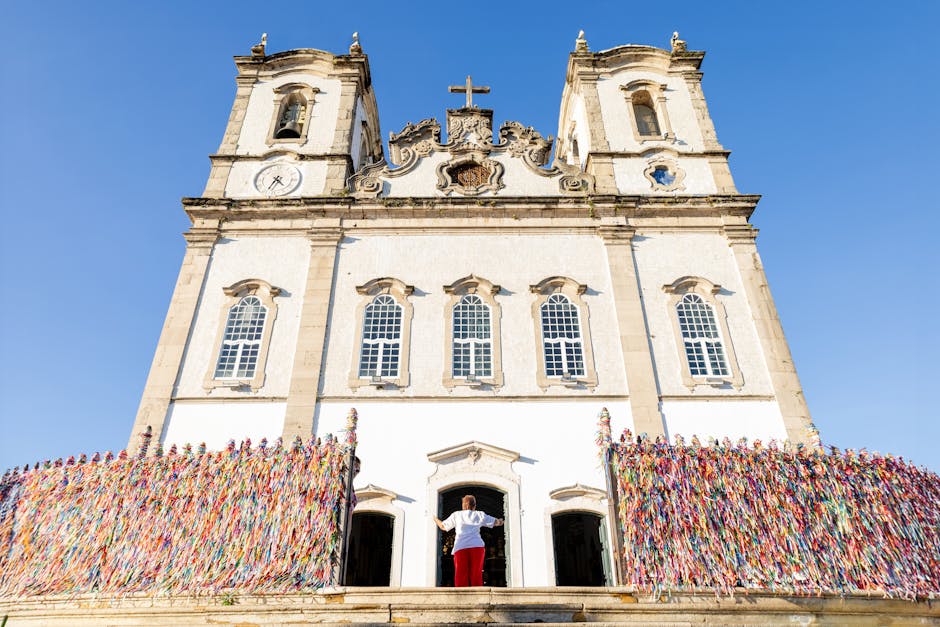
Religion in Salvador isn’t something confined to a Sunday morning or a specific building; it is the oxygen of the city. While the skyline is famously dotted with 365 churches—one for every day of the year—the true spiritual engine of Bahia is Candomblé. This is an Afro-diasporic religion brought over by enslaved Yoruba, Fon, and Bantu peoples. For centuries, it was practiced in secret, often hidden behind the veil of Catholicism to avoid persecution. Today, it stands proud. When you visit a Terreiro (a house of Candomblé), you aren’t just entering a place of worship; you are entering a community. The Orixás—the deities who represent the forces of nature—are not distant figures. They are seen as ancestors and guides who walk among the people. Iemanjá, the queen of the sea, protects the fishermen; Ogum, the god of iron and war, clears the paths for the workers; and Oxum, the goddess of fresh water and love, brings sweetness to life. The rituals are a sensory explosion: the rhythmic thrumming of the atabaques (drums), the scent of sacred herbs, and the swirling white lace of the practitioners’ clothing. It is a faith rooted in the earth and the elements, reminding everyone that we are inextricably linked to the natural world. This spiritual backbone provided the strength for the Afro-Brazilian community to maintain their identity through the darkest periods of history. It is a testament to the fact that you can chain a person’s body, but you cannot conquer their spirit if it is anchored by the drums.
The Dance of the Disguised Warrior
Walking through the plazas of the Upper City, you will inevitably hear a metallic, rhythmic twang that cuts through the chatter of the crowds. That is the sound of the berimbau, the primary instrument of Capoeira. To the uninitiated, it looks like a dance—an acrobatic display of kicks, flips, and spins performed within a circle of people called a roda. But to those who know the history, Capoeira is a martial art born from the necessity of freedom. Developed by enslaved people as a way to practice self-defense under the noses of their oppressors, it was cleverly disguised as a folk dance.

If a guard approached, the music would change, the movements would become more rhythmic and less combative, and the ‘fight’ would instantly look like a harmless celebration. There is a profound philosophy in Capoeira: the idea of the ‘malícia’ or ‘mandrake.’ It isn’t about brute strength; it’s about cunning, fluidity, and the ability to find a way out of a tight spot. There are two main styles you’ll encounter in Salvador. Capoeira Angola, championed by the legendary Mestre Pastinha, is slower, more grounded, and focuses on the ritual and the ‘play’ between two people. Capoeira Regional, developed by Mestre Bimba, is faster and more athletic. Watching a roda is a lesson in human connection. The participants don’t hit each other; they dialogue with their bodies. Every movement is a question, and every evasion is an answer. It is a physical manifestation of the resilience of the Afro-Brazilian soul—a reminder that even when your hands are tied, you can still fight with your feet, your mind, and your rhythm.
The Scent of Dendê and the Baiana’s Grace
You cannot talk about the heritage of Salvador without talking about the food, because in Bahia, food is a language of love, memory, and sacred offering. At almost every major street corner, you will find a woman dressed in voluminous white skirts, a headwrap, and layers of colorful beads. This is the Baiana de Acarajé. Her presence is iconic, and her craft is ancient. She sits behind a wooden tray, frying balls of mashed black-eyed pea dough in bright orange dendê (palm oil). The result is the acarajé, a crispy, savory fritter split open and stuffed with vatapá (a creamy paste made from bread, shrimp, and coconut milk), caruru (okra stew), and dried shrimp. This dish isn’t just street food; it has its origins in the Candomblé temples as an offering to the Orixá Iansã. The influence of West African flavors is everywhere here. The use of coconut milk, ginger, and peppers creates a flavor profile that is distinct from the rest of Brazil. Then there is the Moqueca Baiana, a slow-cooked fish stew that is perhaps the most soulful meal you will ever eat. It is cooked in a traditional clay pot, which retains the heat and allows the flavors of the cilantro, onions, and dendê to meld into something transcendent. Eating in Salvador is a communal act. It’s about the ‘tempero’—the seasoning—not just of the food, but of the spirit. It reflects a culture that knows how to take humble ingredients and turn them into a feast fit for royalty.
The Rhythms of Resistance and the Blocos Afros
While many people think of Brazil’s Carnival as a sea of feathers and sequins in Rio de Janeiro, the Carnival in Salvador is a completely different beast. It is a political statement, a celebration of blackness, and a massive street party fueled by the sound of the ‘Blocos Afros.’ Groups like Olodum and Ilê Aiyê were formed as a way to reclaim the African heritage that was often marginalized in mainstream Brazilian society. Before these groups existed, the black population was largely excluded from the grand Carnival parades. In response, they created their own. They took to the streets with hundreds of drummers, creating a sound known as samba-reggae—a fusion of traditional Brazilian rhythms with the soulful, politically charged vibes of Caribbean reggae.

When you stand in the middle of a street where five hundred drummers are playing in unison, the vibration doesn’t just hit your ears; it shakes your ribs. It is a thunderous, collective roar of ‘we are here.’ Ilê Aiyê, specifically, is known as the ‘Curuzu’s World Mais Belo’ (the most beautiful world of Curuzu) and only allows black members to parade in its main wing, a deliberate move to foster pride and self-esteem in a society that still grapples with the ghosts of its colonial past. The lyrics of their songs aren’t just about partying; they tell stories of African kings and queens, the fight against racism, and the beauty of dark skin. This is heritage in its loudest, most unapologetic form.
A Living Museum Under the Tropical Sun
It would be a mistake to treat Salvador as a museum or a relic of the past. The heritage here isn’t trapped in textbooks; it is written on the walls in the form of vibrant street art and spoken in the slang of the youth in the ‘periferias’ (outskirts). In recent years, a new generation of Bahian artists, musicians, and activists has been finding innovative ways to bridge the gap between tradition and modernity. You see it in the fashion—young designers using traditional African prints to create high-concept streetwear. You hear it in the music—producers mixing the sacred beats of Candomblé with electronic bass and hip-hop. There is a palpable sense of agency in Salvador right now. People are no longer just ‘preserving’ their culture; they are evolving it. The city’s history is heavy, marked by the scars of the largest slave port in the Americas, but the people of Salvador have a remarkable ability to transform pain into beauty. They don’t ignore the past; they wear it, they dance it, and they cook it. This is why the city feels so authentic. It doesn’t put on a show for tourists; it simply lives its truth, and you are invited to witness it. Whether it’s the quiet dignity of a mother of saint tending to her garden or the explosive energy of a teenager practicing backflips on the beach, the Afro-Brazilian soul is a kaleidoscope of experiences that all point toward the same thing: the power of belonging.
The Unending Song of the Bay
As the night falls and the heat finally begins to break, the city doesn’t go quiet. The bars in Rio Vermelho start to fill up, the sound of ice clinking in caipirinha glasses mingles with the ambient noise of the city, and somewhere, someone is always playing a guitar. To experience Salvador is to realize that heritage is not a static thing we inherit; it is a choice we make every day to remember who we are and where we came from. It is found in the ‘axé’—a word that means many things: a greeting, a wish for good luck, and the life force that flows through all things. When someone says ‘Axé’ to you in Salvador, they aren’t just saying hello. They are recognizing the divine energy within you. That is the ultimate legacy of this city. It is a place that teaches you how to stand tall against the wind, how to find rhythm in the chaos, and how to celebrate life with a fervor that borders on the sacred. You leave Salvador with more than just photos; you leave with a bit of that gold light tucked away in your chest, a reminder that the soul is meant to be expressed, shared, and above all, lived with everything you’ve got.