
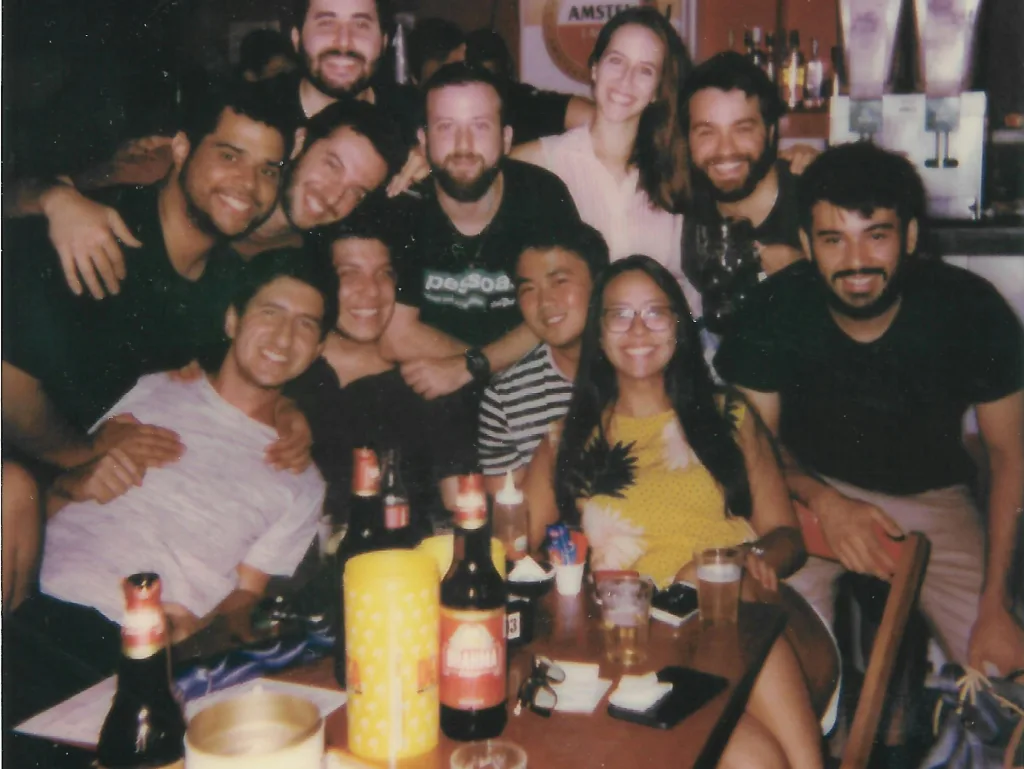
Imagine a place where conversations flow as naturally as ice-cold beer, where strangers become friends within minutes, and where simplicity transforms into pure social magic. This place exists and has a name: boteco. But have you ever wondered about the origins of botecos in Brazil and how these small establishments became so fundamental to Brazilian cultural identity?
The story of Brazilian botecos is a fascinating journey that blends immigration, urbanization, and the genuine human need to find a space for socializing. To truly understand Brazil, it’s impossible to ignore these small temples of conviviality that dot every corner of the country.
From Portuguese Taverns to the First Botecos
The origins of botecos in Brazil date back to the colonial period, when the Portuguese brought with them the concept of taverns and tabernas. These early establishments primarily served wine and aguardente, functioning as meeting points for merchants, travelers, and port workers.

During the 18th century, in major cities like Rio de Janeiro, Salvador, and Recife, the first establishments that we can consider ancestors of modern botecos emerged. They were small businesses that sold alcoholic beverages, especially the famous cachaça, and offered simple snacks to accompany the drinks.
The term “boteco” has controversial origins. Some historians believe it derives from the word “botica,” which designated small shops that sold a bit of everything, including beverages. Others argue it comes from the French “bistrot” or Italian “bottega,” words that arrived in Brazil through European immigrants.
The true essence of these early establishments lay in their democratic nature – spaces where social barriers dissolved over shared drinks and simple food, creating the foundation for what would become a uniquely Brazilian institution.
The Immigrant Revolution: 19th and 20th Centuries
The real boom of Brazilian botecos occurred between the 19th and 20th centuries, driven by major migratory waves. Italian, Portuguese, Spanish, and German immigrants brought their traditions of small family establishments, adapting them to the tropical climate and local customs.
In São Paulo, Italian immigrants opened small cantinas that served homemade wine and simple dishes. In Rio de Janeiro, the Portuguese established tascas that became meeting points for the Lusitanian community. These establishments gradually became Brazilianized, incorporating local ingredients and adapting to national tastes.
Cachaça became the signature drink of these places, gradually replacing imported wine. Along with it came the first typically Brazilian petiscos (bar snacks): torresmo (crispy pork rinds), linguiça acebolada (sausage with onions), bolinhos de bacalhau (codfish fritters), and pastéis (fried pastries).

The immigrant influence created a unique fusion of European tavern culture with Brazilian tropical lifestyle, resulting in establishments that were simultaneously familiar to newcomers and authentically local to native Brazilians.
The Golden Era: Botecos in the First Half of the 20th Century
During the first decades of the 20th century, botecos experienced their golden age. The accelerated urbanization of major Brazilian cities created demand for accessible and democratic socializing spaces. Unlike exclusive elite social clubs, botecos welcomed workers, intellectuals, artists, and bohemians alike.
In Rio de Janeiro, neighborhoods like Lapa, Santa Teresa, and Copacabana buzzed with botecos that became legendary. It was common to find samba musicians, writers, and journalists sharing the same counter, creating an effervescent cultural atmosphere.
In São Paulo, botecos spread through working-class neighborhoods like Brás, Mooca, and Bixiga, serving as refuges for factory workers after long shifts. Bela Vista became famous for its botecos frequented by theater and music artists.
This period established many of the rituals and traditions that define boteco culture today: the after-work gathering, the animated political discussions, the spontaneous musical performances, and the sense of community that transcends social boundaries.

Unique Characteristics of Brazilian Botecos
What makes botecos unique on the world stage is their ability to democratize pleasure. Unlike sophisticated bars or formal restaurants, the boteco is genuinely inclusive. Here, an executive can share the counter with a construction worker, united by the same ice-cold beer and the same crispy torresmo.
The typical architecture of Brazilian botecos is also fascinating. They usually occupy corners, with large open windows that blur the line between internal and external space. The marble or granite counter, colorful plastic chairs, the always-visible beer cooler, and the television tuned to football compose the classic setting.
Boteco cuisine developed organically, prioritizing simple, flavorful dishes that harmonize perfectly with alcoholic beverages. Coxinha (chicken croquettes), bolinho de bacalhau (codfish balls), dadinho de tapioca (tapioca cubes), picanha na chapa (grilled sirloin), and caldinho de feijão (bean broth) became indispensable classics.
The serving style is equally distinctive – food arrives quickly, portions are generous, and the atmosphere encourages lingering conversations rather than rushed dining.
The Boteco as a Social Phenomenon
More than simple commercial establishments, botecos became fundamental social institutions in Brazilian culture. They function as informal community centers where information is exchanged, business is conducted, friendships are cultivated, and political life is debated.
During the military dictatorship (1964-1985), many botecos served as spaces of cultural resistance, where artists and intellectuals gathered to discuss art, politics, and society. The apparent informality of these places offered natural protection against official surveillance.
The Brazilian “happy hour” tradition, which primarily takes place in botecos, created a unique social ritual. After work, groups of colleagues head to the nearest boteco to “have one” and decompress from the day’s tensions. This practice strengthens social bonds and creates community support networks.
The boteco becomes a space where Brazilian democracy is practiced daily – not in the formal political sense, but in the genuine interaction between people from all walks of life, united by shared experiences and common humanity.
Regional Evolution: Each Region, Its Style
The origins of botecos in Brazil gained distinct regional characteristics, adapting to local ingredients and specific cultural traditions. In the Northeast, botecos incorporated seafood and regional spices, creating petiscos like macaxeira com carne de sol (cassava with sun-dried meat) and dadinho de tapioca.
In the South, German and Italian influence is evident in botecos that serve linguiça colonial (colonial sausage), polenta, and craft beers. The North Region developed a boteco culture that serves Amazonian fish like tucumã, açaí, and tacacá.
In Minas Gerais, botecos became famous for their hearty tira-gostos (appetizers) and artisanal cachaça. Pão de açúcar (sugar bread), torresmo, and queijo minas (Minas cheese) are mandatory presences in Minas botecos.
Each region’s adaptation reflects the broader Brazilian genius for cultural synthesis – taking universal concepts and making them distinctly local through ingredients, preparation methods, and social customs.
Modernization Without Losing Essence
In recent decades, Brazilian botecos underwent a modernization process that respected their essential characteristics. New establishments incorporated contemporary concepts of gastronomy and design but maintained the informality and accessibility that define the authentic boteco.
The movement to valorize Brazilian cuisine elevated many typical boteco dishes to haute cuisine status. Renowned chefs began reinterpreting classics like bolinho de bacalhau and coxinha, creating sophisticated versions without losing the original soul.
Brazilian craft beer found the perfect environment to develop in modern botecos. Many establishments began offering local labels, creating a new beer culture that combines tradition and innovation.
This evolution demonstrates the boteco’s remarkable adaptability – embracing change while preserving core values of accessibility, community, and authentic Brazilian flavor.
Famous Botecos and Their Stories
Some botecos became true urban legends, accumulating decades of stories and memorable characters. Bar Luiz in Rio de Janeiro, founded in 1887, is considered the oldest operating boteco in the city. Its walls have witnessed conversations by writers like Machado de Assis and Lima Barreto.
In São Paulo, Bar do Alemão in Bixiga has maintained the tradition of hearty petiscos and welcoming atmosphere for decades. Filial in Pinheiros became a reference for modernizing the boteco concept without losing its democratic essence.
Armazém do Campo in Belo Horizonte exemplifies how Minas botecos manage to combine culinary tradition with a relaxed environment. Its generous tira-gostos and selection of artisanal cachaças attract both locals and tourists.
These legendary establishments serve as living museums of Brazilian culture, preserving not just recipes and traditions, but the stories and memories of countless patrons who have found community within their walls.
The Boteco in the Digital Age
The digital era brought new challenges and opportunities for Brazilian botecos. Delivery apps allowed classic petiscos to reach customers’ homes, especially during the COVID-19 pandemic. However, the social essence of the boteco – the encounter, conversation, spontaneity – remains irreplaceable.
Social media helped promote traditional botecos and discover new establishments. Gastronomic influencers began valuing the authenticity of botecos, contrasting with the artificiality of many modern restaurants.
Despite technological advances, the fundamental appeal of botecos lies in their analog nature – the unmediated human connection, the spontaneous conversation, the serendipitous encounter that no digital platform can replicate.
Cultural and Economic Impact
Botecos represent a significant portion of the Brazilian economy, generating millions of direct and indirect jobs. More important than numbers, however, is their role in preserving national culture and maintaining the social fabric of communities.
These establishments function as guardians of culinary traditions, keeping alive recipes passed down through generations. Many dishes now considered Brazilian gastronomic heritage were born and developed in botecos.
Brazilian music also owes much to botecos. Samba, choro, MPB (Brazilian Popular Music), and other genres found the ideal environment in these spaces to develop and popularize. Samba circles in botecos continue to be breeding grounds for new talent.
The cultural impact extends beyond food and music to language, social customs, and the very Brazilian way of relating to others – with warmth, informality, and genuine interest in human connection.
The Future of Botecos
Looking to the future, Brazilian botecos face challenges like urban gentrification, changing consumption habits, and economic pressures. However, their capacity for adaptation, demonstrated over centuries, suggests they will continue evolving without losing their essence.
New botecos incorporate sustainability concepts, offering organic and local ingredients. The valorization of national culture and the slow food movement favor establishments that prioritize quality and authenticity over speed and standardization.
The origins of botecos in Brazil teach us that these spaces are much more than simple bars or restaurants. They are living manifestations of Brazilianness, places where the country’s cultural diversity meets and celebrates itself daily. For any visitor who wishes to truly understand Brazil, a visit to an authentic boteco is absolutely essential.
Understanding the history and evolution of botecos is diving into the Brazilian soul itself, where simplicity and sophistication, tradition and modernity, individual and collective harmoniously meet in each sip of ice-cold beer and each bite of well-seasoned petisco.