
April is one of those quietly excellent months for Ouro Preto. The heavy holiday crowds of peak season have usually thinned out, the summer rain starts easing, and the historic hills often sit under those crisp Minas Gerais skies that make the town look almost painted. If you want to experience one of Brazil’s most important colonial cities without rushing shoulder to shoulder through every square and church, April fits beautifully.
Ouro Preto rewards travelers who like places with layers. The streets are steep, the churches are elaborate, the past feels close enough to touch, and the food leans into the kind of Minas Gerais comfort that makes a rainy afternoon feel like a gift rather than a problem. April gives you a good balance: the weather still feels pleasant, but not as intense as the hottest months, and the town is generally easier to enjoy at a slower pace.

Why April works so well for Ouro Preto
Ouro Preto sits in the mountains of Minas Gerais, not far from Belo Horizonte, and its climate changes in a way that visitors notice fast. April falls right after the wettest stretch of summer and just before the drier winter season settles in. That means mornings often arrive bright and fresh, afternoons may still bring a passing shower, and evenings cool down enough to make a light jacket useful. For walking this city, that matters.
The steep cobblestones that define Ouro Preto are beautiful, but they are not gentle on tired legs, especially when wet. In April, the streets are usually less slippery than during the heaviest rain months, and the weather often supports longer walks between viewpoints, churches, museums, and cafés. You still need to pay attention to the hills—this is not a city you casually stroll through in flat shoes—but April reduces some of the friction that can make a first visit feel exhausting.
There is another advantage that matters just as much: the town often feels more local. Students from the Federal University of Ouro Preto give the city a lively rhythm year-round, but April usually avoids the biggest tourism surges. You get a better chance of hearing the church bells, watching residents go about daily life, and noticing how the historic center functions as a real neighborhood rather than a museum set.
The weather you should actually expect
Travelers often ask about “good weather,” but in Minas Gerais that phrase deserves a little precision. April in Ouro Preto usually brings milder temperatures than the peak summer heat, along with a lower chance of the dramatic downpours that appear earlier in the year. The days remain comfortable for sightseeing, while the nights can feel cool enough for a sweater or light jacket.
Don’t pack as if you’re headed to the beach. Ouro Preto is a mountain town with altitude, and that changes everything. Even when the day feels warm in the sun, shaded streets and high terraces may feel crisp. A compact umbrella still earns its place in your bag, because an isolated shower is never impossible. Comfortable walking shoes matter more than anything else. The streets are uneven, shiny in places, and often steep enough to punish poor footwear within an hour.
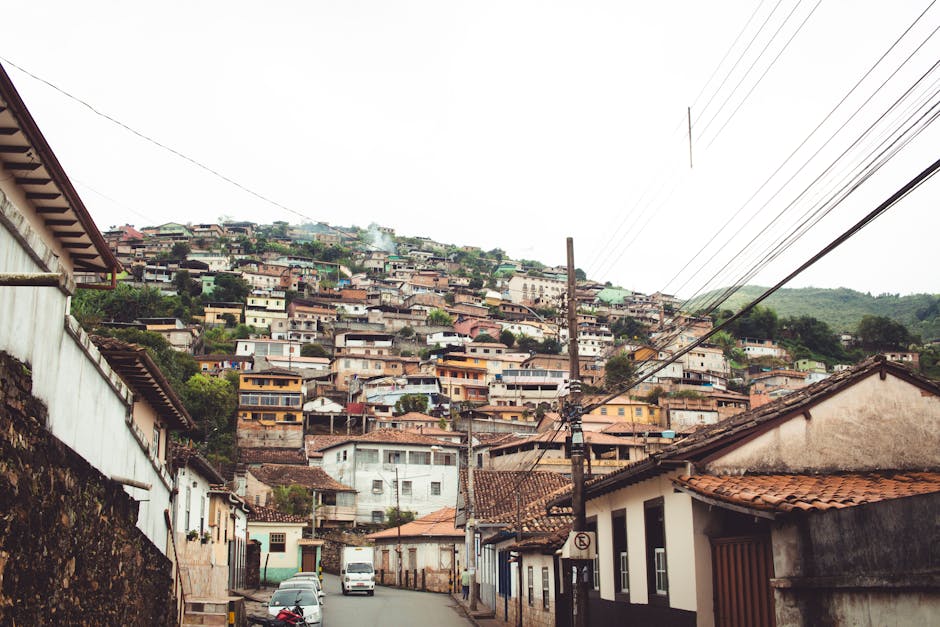
Clearer skies also mean the city’s viewpoints become especially rewarding. Ouro Preto is famous not only for its churches and museums but for how dramatically it sits across the hills. When the air is clean after a rain or on one of those bright April mornings, you get long views over tiled rooftops, church towers, and the surrounding mountains. The town’s color palette—white façades, dark stone, gilded altars, blue sky—shows up at its best.
Walking into Brazil’s gold rush past
Ouro Preto was once called Vila Rica, and that old name tells you plenty. The city grew during the gold rush in colonial Brazil, when wealth from the region transformed the settlement into one of the Portuguese Empire’s most important centers in South America. That legacy remains visible everywhere: in the churches, the plazas, the slopes, the carved woodwork, and the way the city still wears its 18th-century structure.
For many foreigners, Ouro Preto becomes the first place where the colonial period in Brazil stops feeling abstract. You see how wealth, religion, slavery, and imperial power all intersected here. The city’s ornate churches were funded in a colonial economy built on extraction and human exploitation. That history sits behind the beauty. A visit feels richer when you keep both truths in mind at once.
One of the most striking things about Ouro Preto is that its historic center is not a flat, orderly grid. The town rose organically on hillsides, and that shape gives it an irregular, dramatic energy. Streets bend, climb, and drop without apology. You don’t just pass through history here; you physically work through it. That makes the city feel immersive in a way that many more polished heritage destinations do not.
April is a strong month for this kind of exploration because the experience is less rushed. You can step into a church, sit for a while, return to a viewpoint, and not feel as though the whole town is overflowing with day-trippers. There is room to absorb the scale of the place.
Churches, altars, and the artistry that defines the town
Ouro Preto’s churches are famous for a reason, and no first visit should skip them. They are not simply religious spaces; they are some of the clearest expressions of Brazilian colonial art and the power structures of the era. Their interiors often combine carved wood, gold leaf, painted ceilings, and a sense of theatrical devotion that still surprises visitors used to more restrained European church design.
Church of Saint Francis of Assisi is usually at the top of the list. Designed with contributions associated with Aleijadinho, one of Brazil’s most celebrated colonial-era artists, it represents the artistic ambition of the town at its height. The façade, the stonework, and the interior details make it an essential stop. Even if you have seen photographs before, the actual space carries more texture and depth than pictures suggest.
Our Lady of the Pilar Church is another major stop, especially for visitors interested in the sheer abundance of decoration. Ouro Preto’s churches often feel astonishingly rich inside, and Pilar’s interior is a textbook example of that gold-heavy Baroque and Rococo visual language. It is beautiful, but it also invites questions: where did the wealth come from, who built this, and what labor made it possible?
Our Lady of the Rosary of Black Men Church adds another essential layer to the city’s story. The irmandades, or brotherhoods, of enslaved and free Black people had a profound role in colonial religious life. Visiting this church places Black history squarely inside Ouro Preto’s religious and social fabric, which matters because too many colonial narratives erase that dimension. The city becomes more honest when you include it.

Museums that make the past feel less polished
April’s gentler pace gives you time to visit museums properly, and Ouro Preto deserves that slower approach. The city’s museums do more than display artifacts; they help connect the elegant exterior of colonial architecture to the harder realities underneath it. If you only rush through the center, you miss that tension.
Casa dos Contos stands out for anyone curious about economics, taxation, and the colonial system that shaped the region. The building itself is historic, and the exhibits help explain the machinery behind gold extraction and circulation. That context deepens a visit because Ouro Preto’s beauty is inseparable from the colonial economy that produced it.
Inconfidência Museum is equally important. The Inconfidência Mineira movement occupies a central place in Brazilian historical memory, tied to the colonial revolt against Portuguese rule and to figures such as Tiradentes. The museum’s collections and setting provide a strong entry point into the political imagination of the era. Foreign visitors often find this one especially valuable because it anchors Brazil’s independence narrative in a specific place rather than a vague national timeline.
Museu da Pharmacia adds a more unusual stop. Housed in a historic pharmacy setting, it offers a window into medicine, science, and daily life in colonial and imperial Brazil. It is the kind of museum that sounds small until you walk through it and realize how much a city’s history lives in practical objects, not just monumental ones.
April makes these visits more pleasant because museum-hopping feels natural when the weather shifts between sunshine and the occasional shower. You can structure your day around an outdoor walk, a church interior, a meal, and then another indoor stop without fighting extreme heat or peak-season crowds.
Where April shines brightest: viewpoints and slow walks
Some cities are best understood in motion, and Ouro Preto belongs to that group. The viewpoints matter almost as much as the landmarks themselves. From above, the city’s shape makes sense: church towers punctuating the hills, tiled roofs packed tightly together, and a green mountain backdrop that reminds you this is a historic city inside a landscape, not separate from it.
The Praça Tiradentes area is a natural starting point, but the real pleasure comes from wandering outward. April’s clearer skies often make these walks especially satisfying in the morning or late afternoon. Light at those hours softens the stone and gives the town a warm glow that photographs well without looking forced.
Look for vantage points where you can pause rather than just snap a picture and move on. Ouro Preto rewards stillness. You notice the rhythm of bells, the sound of shoes on stone, the occasional motorbike passing too close in a narrow lane, the way a child returns from school, the way a church façade changes color as the light shifts. These small things are part of the city’s identity.
If you have time, build your itinerary around one or two longer walks instead of trying to race through every attraction. That approach fits April perfectly. The month lends itself to lingering. The weather is usually cooperative enough to make a slow afternoon feel easy rather than punishing.
Eating well in Minas Gerais
No trip to Ouro Preto feels complete without food that reflects Minas Gerais. The state has one of Brazil’s most beloved culinary traditions, and the city gives you plenty of chances to sample it. This is not the place for rushed meals eaten between attractions. Minas food rewards people who sit down and let the plate do its work.
Look for dishes built around rice, beans, slow-cooked meats, collard greens, pork, and the cheeses that Minas Gerais is famous for. Tropeiro beans are a classic regional choice and often appear in substantial portions. Pão de queijo belongs at breakfast or as a snack, but in Minas it rarely feels like a snack in the casual foreign sense. It is part of the daily rhythm. Coffee matters too, especially in a state where strong coffee culture shapes everything from hotel breakfasts to midafternoon pauses.
For dessert, doce de leite and sweets made from local fruit often appear on menus with a kind of quiet confidence. They do not need reinvention. They just need to be good, and in Minas Gerais, they often are. If you visit a traditional restaurant in April, the cooler weather makes richer dishes especially appealing. A heavy lunch feels less like a mistake and more like the correct response to a walking-heavy day.
Pay attention to the atmosphere of the place where you eat. In Ouro Preto, many restaurants occupy historic buildings or sit close to old façades and sloping streets. That setting adds to the experience, but it also means you may be climbing stairs before or after lunch. Build in time. Brazil rewards unhurried meals, and Ouro Preto seems to know that better than most places.
April events, student energy, and a different side of the city
Ouro Preto is not frozen in the past. The university brings a younger current into the city, and that energy changes how the town feels outside the pure tourist circuit. April is a good month to notice it. Cafés, bars, and public spaces often carry a mix of locals, students, and visitors, which makes the city feel lived-in rather than staged.
Depending on the year and the calendar, April may also intersect with Easter period activities or other local religious observances. In a city with such strong Catholic heritage, church calendars still shape public life more than many foreign visitors expect. Even when you are not timing your visit around a specific festival, it is worth paying attention to what is happening in the churches and squares. Religious tradition remains visible here in a way that feels woven into the urban fabric.
Nightlife, for travelers who stay after dark, is often tied to the student scene. You do not come to Ouro Preto for a flashy nightlife district; you come for bars with character, conversation, and a town that becomes quieter but not dead once the day-trippers leave. In April, the nights are generally comfortable enough for an after-dinner walk or a drink without the sticky humidity that can make Brazilian summer evenings feel heavy.
Getting there and moving around without stress
Most foreign travelers reach Ouro Preto through Belo Horizonte, which is the nearest major city and a practical base if you are combining the trip with other parts of Minas Gerais. From there, buses and private transfers connect you to Ouro Preto. The journey is manageable, and April weather usually helps by making roads and transfers less tiring than they might be during heavy summer rain.
Once in town, assume you will walk a lot. That is not a problem; it is the point. But do not underestimate the hills. If you have any mobility concerns, plan your route carefully because the historic center is beautiful but demanding. Some streets are steep enough that you will want to save energy for the parts of the day that matter most to you. Taxi and ride-hailing options may help for longer hops, but the town’s character reveals itself best on foot.
Pack light and practical. A day bag, water, sunscreen, a compact umbrella, and proper walking shoes cover most situations. April sun can still be strong, especially at altitude, and the reflection off pale walls adds brightness. If you are shooting photos, a lens cloth helps more than you might think after a short shower or a dusty walk.
How to read the city a little more deeply
One of the best ways to enjoy Ouro Preto in April is to leave room for the city’s contradictions. This is a place of extraordinary beauty and difficult history. Its churches dazzle, but they were built within a system of inequality. Its streets charm visitors, but those same slopes shaped daily life for generations of residents, workers, enslaved people, clerics, merchants, and students. Its monuments celebrate colonial power while also preserving the memory of resistance.
Travelers often arrive wanting a picturesque historic town and leave with a more complicated understanding of Brazil’s colonial past. That is a good outcome. Ouro Preto gives you a chance to see how architecture, religion, politics, and labor all sat together in one mountain city. April provides the right setting for that kind of visit because the calmer pace lets those layers surface naturally.
Take your time in the churches. Read the plaques. Stop at the museums. Ask questions if you are visiting with a guide. Eat the regional food slowly. Look out over the rooftops when the light starts to soften late in the afternoon. These are simple things, but they reveal why Ouro Preto matters so much in Brazilian history and why the city keeps drawing travelers who want more than a pretty backdrop.
April does not turn Ouro Preto into a different city. It simply gives you a clearer, more breathable version of the one that already exists. The skies open up, the crowds relax, and the colonial center feels more available for real attention. For a foreign visitor trying to understand Brazil beyond the obvious coastal postcard, that combination is hard to beat.