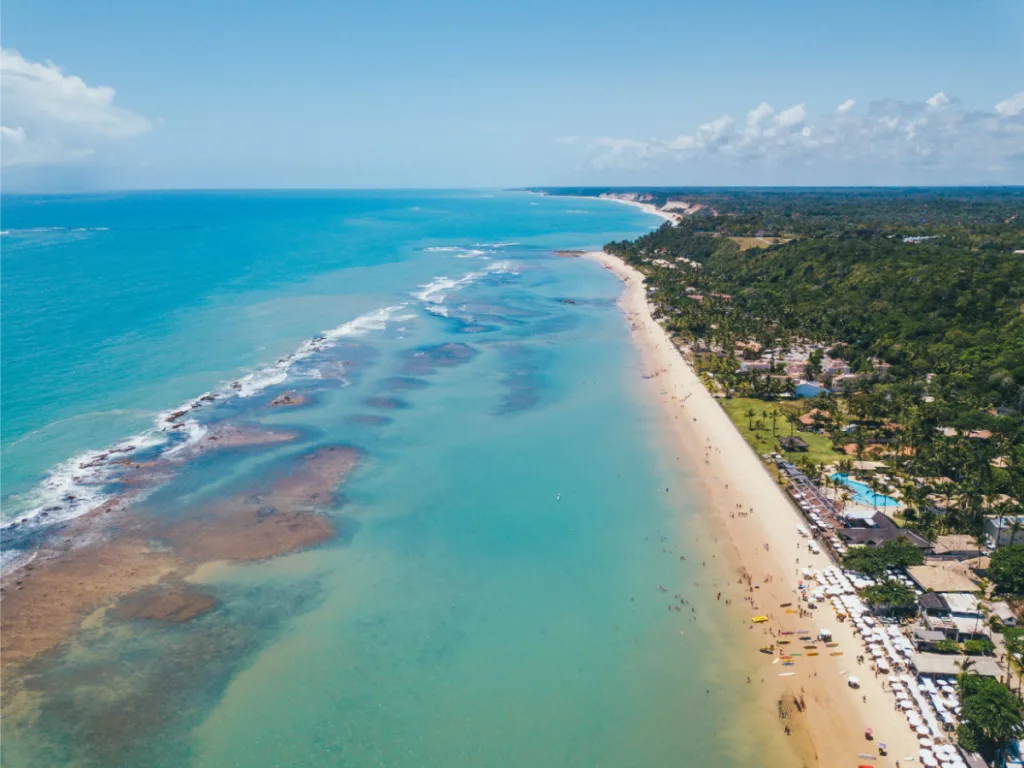


Sand is personal space: how Brazilians claim their spot
On Brazilian beaches, a patch of sand is treated like an extension of the home. People arrive early, lay a towel or bring a low chair, and orient themselves to family and friends rather than toward the water. Placing your items close to where you want to sit—without spreading across someone else—signals respect. Avoid staking out a large area with multiple umbrellas if the beach is busy; Brazilians expect an efficient, considerate use of space.
Dress codes that differ from your home beach
Swimwear style varies widely across Brazil. On most Atlantic beaches you’ll see everything from modest one-pieces to skimpy bikinis and, in some regions, thong bottoms. Men commonly wear tight, short trunks rather than long board shorts. If you’re visiting a conservative religious area or a family-oriented beach, opt for slightly more coverage when leaving the sand or walking through nearby towns.
Quick packing checklist
Bring reef-friendly sunscreen, a light cover-up for sun protection, a hat, and a reusable water bottle. If you plan to rent a chair or umbrella, carry some small bills; those transactions are usually cash-based. A waterproof pouch for your phone and ID saves headaches when pockets fill with sand.
How free vendors and services work
Street vendors, snack sellers, and folks offering chairs or massages are a normal part of beach life. Saying no once is enough; persistent haggling or ignoring someone repeatedly feels rude. If you buy something, pay the agreed price promptly. Tipping is appreciated for table service, hair braiders, and masseurs—leave a few reais as a gesture when the worker goes out of their way.
Water safety and local signals
Brazilian beaches use colored flags and sometimes rescue towers to communicate water conditions. Red flags mean dangerous currents or swimming prohibited. Yellow signals caution—swim with care—and green means calm water. If lifeguards are present, follow their directions without debate. Strong rips and undertows are common near river mouths and rocky outcrops even on sunny days; if locals avoid a spot, follow suit.
Loud music, bonfires, and nighttime behavior
Beach parties are part of the culture, especially toward sunset. Small groups playing acoustic guitars and sharing food are welcomed; large, amplified speakers can be invasive. If you want to play music, keep volumes modest and watch for signs that neighbors want quieter surroundings. Open fires aren’t allowed on every stretch—check local signs or ask a nearby vendor before lighting one. After dark, stick to well-lit areas and stay near crowds when possible.
Alcohol and public drinking
Public drinking is widely accepted on many beaches, yet producing a respectful atmosphere matters. Don’t leave glass bottles on the sand; use plastic or recycle containers. If you drink, watch your belongings—pockets and towels left unattended are easy targets. Authorities sometimes crack down on excessive public intoxication, especially during holidays.
Conversation, flirting, and social boundaries
Brazilians are warm and talkative, often striking up conversations with strangers. Smile, return friendly banter, and offer a brief introduction. That said, personal questions about money or intimate matters are intrusive unless you’ve built rapport. Physical compliments are common, but persistent or aggressive flirting crosses a line quickly. If someone makes you uncomfortable, be direct: say “Não, obrigado” (No, thank you) and move spots.
Keeping the beach clean—and why it matters
Trash bins may be limited. Carry out what you carry in. Many communities run informal beach-cleaning efforts; joining a quick five-minute pickup will earn gratitude and a local high-five. Avoid stepping on dunes and native plants; they stabilize the coastline. If you encounter discarded fishing line or hazardous debris, alert a nearby vendor or lifeguard so they can remove it safely.
Respecting local wildlife and reef areas
Sea turtles, shorebirds, and small crabs share the shoreline. Don’t disturb nesting areas—look for marked zones and keep distance. If you plan to snorkel or dive over reefs, avoid standing on coral. Touching marine life stresses animals and damages delicate ecosystems. Many tour operators follow strict conservation rules; pick one that mentions low-impact practices.
Transport, parking, and what to expect at peak times
Roads to popular beaches clog on weekends and holidays. Arrive early, or take public transport to save time and hassle. If you must park on the street, follow local signage and use secure lots where available. Vendors will often offer directions to quieter stretches—asking a trusted seller can help you discover calmer spots without the crowds.
Useful Portuguese phrases that smooth interactions
Learn a few short phrases: “Bom dia” (good morning), “Obrigado/Obrigada” (thank you—men say obrigado, women say obrigada), “Por favor” (please), and “Quanto custa?” (how much?). For declining politely: “Não, obrigado.” If you need help: “Você pode ajudar?” A little Portuguese goes a long way and leads to friendlier exchanges.
When you’re unsure, follow local cues
Observe before acting. Watch how families set up, how vendors approach, and how swimmers behave. Mimicking local patterns avoids awkwardness and shows cultural respect. If an action feels intrusive—like splashing someone intentionally or hovering near a family—step back and choose another spot to enjoy the sand.
Final practical tips for a smooth beach day
Charge an extra battery for your phone, carry small bills in a separate pouch for quick purchases, and pack a lightweight bag for wet clothes. If your towel isn’t weighted, place a small stone on a corner during wind. Remember that each beach has its own rhythm; learning it quickly turns a good visit into a memorable one.