
The first time I crouched under a low red overhang and saw a line of tiny painted figures—stylized humans with spears, big-eyed animals that look like stylized deer—I felt the peculiar chill you get when something older than language looks back at you. The paintings were not behind glass or behind layers of sterile interpretation; they were on raw stone, miles from a city, in a landscape scraped by wind and sun. You can feel the hand that painted them.
Why Serra da Capivara matters (and why you should care)
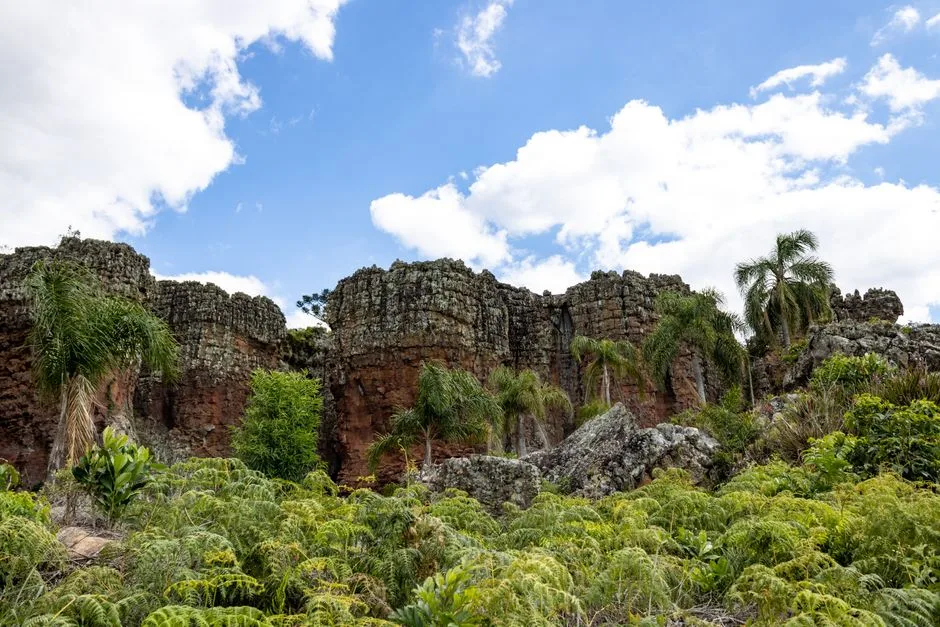
Serra da Capivara National Park sits in Piauí, in Brazil’s dry northeast. For travelers who think Brazil equals Rio beaches and Amazon jungles, this park is a different country entirely: dry caatinga scrub, sandstone ridges, and a scattering of rock shelters whose walls are covered with ancient paintings. Archaeologists and local guides point to these panels as evidence of human occupation of the Americas that is older—and more continuous—than many casual histories allow. That alone makes Serra da Capivara one of the must-see cultural sites in Brazil.
But this place is not just for specialists. If you love quiet travel, slow discovery, and the slightly unsettling intimacy of ancient pictures done by hands that never met a map, you’ll love being here. The rock art is bold and immediate: hunting scenes, dancing figures, large animals, and abstract marks rendered in red, ochre, white and sometimes black pigments that have survived centuries of sun and the acidic bite of the semi-arid climate.
How the art sits in the landscape
The paintings are not hung in galleries; they live in shelters and under cliff overhangs where sheltering rock protects pigment. Walk a few steps and the sun refashes. Walk twenty meters more and you are in a different panel with a different mood—sometimes an entire narrative strip. Many scenes are fragmentary; some panels are spectacularly whole. I remember a set of tall, elongated figures facing a line of small animals, a story that stubbornly refuses to be explained away.

Getting there—the logistics that actually matter
You’ll almost certainly base yourself in São Raimundo Nonato, the small town that serves as the park’s gateway. There’s a modest museum there, the Museu do Homem Americano, which does a good job explaining the archaeology and showing excavated artifacts. It’s run by people who know the work and the landscape—don’t skip it. Beyond the museum, infrastructure is basic: simple pousadas, a handful of restaurants, and services designed for travelers who are comfortable with low-key travel.
Most international visitors fly into Brasília, São Paulo, or Salvador and connect domestically to Teresina or other regional hubs before making the overland trip. Expect the transfer from Teresina to São Raimundo Nonato to feel long; it crosses dry, empty spaces. Local tour operators and the park’s visitor services can arrange pickups. If you rent a car, use a small, sturdy vehicle. Roads inside the park are often unpaved and can be challenging in the rainy season.
Best time to visit and what to pack
Dry season months—roughly May through October—are the easiest for hiking and seeing paintings. The trails get muddy and the streams rise during summer storms, which makes some sites harder to reach. Mornings are cool and sharp; afternoons are hot. Pack strong sun protection: a wide-brim hat, long sleeves, and good sunscreen. Bring plenty of water—there are long stretches between services. Sturdy walking shoes or light boots are better than sneakers; some terrain is rocky and uneven.
On-site etiquette: how to look without damaging
These paintings survived for millennia because people respected the rock. You should do the same. Don’t touch pigments—the oils on skin are corrosive. Stay on marked trails and follow your guide. Flash photography is discouraged at many sites because it can accelerate pigment deterioration. Most important: the panels are fragile. The park regulates visitor access to sensitive shelters; sometimes a guide will need to crouch near the painting to describe details rather than let a group swarm close.
Guides are not optional
Hire a park guide. Not because the panels are dangerous, but because a guide locates small, easily-missed figures, interprets scene composition, points out motifs that return across different sites, and keeps you from making environmentally harmful mistakes. Guides also know the behavioral and seasonal patterns of wildlife and the safest paths over sandstone ridges. Local guides are usually residents of São Raimundo Nonato or nearby villages; hiring them supports the local economy and creates a relationship that helps protect the sites.
Reading the rock art: what the paintings show
When you stare at a painted panel you’ll notice some persistent themes. Human figures are frequent; they’re often schematic—stick-like bodies, round heads, legs spread as if in motion. Hunting scenes are common too: figures with spears, humans surrounding large game, sometimes animals shown with entrails exposed. Some panels depict ritual scenes: dancers, masked figures, or people carrying objects. There are also abstract motifs—dots, concentric circles, zigzags—that may encode social or cosmological meanings we only partially understand.
One of the surprises for visitors is how modern some of the compositions feel. There’s an economy of line that communicates movement cleanly and deliberately. In other places the pigments are layered: one image painted over another, evidence of many generations using the same shelter over thousands of years.
Animals, symbols, and storytelling
Fauna in the paintings includes recognizable species like deer and peccary, as well as animals that some researchers identify as large cats or now-extinct megafauna. Interpreting animals is a careful exercise; time, stylistic variation, and pigment fading complicate identification. What matters more for a visitor is the sense of story: hunting scenes showing strategy, groupings of figures that imply social relationships, and the repeated use of certain symbols suggest a visual language used over long time spans.
The archaeology beneath the paint
Excavations in rock shelters at Serra da Capivara have produced stone tools, bone fragments, and hearth features. The stratigraphy in some shelters shows long sequences of occupation. Archaeologists debate precise dates—scientific work is ongoing—but even the conservative estimates place human occupation in the park area many thousands of years ago. That’s why UNESCO inscribed Serra da Capivara as a World Heritage Site: the park demonstrates long-term human adaptation to a semi-arid environment and preserves an exceptional record of prehistoric life.
One of the things I appreciate about visiting is how archaeology and on-the-ground interpretation coexist. The Museu do Homem Americano is not a big museum, but it presents excavation photos, tool types, and radiocarbon data in an accessible manner. If you’ve only ever seen prehistoric artifacts in sterile vitrines, seeing the artifacts alongside the shelters where they came from changes the way you think about past human lives.
Research and controversy—keep a curious but critical mind
There have been debates within archaeology about the age of some layers and about how to interpret certain images. That’s normal in a field where new dating techniques and new excavations refine our understanding. Don’t expect the visitor center to hand you final answers; expect it to hand you the evidence and the questions. Good travel is learning how experts argue, not just what they agree about.
Practical walks: trails and what to expect
Trails range from short, accessible walks to half-day hikes that climb rocky ridges for panoramic views. Some shelters are two minutes from the trailhead; others require more effort but reward you with less-visited paintings and more time alone with the panels. Trails can be sandy, then suddenly rocky. Watch your step around painted shelters—the last thing any visitor should do is trample a panel’s protective margins.
If you have limited time, aim for a mix: one well-known site to see carefully preserved, easily-read panels; one smaller, remote shelter where the paintings feel discovered rather than curated. Guides can plan these sequences in a single morning or spread them across two days, depending on your stamina and the heat.

Where to sleep and eat: São Raimundo Nonato basics
São Raimundo Nonato is small and modest—don’t expect boutique hotels or Michelin-star restaurants. That’s part of the charm. Simple pousadas offer clean rooms and friendly service. Local eateries serve northeastern staples: hearty stews, cassava in several forms, rice and beans, and carne de sol prepared in regional styles. Coffee is strong, and breakfast often includes fresh fruit. If you’re fussy about food options, bring snacks for the park days; sometimes the lunch options are basic picnic-style meals arranged by tour operators.
ATMs can be scarce, and credit card acceptance fluctuates in smaller establishments. Carry some cash and confirm payment methods with your accommodation when booking. The town’s scale makes logistics easy—everything is within a short drive or even a walk if your pousada is centrally located.
Community, conservation, and how your visit helps
Local guides, museum staff, and artisans sustain the protection of Serra da Capivara. Entrance fees, guided tours, and purchases of locally made crafts help conserve sites and support families who depend on tourism. The park’s protection also raises land-use questions—balancing local needs and long-term preservation is complicated. For visitors, choosing certified guides and reputable operators is the clearest way to contribute positively.
I like buying hand-painted rock-art inspired prints from a cooperative in town—original work made by artists who live in the region. It’s a direct, meaningful way to support the people who have the most to lose if tourism is careless or exploitative.
Photography ethics
Photographing panels is allowed in many places, but respect restrictions. Don’t use flash where signs forbid it. Avoid standing on ledges to chase a better angle. And if a guide or park sign asks you not to photograph a shelter, don’t argue: there are conservation reasons you won’t find on the surface.
Day trips and nearby surprises
Beyond the park’s best-known shelters, the Piauí interior is full of surprises. Small ruins, rock formations and quieter villages dot the roads. If you have extra days, ask your guide about off-the-beaten-track shelters that require a longer hike but reward you with solitude and the sense that you are joining a very small number of people to see a very old thing.
For travelers with more time, combine Serra da Capivara with a slow route through the interior: visit other Piauí towns, try regional dishes, and learn about the caatinga’s seasonal rhythms. The region is full of musicians, local festivals, and religious traditions that reveal a modern, lived culture as layered as the rock paintings.
What surprised me most
People assume the art is merely decorative or pictorial evidence of hunting. It is that, but it is also a portrait of social life—stories about conflict, cooperation, identity. The human figures are sometimes shown in groups that suggest social structures; other times the focus is ritual. The paintings are not snapshots. They are part of a conversation that spans generations—a conversation that continues in the local communities who live around the park today.
Safety—be sensible, not fearful
Piauí is safe for travelers who take basic precautions. Keep your valuables out of sight in São Raimundo Nonato, be mindful at bus stations, and avoid driving at night on rural roads. The park itself is remote; bring supplies and confirm pickup times with your guide. Health services in town are limited; if you have a condition that needs quick medical attention, plan accordingly.
A final, crisp piece of advice
If you go, give yourself time. See a major panel with a guide, visit the Museu do Homem Americano, then spend a second morning on a smaller trail where the shelters are quieter. Bring plenty of water, respect the paintings, and budget a little cash for local guides and crafts. The point is not to check a UNESCO box but to feel how long human stories have been painted into that sandstone—how people made meaning where the land looks harsh and everything was a precious resource.
Walk in slowly. Don’t rush the panels. Leave the shelters as you found them. That’s the practical promise you make to the next visitor and to the long list of hands that painted here long before any of our maps existed.