
That morning at Praia Mole — and why I booked a one-way ticket
I opened my laptop, looked past a row of palm trees and realized the Wi‑Fi actually held. The café’s espresso machine hissed like a propeller. A local developer I’d met the night before waved from a table and shouted a hello in broken English. I stayed four months.
People romanticize remote work in Brazil, but those months taught me exactly what matters: stable internet, a SIM card that doesn’t die after one video call, a neighborhood where you can walk to a grocery store at 9 p.m., and a visa situation that doesn’t require living on the edge. If you’re thinking about doing the same — working remotely from Brazil — you’ll want practical answers, not inspirational photos. Here’s a hands‑on guide from someone who moved, worked, and paid rent here for a while.

What the “digital nomad” option in Brazil actually asks of you
Brazil introduced a migration path aimed at remote workers a few years back. At its core, the process is straightforward if you treat it like any other visa application: you must prove your identity, prove you work remotely for a foreign company or run a foreign business, and provide solid proof of income and health coverage. Rules and bureaucracy change, so always check the Brazilian consulate that covers your country before you book a flight.
Typical documentation you’ll be asked for:
- Valid passport (with at least six months’ validity in many cases).
- Proof you work remotely: employment contract, client contracts, or evidence of business ownership linked to clients outside Brazil.
- Proof of stable income: recent bank statements, invoices, or salary slips. The exact amount requested varies by consulate.
- International health insurance or travel insurance that covers you while in Brazil.
- Criminal background check from your home country (apostilled or legalized depending on your consulate’s rules).
- Birth or marriage certificates if you apply with family members.
- Completed application forms and passport photos, plus payment of consular fees.
Processing times vary widely—expect anywhere from a couple of weeks to a few months. If your work is flexible, plan for a buffer. If you need guaranteed immediate entry, apply well before your intended move and avoid trying to convert a tourist stay into a longer-term right to work without clear legal advice.
Applying from abroad vs. switching status inside Brazil
Most people apply at a Brazilian consulate before arrival. Some have attempted to change status while in Brazil as tourists; that route can be messy and depends on local Federal Police interpretations. My rule of thumb: if you plan to be here for more than two months, do the paperwork properly through a consulate. It costs more upfront but saves you the stress of unexpected departures or fines.
Taxes, CPF, and money matters you actually need to handle
Brazil treats tax residency seriously. A general benchmark used by many expats is 183 days in a 12‑month period — if you stay longer than that, Brazilian tax authorities typically consider you a tax resident. That means you should speak to an accountant who knows both Brazilian and your home country’s tax law before you spend the year here. Don’t treat taxes like something to worry about only after you arrive; early advice prevents a nasty surprise.
Getting a CPF and opening bank accounts
CPF is the personal tax ID number Brazilians use for almost every bureaucratic thing: signing a lease, opening a phone line, buying a SIM, setting up utilities, or even ordering food with a local card. You can apply for a CPF through a Brazilian consulate before you travel, or at Receita Federal offices after you arrive. Having one makes daily life dramatically easier.
For banking, many nomads use international fintechs for day-to-day spending and keep a small Brazilian account for local bills and PIX transfers. PIX is the lightning-fast payment system Brazilians use for everything — splitting a dinner bill, paying rent, or transferring money to a private school — and it’s a huge convenience. To use it smoothly, get a local account, link a phone number, and register your CPF.
Health care, insurance, and what to expect in an emergency
Brazil has a public health system (SUS) that anyone can access in emergencies, but waiting times and bureaucracy can be frustrating if you need prompt care. Most foreigners opt for private insurance that covers hospital care and repatriation.
Tip: when you choose a plan, check whether it includes outpatient telemedicine and emergency ambulance coverage. A serious consultation in a private hospital in a big city is fast but costly without insurance. For anything beyond basic first aid, I always wanted a policy that covered transfers and major treatment.
Emergency numbers to keep in your phone: 190 for police, 192 for SAMU (medical emergencies), 193 for fire and rescue. Save the address of the nearest private hospital to where you’re staying — in a crisis, Google maps searches can lose precious minutes.
Connectivity: ISPs, mobile networks, and staying online
Internet stability makes or breaks a remote work stint. In major cities and tourist hotspots you’ll find decent fiber connections and reliable mobile networks. In smaller towns and many beach communities, speeds can dip in the evening when everyone streams a novela.
Mobile operators like Vivo, TIM and Claro sell prepaid plans for visitors; bring your passport when you buy a SIM. If you work heavily on video calls, consider a dual strategy: a stable apartment fiber connection plus a local SIM for mobile backup. eSIMs are gaining traction and can be useful if you want to land with connectivity already in your phone.
Best Brazilian cities to base yourself — honest pros and cons
Pick a city based on the experience you want and the realities of work. Below I break down nine places I’ve lived in or visited on extended trips; these are practical snapshots, not glossy travel blurbs.
Florianópolis — island life with a dev community
Why people move here: beaches within minutes, excellent surf spots, a strong tech scene concentrated around Lagoa da Conceição and north‑island coworkings. The quality of life is excellent if you like outdoor life and seafood markets.
Trade-offs: the island is seasonal — winter (June–August) is quiet, summer gets crowded and accommodation prices spike. Internet in central neighborhoods is reliable; in remote beach coves it can be patchy.
Rio de Janeiro — beaches, neighborhoods, and a higher price tag
Why move: if you want Ipanema sunsets, vibrant culture, and cafes where people actually work. Neighborhoods like Ipanema, Leblon and Botafogo have a mix of coworkings and fast cafés.
Trade-offs: safety and cost. Keep daily routines local and use apps or a trusted local contact to scope neighborhoods. If nightlife and a social scene matter, Rio is extremely rewarding; if calm and quiet are your priority, choose carefully.
São Paulo — for networking and professional life
Why move: São Paulo is the business heart. Variety in coworking spaces, client meetings, and a nonstop restaurant scene. Neighborhoods I recommend for remote workers: Pinheiros, Vila Madalena, and Jardins — each has cafés, grocery stores, and reliable transit.
Trade-offs: noise and longer commutes are real. Apartments tend to be smaller and pricier than in many other Brazilian cities.
Recife and Salvador — cultural depth with lower costs
Recife (Pernambuco) and Salvador (Bahia) offer strong local culture, music scenes, and comparatively lower living costs. Both have growing digital‑nomad communities and reliable cafes for remote work, though the mix of coworkings is smaller than in São Paulo or Rio.
Trade-offs: heat and humidity year‑round, and infrastructure varies block to block. For long stays, scout neighborhoods before signing long leases.
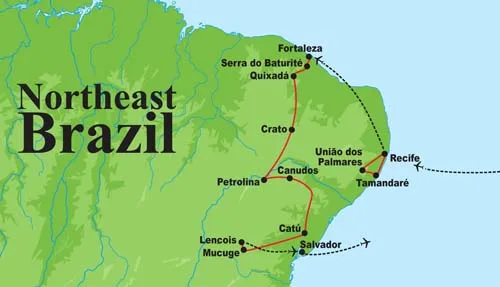
Fortaleza, Natal and coastal northeast towns — sun, kitesurf, cheap grub
Choose these if your life involves beaches and wind sports. Fortaleza and Natal have good tourist infrastructure and plenty of short‑term rental options that are budget friendly.
Trade-offs: fewer coworkings and fewer networking opportunities for corporate roles. If you work in a small international team, it’s fine; if you need frequent in‑person meetings, consider São Paulo or Rio.
Belo Horizonte and Curitiba — inland living with balance
Belo Horizonte (Minas Gerais) and Curitiba (Paraná) offer a slightly quieter pace, strong culinary scenes, and good infrastructure. Internet and public services are solid, and both are well‑connected by flights to other national hubs.
Porto Alegre — southern flavor and European influence
Porto Alegre is a solid option for those who prefer a temperate climate and a slower rhythm than São Paulo. The city has a respectable remote work scene and many neighborhoods with cafés and coworkings.

Where to live within a city — neighborhood pick strategy
Don’t choose a place purely based on price. My neighborhood checklist is short and practical:
- Walkability: at least one supermarket and a pharmacy within a 10–15 minute walk.
- Transit: a metro or reliable bus line for unexpected commutes.
- Wi‑Fi quality: ask the host for upload and download speeds, not just “fast Wi‑Fi.”
- Noise: if you work late, avoid rooms facing busy streets or bars.
- Safety: find a local FB group and ask residents about petty theft hotspots.
Coworking culture and networking with locals
Coworkings range from polished chains to neighborhood cafés that double as remote workspaces. Smaller cities often have one or two well‑run spaces that become social hubs. I learned more about local clients and projects by showing up to a coworking kitchen at 9 a.m. than I did by scrolling LinkedIn for a month.
How to meet people: join local Facebook groups like ‘Digital Nomads Brazil’ or city‑specific groups, check Meetup events for tech and language exchanges, and attend evening happy hours at coworkings. Brazilians are social — don’t be shy about asking to join a table.
Day‑to‑day reality: groceries, food delivery, and living costs
Supermarkets chain across cities; look for Dia, Pão de Açúcar, Carrefour, or local markets. Street markets are a highlight — you can buy fruit, fish, and regional cheese cheaper than an imported supermarket brand.
Food delivery apps (iFood, Rappi, Uber Eats) are ubiquitous. Delivery fees vary and are sometimes waived with promotions. Use local apps — they matter for convenience and speed.
Packing list for a comfortable remote stint
Pack fewer clothes and more chargers. A checklist that saved me time:
- Uninterruptible power strip and a travel surge protector — Brazilian sockets can be different from yours.
- Noise‑cancelling headphones for calls (cafés can be noisy).
- Lightweight Bluetooth speaker for background music in your apartment.
- Portable backup battery and a spare ethernet adapter — some Airbnbs boast “fiber,” but the router may be in another room.
- Copies of key documents (PDFs of passport, visa, insurance, criminal records) saved both locally and in cloud storage.
Practical safety tips that don’t sound dramatic
Use common sense: carry minimal cash, register your accommodation with a friend or family member, and leave passports in a secure place when you’re exploring. Avoid flashy displays of expensive tech in crowded places. If you ride Uber, confirm license plate and driver details before getting in; if you use local taxis, ask your host for trusted company names.
A realistic 8‑step plan to move and start working in Brazil
- Check the Brazilian consulate website for the most current requirements for the digital nomad visa that applies to your nationality.
- Gather core paperwork: passport, proof of remote work, income statements, criminal record certificate, and purchase health insurance.
- Apply for visa via consulate; leave room for bureaucratic delays.
- Book flexible travel and a short‑term apartment for the first month; don’t commit to a year until you’ve scoped neighborhoods.
- On arrival, get a local SIM and apply for a CPF if you need local services immediately.
- Set up local banking or fintech solutions and register for PIX for quick transfers.
- Find a coworking or reliable cafés and visit at least three before choosing a weekly routine.
- If you plan to stay long term, consult a local tax lawyer about residency and reporting obligations.
Small cultural things that make life easier
Learn a few phrases in Portuguese: ‘bom dia’ (good morning), ‘obrigado/obrigada’ (thank you), and ‘por favor’ (please). Brazilians appreciate the effort. Also: many shops and restaurants accept cards, but small vendors and markets prefer cash or PIX, so keep both options available.
Expect friendly curiosity. Brazilians will ask where you’re from and often want to practice English. If you’re invited to someone’s home, bring a small gift — wine or dessert — and you’ll be welcomed into the conversation.
A concrete last thought before you book that flight
If the idea of doing your work with sand between your toes is calling you, be intentional about the logistics. A reliable apartment, a local SIM, a CPF, and solid health insurance turned the fantasy of my first morning at Praia Mole into four months where I actually got work done, made friends, and felt at home.
Book that one‑way if you must, but don’t treat Brazil like a monthlong vacation folded into a workweek. Plan, protect yourself, and pick a city that supports your rhythm. That way the sunsets become a recovery ritual rather than a Wi‑Fi speed gamble.
If you want, tell me which city you’re considering and what you do for work — I’ll give neighborhood and logistics tips tailored to that plan.