
The Great Brazilian Rhythms
Stepping into brazil during carnival for the first time feels like walking into a technicolor dream where the laws of physics and silence have been temporarily suspended. It is a sensory overload of the best kind—glitter sticks to skin like a second coat of paint, and the air hums with a vibration that moves through your feet before it ever hits your ears. Most newcomers think of Carnival as a singular event, but the reality is a massive, diverse tapestry of traditions that vary wildly depending on which city you find yourself in. Choosing where to go isn’t just about picking a location; it’s about deciding what kind of energy you want to inhabit for a week.
For some, the dream is the sheer spectacle of the Sambadrome in Rio de Janeiro, where the world’s most polished performers showcase years of dedication. For others, it’s the raw, unscripted chaos of the street parties, or blocos, that turn every corner into a stage. Then there is Salvador, a city where the African heartbeat of Brazil takes center stage with a force that is impossible to ignore. Understanding these three distinct pillars of the celebration is the key to ensuring your first experience isn’t just overwhelming, but life-changing.
The Grand Theater: Rio’s Sambadrome Experience
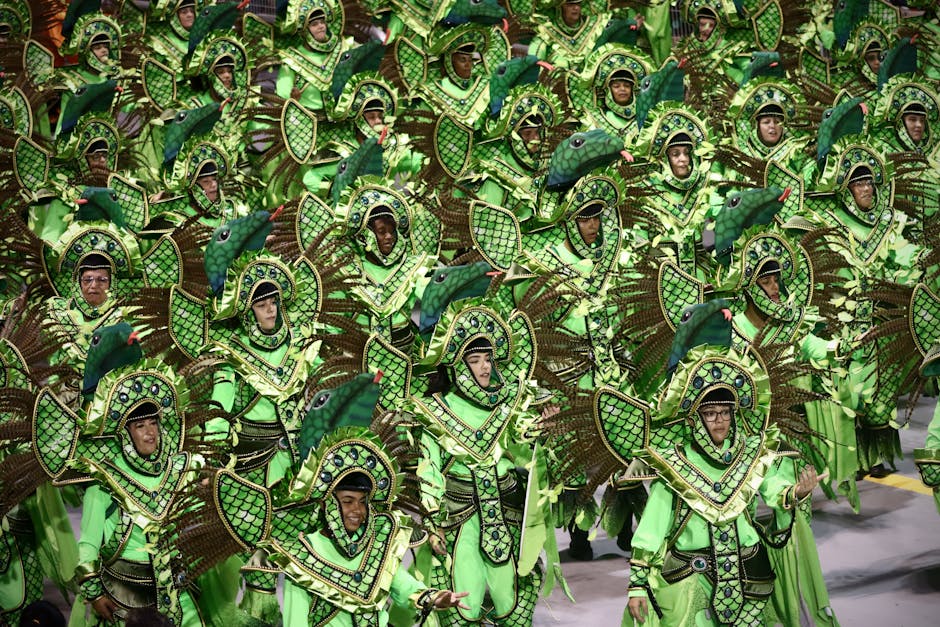
If you have ever seen a postcard of Carnival, you are likely looking at the Marquês de Sapucaí, better known as the Sambadrome. Designed by the legendary architect Oscar Niemeyer, this purpose-built concrete runway is the Colosseum of samba. This is where the top-tier samba schools compete for the championship title, a title taken as seriously as the World Cup. Each school spends millions of dollars and thousands of man-hours creating floats that are essentially moving skyscrapers, and costumes that defy gravity.
Attending the Sambadrome is an exercise in endurance and awe. The parades begin in the evening and stretch well into the following morning, often ending as the sun rises over the concrete stands. You aren’t just watching a parade; you are watching a community pour its soul into an hour-long window of time. Each school has about 75 minutes to traverse the runway, and every second is judged. The precision of the percussionists, the grace of the flag bearers, and the sheer volume of the singing crowd create an atmosphere that feels less like a party and more like a collective spiritual awakening.

Sitting in the stands, you’ll notice that the energy isn’t just on the track. The ‘arquibancadas’ (bleachers) are filled with locals who know every word to their school’s anthem. If you want a more exclusive experience, there are the ‘camarotes’—luxury suites with open bars and air conditioning—but many argue that the true heart of the experience is in the open-air seating where the passion is palpable. It is loud, it is long, and it is undeniably the most polished version of Carnival you will ever see.
The Soul of the Streets: Rio’s Blocos
While the Sambadrome is the formal heart of Rio, the blocos are its nervous system. These are the street parties that happen everywhere, from the beaches of Ipanema to the winding alleys of Santa Teresa. Unlike the Sambadrome, which requires a ticket, the blocos are free and belong to everyone. They range from small gatherings of a few hundred neighbors to massive crowds of over a million people following a single truck through the city center.
The charm of the bloco lies in its spontaneity and its costumes. This isn’t the place for professional feathers and sequins; this is the place for clever, DIY outfits that often involve a healthy dose of political satire or absurd humor. You might see a group of twenty friends dressed as Tetris blocks, or a lone man wearing nothing but a giant cardboard box labeled ‘Instant Delivery.’ The goal is to be seen, to laugh, and to keep moving.

Navigating a bloco requires a specific mindset. You have to be comfortable with crowds and ready to walk. There is no ‘front row’ because the party is constantly in motion. Vendors weave through the masses selling cold cans of Antarctica or Brahma beer, and the ‘pula-pula’ (the jumping and dancing) never stops. Every bloco has its own personality. Some are famous for brass bands playing traditional marches, while others are dedicated to the music of the Beatles or David Bowie, all rearranged to a samba beat. It is democratic, messy, and deeply joyful.
Salvador: The Electric Pulse of Bahia
If Rio is about the visual spectacle and the samba, Salvador, the capital of Bahia, is about the drum and the ‘Trio Elétrico.’ In Salvador, Carnival isn’t just an event; it’s a physical force. The city’s celebration is heavily influenced by its Afro-Brazilian heritage, resulting in a sound that is heavier on percussion and Axé music than the Rio variety. Here, the ‘Trio Elétrico’—a massive truck loaded with sound systems and a live band on top—slowly crawls through the streets, surrounded by a sea of people.
Salvador introduces the concept of the ‘Abadá.’ To get close to the music, you buy a colorful tank top that serves as your ticket into the ‘cordão,’ a protected area surrounded by a rope held by security guards. This keeps the crowd manageable and gives you a bit more space to dance, though ‘space’ is a relative term in Bahia. If you choose not to buy an abadá, you are part of the ‘pipoca’ (the popcorn), the crowd outside the ropes that jumps and dances with just as much intensity. Being in the pipoca is a badge of honor for many, but it is intense and not for the faint of heart.
The Circuit Tradition
The parties in Salvador follow specific routes called circuits. The Barra-Ondina circuit runs along the coast, offering stunning ocean views as you dance behind the trucks. The Campo Grande circuit is more traditional, winding through the historic heart of the city. What sets Salvador apart is the sheer stamina of the revelers. The music starts in the afternoon and goes until dawn, and the heat of the Bahian sun adds a layer of physical challenge that makes the eventual cooling sea breeze feel like a miracle. It is a more visceral, raw experience than Rio, focused less on the visual ‘show’ and more on the collective movement of tens of thousands of bodies in unison.
Costumes, Glitter, and Practicality
For a beginner, the question of what to wear can be daunting. In the Sambadrome, if you aren’t part of a school, casual and light clothing is best. However, for the street parties of Rio and the circuits of Salvador, more is more. This is the time to embrace anything that sparkles. Biodegradable glitter is the currency of the street; you will likely start the day with none and end it covered in it, courtesy of friendly strangers.
Comfort is the only rule that cannot be broken. You will be on your feet for ten to twelve hours. Wear sneakers you don’t mind ruining—the streets can get wet and crowded. Sunscreen is non-negotiable, even if the sky looks overcast. Dehydration is the most common reason for a shortened Carnival experience, so alternating every beer or caipirinha with a bottle of water is the smartest move you can make. Many locals use a ‘pochete’ (fanny pack) worn across the chest to keep their phone and cash secure, as the density of the crowds makes pockets unreliable.
The Unwritten Rules of the Crowd
There is a specific etiquette to Carnival that helps maintain the harmony amidst the chaos. In the blocos, the ‘beijo’ (the kiss) is a common part of the culture, but ‘no’ always means ‘no.’ The phrase ‘Não é Não’ (No means No) is a vital mantra during the festival, and respect for personal boundaries is paramount. When moving through a dense crowd, a hand on a shoulder and a polite ‘com licença’ (excuse me) goes a long way. People are generally there to have the time of their lives, and that shared goal creates a surprising amount of camaraderie among strangers.
Safety is also about being street-smart. Stick to well-lit areas, travel in groups if possible, and don’t carry valuables that aren’t necessary. Most importantly, trust the flow. If a crowd is moving in one direction, don’t fight it. Carnival is like a river; you are better off navigating its currents than trying to stand still against them. Embracing the lack of control is often where the most memorable moments happen—the random conversation with a person dressed as a giant shrimp, or the discovery of a tiny side-street band that sounds better than anything on the radio.
The Logistics of Joy
Planning a trip during this period requires foresight. Hotels in Rio and Salvador fill up months in advance, and prices spike significantly. If you are eyeing the Sambadrome, tickets for the ‘Special Group’ (the top schools) sell out quickly, though you can often find seats for the ‘Access Group’ (the second tier) which are just as impressive and much cheaper. For Salvador, choosing between an abadá or a camarote (a fixed VIP structure along the route) depends on whether you want to follow the truck or watch the trucks pass by from a stationary balcony.
Transportation during Carnival is a puzzle. Many streets are closed to cars, making the metro the most reliable way to get around Rio. In Salvador, taxis and ride-shares work, but expect to walk the final stretch to any circuit. It is a week where time loses its meaning; a ‘ten-minute walk’ can take an hour when a bloco decides to turn your street into its temporary home. Patience isn’t just a virtue during Carnival; it’s a requirement for survival.
Choosing Your Own Adventure
If you prefer a curated, breathtaking artistic display, the Sambadrome is your destination. If you want to feel like a part of the city’s living, breathing pulse, the Rio blocos will satisfy your soul. And if you want to be pushed to your physical limits by the power of the drum and the heat of the northeast, Salvador is calling. Many first-timers try to do everything, but the most seasoned Carnival-goers know that the best way to experience it is to pick a vibe and dive deep into it.
Regardless of which path you choose, the magic of the festival lies in its ability to dissolve the barriers between people. For one week, the hierarchy of daily life is replaced by the hierarchy of the rhythm. You aren’t a tourist, a worker, or a stranger; you are simply another heartbeat in the crowd, covered in glitter, singing a song in a language you might not fully understand, but whose meaning you feel in every fiber of your being. That is the true beginner’s guide to Carnival: let go, stay hydrated, and let the music lead you home.