

Porto Seguro is the real cultural detour — not Salvador
That claim will make people gasp at first, but hear me out. Most foreigners arrive in Bahia primed to hunt for ‘authentic Afro-brazilian culture’ in salvador and then move on. I used to assume the same. After spending years guiding travelers between porto seguro and Arraial d’Ajuda, plus long conversations with local musicians, fishermen, and Pataxó artisans, I came to the opposite conclusion: Porto Seguro and its sister town Arraial are where coastal history, Indigenous presence, and contemporary beach-party culture meet in a way Salvador doesn’t. Salvador is louder and older; Porto and Arraial are layered and intimate.
Why that contrarian take actually works
Porto Seguro sits on the Costa do Descobrimento — the ‘Discovery Coast.’ That’s not a marketing slogan. It’s the geographic area associated with the earliest Portuguese landings in Brazil and the waves of contact and exchange that followed. Walk through the historic corners of Porto and you’ll bump into small museums, colonial facades, and the odd plaque marking the moments when the old and new worlds collided. Outside town, Pataxó villages remain active: they sell crafts, perform rituals, and run community tourism projects. I’ve eaten tapioca with a Pataxó family, watched a forró band set up on a makeshift stage behind a beachfront pousada, and seen vendors blend Afro-Brazilian recipes with Indigenous ingredients. That kind of cultural cross-pollination is alive and visible at the street level here.
Two towns, two beats
Say you pull into Porto Seguro after landing at the local airport. The town has teeth — a working port, a main drag where fishermen unload the morning catch, and a nightlife circuit that swells at sunset. The go-to nighttime artery is the Passarela do Descobrimento (often called Passarela do Álcool by long-time visitors). It’s a strip of vendors, bars and live music where you can have cold beer and a grilled fish plate to the soundtrack of axé or forró. Expect energetic, late-night crowds on weekends and holidays; this place lives up to its reputation for big, messy fun.
Cross the small ferry to Arraial d’Ajuda and the rhythm shifts. Arraial is bohemian and loose-limbed, the kind of place where you’ll find boutique pousadas tucked behind bougainvillea, artists selling prints at dusk, and a main street—Rua do Mucugê—lined with candy-colored shops and live music spots. The town is quieter at 2 a.m. than Porto, but the music you hear tends to be acoustic, world-leaning, and longer on conversation than on pure volume. Backpackers fall in love with Arraial because it’s walkable and forgiving: you can move from a lazy beach morning to a sidewalk caipirinha without a fuss.
How the beaches actually behave
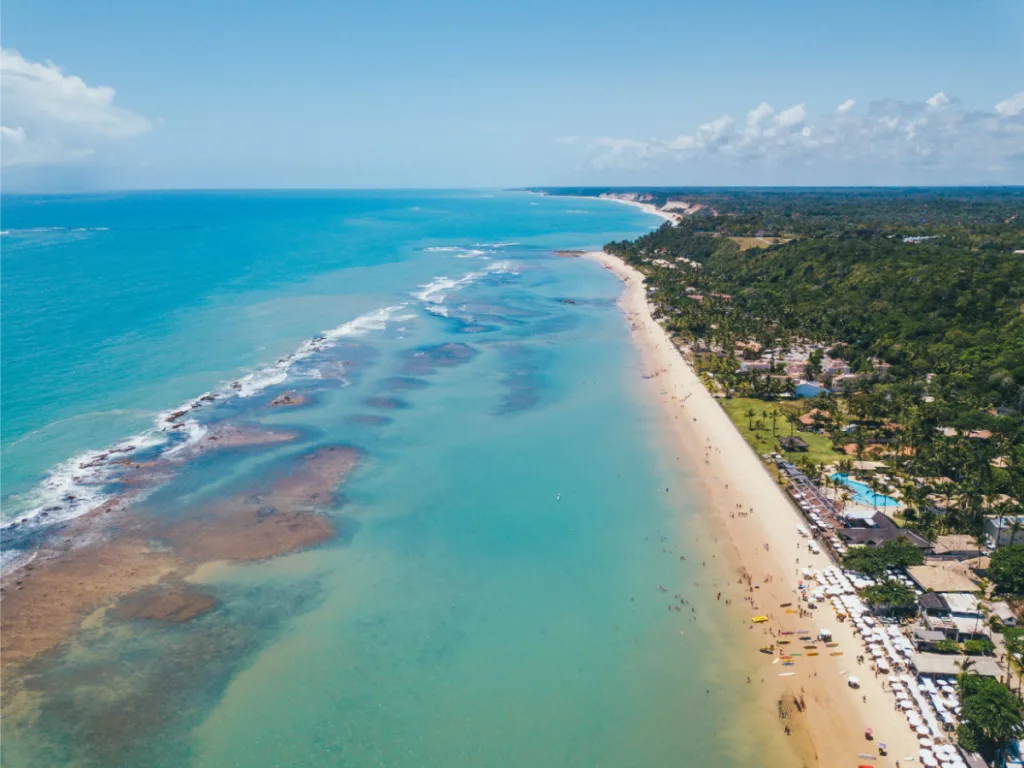
Bahia’s beaches here are not one-note. Taperapuan and Mundaí (to the north of Porto) attract a mix of families and partygoers, with vendors and bars spaced along the sand. These are wide, easy beaches with waves that suit casual surfers and swimmers. Arraial’s main beaches—Mucugê, Parracho, and the cliffs of Taípe farther south—offer a different spectacle: natural pools at low tide, rocky outcrops that split the surf, and shallow stretches ideal for snorkeling on calm days. Bring reef shoes if you plan to explore the pools; the barnacles and rocks can be sharp.
Both towns have boat trips that visit reefs and nearby islands; a morning trip to a clear, shallow reef is the best antidote to a night of partying. If you trust my snippet of hard-earned advice: schedule a reef boat on your second morning. Your head will thank you.
The backpacker blueprint: how to split time
If you have a week, split it like this: couple of nights in Porto to absorb the raucous Passarela energy, then move to Arraial for rest, beaches, and a slower soundtrack. I routinely recommend this sequence to travelers who want both the ‘party’ and the ‘classic backpacker chill’ without doubling transport logistics. The ferry between Porto and Arraial is short and frequent; it’s quicker than you think and almost always part of the charm. Keep a small daypack in your main bag so you can hop between towns without lugging your life through the heat.
Where to sleep without wasting money
For backpackers the options break down simply: dorm-bed hostels and local pousadas. In Porto, look for hostels close to the Passarela or the central market if you want nightlife and easy food. In Arraial, a hostel near Rua do Mucugê saves taxi fares and keeps you within walking distance of music and restaurants. I know travelers who snuck a few days in a cheap pousada outside the town center and split taxi rides with new friends—good approach when the high season jacks prices up.

Food, drink, and the meals you’ll remember
Bahian cuisine is garlic, dendê (palm oil), coconut milk and heat. Your must-try items: bobó de camarão (a creamy shrimp stew), moqueca baiana if you find a traditional cook, and tapioca crepes for breakfast. Street vendors sell grilled manioc, fried pastries, and sometimes acarajé; seek vendors who clearly work in the shade and have a steady local line. It’s a small rule of thumb that saves you from disappointment.
Cocktails are simple and loud here. Caipirinhas are everywhere; ask for a smaller sugar level if you prefer. Fresh coconut water sold on the beach is a currency of joy; I recommend pairing it with a plate of grilled fish for an effortless beach lunch.
Nightlife that respects morning plans
Porto’s nightlife is honest about itself: it wants to go late and loud. Clubs attract national and regional DJs; street bars host live bands that cut through the night with drums and brass. Arraial tends to stage live bands earlier and quieter, so if you like to be awake for sunrise on the beach, lean Arraial. There is overlap: a single night might start in Arraial and cascade into Porto later. Consider your tolerance level for sleep deprivation; you’re in tropical sunshine territory where sleep debt is painful and visible.
Small-business tourism and ethical visits to Pataxó villages
Pataxó communities around the Costa do Descobrimento offer crafts, guided trails, and cultural presentations. Visit thoughtfully. Don’t treat communities as an exotic backdrop. Buy crafts directly at community-run shops, ask permission before photographing, and pay for guided experiences rather than dropping coins and moving on. I’ve spent afternoons on Pataxó farms where families explained cassava processing (from root to tapioca). Those afternoons cost a little, but they transfer benefit directly back to the people hosting you.
Daily logistics: getting around, money, and safety
On short hops, the ferry between Porto and Arraial is the easiest option. It ferries pedestrians and cars across the estuary in a ten- to fifteen-minute run. Many travelers prefer to travel the ferry route at dusk for the light; vendors and musicians sometimes line the docks. Taxis and motorcycle taxis (moto-táxis) are available but negotiate fares upfront if you’re hailing outside of official points.
ATMs work in both Porto and Arraial, but if you’re staying in smaller pousadas plan to carry some cash; small restaurants and bars sometimes prefer it. Credit cards are accepted at most restaurants and shops on the tourist strip, but the best caipirinha stands often accept only cash.
Regarding safety: petty theft is the main issue. Keep valuables out of sight on beaches, use anti-theft backpacks or inside pockets, and keep photocopies of your passport stored in two separate places. At night, stick to well-lit streets and official taxi ranks. Most visitors miss nothing by following these simple precautions, and you’ll sleep easier for it.
Seasonality and when to time the trip
High season is obvious: Brazilian summer and Carnival draw crowds and push prices up. If you want lively beaches and packed nightlife, that’s when Porto shines brightest. If you’d rather avoid crowds and find better prices on pousadas, the shoulder seasons—when the weather is warm but the tourists thin—are ideal. Weather can be surprisingly variable here; one afternoon might be perfect for snorkeling while the next offers passing showers. Bring a lightweight rain jacket and a sense of adaptability.
Day trips that make sense for backpackers
Block a day for Trancoso if you want postcard-cliff beaches and a more polished boutique vibe; it’s not far and can be done by bus or private transfer. Caraíva, further south, is a bohemian village with no cars and a slower pace—expect to walk and to cross small rivers by canoe. If you prefer boat trips, book a reef/snorkel outing in the morning; many captains will tailor short trips to your group rather than cram you into an overpacked boat.
Transport tips that save time
- Buy ferry tickets during daylight hours when lines are visible; avoid last-minute rushes after a late-night party.
- If a bus looks crowded, wait for the next one—squished rides frequently end with lost items.
- Get a local SIM with data if you plan to use maps and ride apps; coverage in these towns is decent and data helps with last-mile navigation.
How to spend 48 hours like a local
Morning one: dawn walk on Taperapuan or Mucugê, fresh coffee at a beach kiosk, then a light swim. Midday: beach-side lunch—grilled fish and coconut water. Afternoon: nap or slow book session at a shaded pousada. Night: Passarela for live music and tapas-style plates. Morning two: reef boat or Pataxó community visit. Afternoon two: walk Rua do Mucugê, pick up a handmade piece. That compact loop shows you the party, the beach, and the cultural layers without needing more than a weekend.

Budget sense for backpackers
These towns are user-friendly for shoestring travelers. Dorm beds, cheap eats, and regular minibuses keep costs down. Splurges are optional: a private boat trip, a night at a boutique pousada, or a guided Pataxó experience. I advise setting aside a single ‘experience’ fund—money you’ll spend on one memorable thing rather than distributed thinly across small treats. That way you keep a frugal baseline and still come home with one story worth retelling.
Practical packing and personal gear
Packed smart: reef shoes, sunscreen (reef-safe preferred), a sarong for shade and modesty when visiting villages, a dry bag for boat days, and a basic first-aid kit. Top up with a lightweight sweater for unexpectedly cool nights. If you plan to party, carry a small flashlight for late-night walks; street lighting can be inconsistent outside main commercial strips.
How to behave like you belong
Learn a handful of Portuguese phrases—please, thank you, the price please, where is—people here appreciate the effort more than you expect. Respect local rhythms: restaurants and shops may nap in the late afternoon; many bars pick up only after sunset. Buy crafts at the artists’ stands rather than in souvenir supermarkets. Smile, slow down, and the welcome will be warm.
When you should skip something
Don’t try to do every beach and every town in one trip. The coast stretches, and the best experiences are slow: a sunrise swim, a lazy lunch, a backroad ride to a cliff. If you cram too much, the rhythm of the place will simply pass you by. Pick fewer things and do them well.
Final takeaway
If you want a Brazil that’s equal parts party and introspective, Porto Seguro plus Arraial d’Ajuda beats the two-week tourist pilgrimage that hits only the postcard spots. Split your time, move at beach pace, and treat the Pataxó communities and local musicians as people you’re visiting—not scenery you’re snapping. Book ferry crossings in daylight, choose a single splurge, and remember that the best beach nights are those that end with you walking barefoot home to the sound of the sea.