
A landscape that refuses to behave like a desert
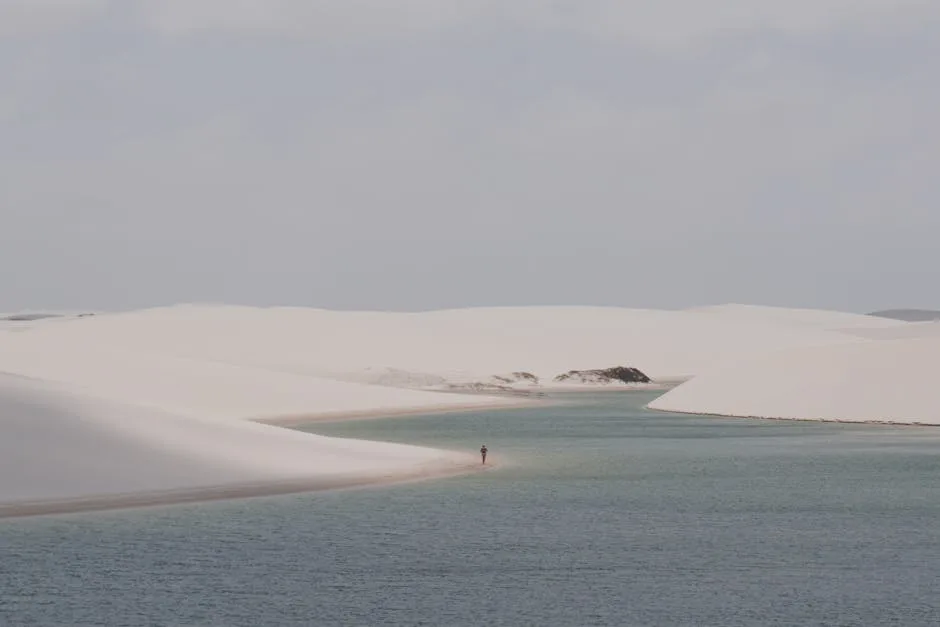
When people hear the word “desert,” they picture endless dunes and baked earth. lençóis maranhenses looks like that at first glance: sweeping white sand hills that roll to the horizon. Then the rains come and the scene flips — broad, jewel-toned lagoons sitting like mirrors in the hollows between dunes. The effect is cinematic and strangely fragile: freshwater pools that appear after seasonal rains, crystal clear or cobalt depending on depth and algae, framed by pristine sand so pale it almost glows.

How these lagoons form — the simple miracle of rain and sand
The secret behind Lençóis Maranhenses is uncomplicated but unusual. The dunes are made of fine, white quartz sand transported from inland and reshaped by strong coastal winds. Below the sand sits an impermeable layer of clay or rock, so when the rainy season arrives the water has nowhere to go and collects in depressions among the dunes. The lagoons are freshwater, fed purely by rain, not by underground springs or seawater. They build up during the rainy months and persist into the dry season, creating a temporary archipelago of swimming holes.
That temporality is what gives Lençóis its personality: the park is perpetually morphing. One year a particular lagoon might be the size of a lake; the next year it’s a shallow pond. The water chemistry and clarity change depending on how long the pool stays filled, which affects the color you’ll see — from deep sapphire to green edged with white sand.
When to plan your visit — timing matters more than luck
Timing is the single most important choice you’ll make. If you go too early in the dry season the lagoons will be full and spectacular; go late and the pools start to shrink or disappear. The rains that fill the lagoons typically occur in Maranhão’s wetter months. Expect the biggest, clearest lagoons from roughly June through September — that’s the window when most travelers aim for.
Visiting during peak lagoon season means larger crowds at the most famous viewpoints, so think about getting on the sand early in the morning or later in the afternoon. Early light softens the dunes’ shadows and makes the lagoons glow. Midday is harsh and brilliant; a photographer’s challenge, but great for high-contrast reflections.
How to get there — practical routes and what to expect on the road
Your arrival point is usually São Luís, the colonial capital of Maranhão. São Luís has a regional airport (IATA: SLZ) with connections to Brazil’s major hubs. From there you can arrange ground transfers or drive: the main tourist gateway to the park is the riverside town of Barreirinhas. The paved and unpaved stretches between São Luís and Barreirinhas vary in quality; the trip takes several hours and often feels longer because the scenery keeps shifting from coastal lowlands to scrub and small villages.
Barreirinhas functions as the logistical center. From here local operators run 4×4 excursions deep into the dunes, boat trips along the Preguiças River, and multi-day combinations that include Santo Amaro and Atins. Santo Amaro do Maranhão is inside the dune area and offers the most intimate access to remote lagoons, but reaching it usually requires a more rugged 4×4 transfer and a willingness to travel on sandy tracks. Atins sits across the Preguiças River and has a slower, more bohemian vibe; it’s also the center for kiteboarding when winds pick up.
Where to sleep — accommodations from comfortable pousadas to rustic camps
Most travelers choose Barreirinhas for convenience. The town has a range of pousadas (guesthouses), small hotels, and restaurants that cater to visitors. Staying in Barreirinhas puts you within easy reach of tour departures, practical services like ATMs and pharmacies, and evening options for dinner. Facilities here can be surprisingly comfortable given the remote setting — expect simple breakfasts, air-conditioned rooms at higher-end pousadas, and friendly staff who know the local trails.
If you want something quieter or more adventurous, head to Atins or Santo Amaro. Atins offers cozy, low-key pousadas, sand-road charm, and a small but lively food scene built around fresh seafood and local sauces. Santo Amaro’s accommodations are more rustic but put you right on the dunes, meaning sunrise walks and lagoon swims without the crowds. Camping on the dunes isn’t common inside the park; most travelers use local lodgings to minimize environmental impact.
Must-do experiences — lagoons, viewpoints, river circuits
There are a handful of experiences that define Lençóis Maranhenses for most visitors. Start with a guided dune trek to viewpoints like the ones near Lagoa Bonita or Lagoa Azul. These vantage points offer sweeping panoramas: white waves of sand punctuated by pools of impossible color. Look for contrast — a single photographer standing at a high dune next to a mirror-flat lagoon will be all the dramatic proof you need that this landscape is not a mirage.
Swimming in the lagoons is the most joyful, unpretentious pleasure. The water is fresh and often surprisingly cold, which feels incredible after climbing hot dunes. Lagoa Bonita and Lagoa Azul are popular spots because they’re easy to reach and particularly beautiful, but if you take a longer tour toward Santo Amaro you’ll find quieter lagoons where the water seems to have fewer footprints in it.
Boat trips along the Preguiças River and the nearby mangrove channels are a different tone — slow, green, and filled with birdlife. These circuits usually include stops at small fishing villages and sandbar islands, with opportunities to spot kingfishers, herons, and sometimes monkeys. A river tour also often culminates with a sunset over the coastal mouth of the Preguiças, an image that stays with you.

Atins and kitesurfing — wind + lagoon = a community
Atins deserves a section of its own. This tiny village on the park’s northern edge drew international kitesurfers years ago when they discovered steady winds and shallow, flat lagoons perfect for the sport. The result is a laid-back hub of guesthouses, small restaurants, and kite schools. Even if you don’t kite, Atins makes a great multi-day base: boat or buggy from Barreirinhas, then relax in hammocks between lagoon swims and seafood dinners. The town’s rhythm is slow; expect barefoot strolls, menus written in chalk, and a relaxed local hospitality that feels less commercial than Barreirinhas.
What to pack and how to travel smart
Lençóis requires deliberate packing. The sun is relentless on the sand, so bring high-SPF sunscreen, a wide-brim hat, and sunglasses. Lightweight, breathable clothing will keep you comfortable during dune hikes; quick-dry swimwear is essential for frequent lagoon dips. Sturdy sandals or closed shoes with good traction are helpful for climbing dunes and walking between lagoons. A small daypack, refillable water bottle, and snacks make long excursions easier.
Other practical details: carry cash for small purchases and tips — ATMs in Barreirinhas are limited and may run out of cash during peak season. Bring a power bank: many pousadas have limited charging options and shore power can be unreliable. If you plan to fly a drone for photography, ask local operators about park regulations and community preferences; rules can be strict to protect wildlife and privacy. Finally, follow your guide’s lead about where to walk and swim — the dunes shift and some routes are deceptively soft.
Safety and environmental respect — leave the place better than you found it
The dunes look soft and endless but they can be physically demanding. Drink water often, seek shade during the hottest parts of the day, and pace yourself on long treks. The sand reflects sunlight and can burn exposed skin quickly. For families traveling with children, choose shorter circuits or lagoons close to Barreirinhas or Atins where access is easier.
On the environmental side, tourism provides livelihoods for many local people, but it also creates pressures on fragile dune ecosystems and nearby mangroves. Stick to marked paths when possible, avoid littering, and use local guides and operators that commit to sustainable practices. Many communities organize cleanup days and conservation efforts; ask your host what they do to protect the park. Respect private property and community spaces in villages like Atins, where traditional lifestyles coexist with visitors.
Food and local culture — Maranhão’s flavors and festivals
Maranhão’s food has a distinct identity shaped by indigenous, African, and Portuguese influences. Try regional specialties like arroz de cuxá, a rice dish dressed with a tangy, herbaceous cuxá sauce traditionally made with vinagreira (sorrel-like leaves), toasted shrimp, and toasted peanuts. Fresh fish and shellfish are everywhere — a simple grilled fish with local herbs is a nightly favorite for many travelers. Street snacks and small restaurants in Barreirinhas and Atins serve crab stews, fish moquecas, and sweet treats using regional fruits.
Cultural life in Maranhão is vivid. If your trip aligns with local festivals — particularly Bumba Meu Boi, the region’s theatrical folk celebration — you’ll witness colorful costumes, music, and parades that tell folktales and reflect deep-rooted traditions. Even outside festival season, local musicians and artisans bring warmth to small-town squares and pousadas. Engaging respectfully with artisans and buying local crafts supports the communities that live around the park.
A few sample itineraries — pick the pace you want
Quick weekend (2–3 days): Fly into São Luís, overnight there or push on to Barreirinhas the same day. Day 1: guided dune-and-lagoon circuit to Lagoa Bonita or Lagoa Azul; sunset on a river boat. Day 2: early morning dune viewpoint, afternoon transfer back to São Luís. Fast, intense, and photogenic.
Relaxed exploration (4–6 days): Arrive in São Luís and spend a night exploring the historic center. Transfer to Barreirinhas. Day 2: full-day quad/4×4 to the central dunes with multiple lagoon stops. Day 3: boat down the Preguiças River toward Atins, overnight in Atins. Day 4: kite school or lagoon-hopping around Atins. Day 5: return to Barreirinhas with time for markets and a final sunset over the river.
Deep dive (7+ days): Add Santo Amaro to your plans for remote lagoons and fewer tourists. Combine dune treks, fishing-village visits, and an extended Atins stay to get a fuller sense of the region’s rhythms. Longer trips let you sample local foods, meet artisans, and watch how the dunes change over several days.
Photographer’s note — how to capture that otherworldly light
Bring a polarizing filter to deepen sky colors and manage reflections on the lagoons. Golden hour — just after sunrise and before sunset — softens the dunes and reveals textures with gentle shadows. Midday produces stark contrasts that work well for minimalist compositions: pure white sand against brilliant blue water. Get low for foreground sand patterns, and climb a dune for sweeping panoramas. Respect other visitors and wildlife when setting up shots, and avoid trampling vegetation or producing erosive paths on sensitive slopes.
Real talk about expectations — it’s romantic but not remote enough for some
Lençóis Maranhenses is romanticized because its photos look unreal. Reality is richer: a place where local community life, small-town commerce, and tourism intersect with fragile dunes. It isn’t a completely untouched wilderness; boat motors, tour groups, and small settlements are part of the picture. That’s not a bad thing — it means you can visit comfortably and support local economies. It simply means your experience will be part natural wonder, part cultural encounter. Embrace both.
Where to learn more and plan your visit
Start with reputable local operators based in Barreirinhas and Atins; they know the routes when the dunes have shifted and which lagoons are in best shape. Read recent trip reports and ask about group sizes — smaller groups reduce impact and often offer a better experience. If you’re an outdoor traveler who values solitude, plan your trip for shoulder-season timing within the lagoon window and aim for Santo Amaro or less-visited lagoons.
Lençóis Maranhenses is one of Brazil’s quirkiest natural gifts: a place where desert logic bends and invites you to swim between dunes. Come with respect, curiosity, and a camera. Swim in the cool, ephemeral pools, listen to the wind rearrange the sand overnight, and leave with a stronger sense that Brazil still holds landscapes that don’t quite behave as we expect.