

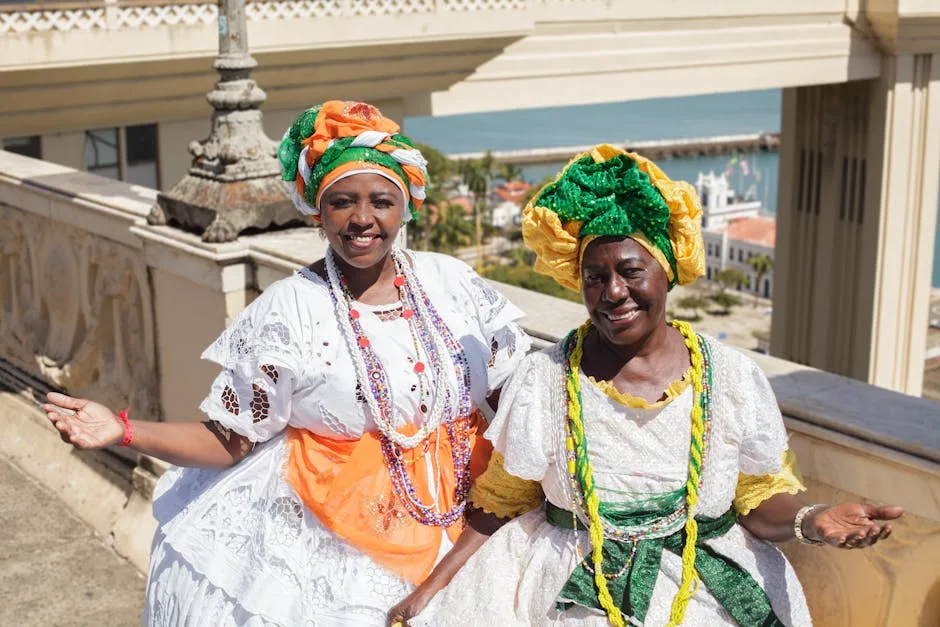
Why Candomblé in Bahia deserves quiet attention
Candomblé is not an exhibit. In bahia — especially in Salvador and the Recôncavo region — Candomblé terreiros are active houses of worship where community, memory, and lineage meet. The sound of atabaques (hand drums), the layered scents of herbs and cooked offerings, and the intensity of trance are all part of a living tradition that traces back to West and Central African roots carried to brazil through the transatlantic slave trade. For the visitor, a ceremony provides a rare window into a worldview that structures daily life for thousands of people here. Attend with curiosity, yes, but above all with respect.
Quick orientation: terms you’ll hear and what they mean
Knowing a few terms helps you follow what’s happening without interrupting. Terreiro refers to the physical space where rituals take place. Mãe-de-santo and pai-de-santo are the spiritual leaders — women and men who guide the house, teach the songs, and steward the lineage. Orixás are the deities or spiritual forces honored through songs, dances, offerings, and possession. Filhos e filhas de santo are initiates and members. Listening for these words will help you map the ceremony as it unfolds.
How to find a ceremony without causing harm
Not every terreiro is open to visitors. Many are private, serving families and initiates. If you want to attend, do the work to get invited rather than showing up unannounced. Start with trusted local cultural centers in Salvador’s Pelourinho or a reputable guide who has preexisting relationships with terreiros. Small language schools and community tourism projects often have contacts. When you contact a terreiro, be direct: introduce yourself, explain your interest, state whether you are a researcher, tourist, or student, and ask whether attendance is appropriate for outsiders that day.
Making the first contact: what to say and ask
Respectful phrasing matters. Offer to send a short message in Portuguese: who you are, where you’re from, why you want to attend, and your availability. Ask about dress code, whether you should bring an offering, whether photography is allowed, and whether you should remove your shoes. If you’re introduced by a mutual contact, mention that person’s name. If language is a barrier, say plainly you speak limited Portuguese and ask if someone can translate. A terreiro will often appreciate clarity over enthusiasm; vague promises to “learn everything” can come across as presumption.
What to wear and what to bring
Dress conservatively and neutrally. For many terreiros white clothes are associated with cleansing ceremonies, but not every ritual requires guests to wear white; some occasions call for colors associated with particular orixás. Always ask in advance. When in doubt, cover shoulders and knees, choose breathable fabrics for Bahia’s heat, and wear comfortable shoes because you might be asked to stand for long stretches or move outside. If the terreiro asks you to remove your shoes, follow that request without hesitation.
Bringing a small offering is sometimes appropriate — and always better asked about first. Common gifts include flowers, fresh fruit, unscented candles, or a modest monetary contribution to help with food prepared for the community. Do not assume you should offer alcohol or packaged meats; some houses have strict rules about what can be offered to which orixás. If they accept money, hand it discreetly to the leader or a designated caretaker rather than leaving it on an altar.

Arriving: the etiquette of entering a terreiro
Walk slowly toward the entrance and wait for a caretaker or a member to welcome you. It’s common to be guided to a specific spot — a bench at the side, a shaded corner, or a designated visitor area. Avoid crossing the center of the terreiro unless explicitly invited; that central space is sacred and often reserved for ritual action. If an elder or the mãe/pai-de-santo approaches to greet you, stand, make direct but calm eye contact, and offer a polite greeting. A simple “obrigado” or “muito obrigado/a” after they speak is always appreciated.
How a ceremony typically unfolds (what you will see and when to be quiet)
Ceremonies vary in length and structure. Common elements include drumming, call-and-response singing, prayers, offerings, dance, and possession. Drumming sets the rhythm and invites particular orixás to approach; the call-and-response singing keeps the community tightly connected. Pay attention to changes in volume and tempo: when the drums and voices intensify, a procession or a moment of possession may be imminent — that’s when silence from observers is most appropriate. When someone is in trance, do not touch them, take photos, or try to speak to them. The possession moment is both deeply personal and communal; it’s not a spectacle.
Physical boundaries and interacting with participants
Filhos and filhas de santo often move with purpose during rituals: bringing offerings to the altar, handling sacred objects, or supporting someone in trance. Observe the flow and remain in your assigned area. If a practitioner invites you to participate — to clap, sing along, or dance — accept with humility and follow their lead. If you are uncertain what to do, mirror a person same-gender near you who is a member of the terreiro; mirroring demonstrates attentiveness without overstepping.
Photography, recording, and social media
Assume cameras are not welcome unless explicitly permitted. Many terreiros prohibit photography to protect privacy and the spiritual integrity of the ceremony. If photography is allowed, take only what you are told to shoot: no flash, avoid capturing faces of those in trance, and do not film offerings or altar details without consent. When a terreiro allows photos, ask whether they prefer images to be shared publicly and whether crediting a particular person or the terreiro is required. Always respect requests for images to be deleted; compliance builds trust.
Food, drink, and the altar: specific rules to remember
Offerings placed on an altar are intended for the orixás and the ritual system; they are not for casual consumption. Never eat or drink anything that appears to be part of an offering unless a member explicitly tells you it is intended for guests. If you are offered food, ask whether it has been consecrated. If it has, it should be eaten only after a clear signal from the leaders that guests may partake. Keep an eye on allergies and dietary preferences — many terreiros prepare dishes with palm oil, fish, or strong spices.
Money, tipping, and donations: how to support without exploiting
Donations help houses pay for food, electricity, and community needs. If the terreiro accepts money, hand it to an appointed person or a visible collection point. Avoid bargaining or demanding change publicly; discretion prevents embarrassment. If a leader declines a donation, accept their refusal with gratitude — sometimes a leader will prefer a visitor to support community projects instead of the house directly, and they will tell you how. Consider longer-term, respectful support: recommend a cultural exchange, sponsor a small communal meal, or sign up for a class or workshop arranged by that terreiro or nearby cultural groups.
When you don’t understand something: listening is your tool
Silence is not emptiness. When you don’t understand a song line, a gesture, or why someone steps into trance, listen first. Ask questions afterward — outside the ritual space and at a time when the leaders are available. A good question shows you were attentive: “What was the song about?” or “May I learn this rhythm later?” are better than asking for explanations during the ceremony. Many terreiro leaders welcome sincere curiosity, but they prefer it framed as a request to learn rather than an immediate demand for interpretation.
Language and a few useful Portuguese phrases
You don’t need fluency, but a handful of phrases goes a long way. Use “bom dia” or “boa noite” depending on the time, and always “obrigado” (men) or “obrigada” (women) when someone helps you. To ask permission to take a photo, say “Posso tirar uma foto?” To offer thanks to a leader: “Muito obrigado(a), mãe/pai” is warm and respectful. If you want to offer a small donation, “Posso deixar uma contribuição?” opens that possibility gently. Balance the language you use with an attitude of listening more than talking.
When you’re invited to dance or be blessed
Invitations to step into the ritual are meaningful. If you’re asked to participate physically, match your energy to the house’s lead. Keep movements modest and attentive. Blessings and direct touches from a mãe or pai-de-santo are an honor; accept them calmly. If you’re unsure what a blessing means materially, ask later in private. Never reflexively film a blessing or force the person who blessed you into a media moment — these are intimate exchanges.
What to do if someone enters trance near you
Trance can look dramatic: altered voice, sudden movements, or change in posture. Respect the person’s space. Move slowly and avoid standing directly in front of them. If a practitioner falls or needs assistance, members of the house will respond immediately — allow them to do so. Do not try to pull someone out of trance or speak loudly to them. If crowding becomes an issue, step back and let the terreiro’s team manage the situation.
Learning after the ceremony: deepen your relationship
If the terreiro welcomes follow-up, express interest in returning. Consider enrolling in a community workshop about drumming, the language of the songs, or the history of Afro-Brazilian religions. Buy from the community: small handicrafts, CDs of traditional songs, or meals prepared by members help sustain the house. Reciprocity matters; don’t leave without asking how your visit helped and what the house might need beyond a one-time donation.
Avoiding common mistakes visitors make
Do not treat ceremony time as an opportunity for cultural content creation. Avoid loud commentary, jokes about possession, or comparing Candomblé to other religions in front of members. Don’t hand offerings directly onto altars without instruction, and don’t attempt to touch sacred objects like beads or staff-like objects unless invited. If someone corrects your behavior, accept it gracefully and change course — humility in a sacred space is more valuable than being right.
Where to go in Bahia if you want responsible experiences
Begin in Salvador’s historic center — Pelourinho — which has long been a hub for Afro-Brazilian culture. From there, expand to neighborhoods like Rio Vermelho and the towns of the Recôncavo, such as Cachoeira, known for strong ties to traditional practice. Seek terreiros that explicitly state they welcome respectful visitors or that run cultural programs. Ask local museums, independent cultural centers, or community-run tourism projects for verified contacts; they often maintain lists of terreiros open to visitors and can advise on the nature of each house’s ceremonies.
Photo by Brunxs Monochrome via Pexels
Safety, health, and accessibility considerations
Terreiros vary in accessibility. Some are on uneven ground, others inside old houses with narrow stairs. Ask ahead if there are mobility concerns. Keep hydrated in Bahia’s heat, but check rules about drinking inside a terreiro — bottled water is usually fine if offered to guests. If you have medical conditions or allergies, disclose them discreetly to the leader or a caretaker before the ceremony so they can advise on what foods or smoke to avoid.
How to write about your experience ethically
If you plan to write about the ceremony, get permission first. Share what you learned and how you felt, but avoid publishing identifiable images of practitioners without consent. Attribute quotes accurately and ask whether the terreiro prefers anonymity. When you describe rituals or spiritual experiences, focus on what you observed rather than trying to define the inner meanings of someone’s possession or trance state. Respectful writing acknowledges the limits of an outsider’s viewpoint.
Final notes on humility and curiosity
Candomblé asks for presence more than performance. Your best contribution as a visitor is to arrive prepared, follow instructions, and listen. Over time, responsible, repeated engagement — not one-off curiosity — builds trust. If you cherish Bahia’s culture, support local education about it: register for classes, buy books and art from community makers, and recommend terreiros that welcome visitors to other travelers only after confirming they remain comfortable with outsider attendance.
Useful resources and next steps
Before your trip, learn brief histories of Afro-Brazilian resistance, the role of the Recôncavo in preserving rituals, and how Catholic syncretism shaped popular religion in Bahia. Take a drumming or Portuguese class in Salvador to deepen your listening. When you return home, consider supporting institutions in Bahia that invest in cultural preservation and community health. Small actions from informed visitors—careful questions, conscientious donations, and amplified respectful stories—sustain the very traditions that make Bahia essential.