
The April Transition: Nature’s Balancing Act
April in fernando de Noronha marks a fascinating crossroads for the island’s ecosystem. It’s the month when the Atlantic starts to change its mind. If you’ve spent any time tracking weather patterns in the mid-Atlantic, you know that the transition from the dry season to the rainy season brings a unique energy to this volcanic archipelago. While the calendar says autumn, the air remains thick with tropical warmth, and the ocean begins a subtle dance between the high-octane surf of the summer months and the glassy, mirror-like conditions that define the winter diving season.
Walking along the trails in April, you’ll notice the greenery exploding. The island transforms from a dusty, sun-baked landscape into a vibrant emerald paradise. This shift isn’t just aesthetic; it affects everything from the humidity in your room to the clarity of the water at Porto. For those trying to decide between bringing a surfboard or a set of fins, April presents a unique challenge because it offers a little bit of everything, often within the same twenty-four-hour cycle.
The Final Echoes of the North Swell
For surfers, April is the last call for the legendary ‘Brazilian Hawaii’ vibes. The powerful North Swells that pump through the archipelago from December to March start to lose their frequency, but they don’t disappear entirely. Instead of the relentless overhead sets that characterize February, April brings a more groomed, manageable size that makes spots like Cacimba do Padre and Boldró accessible to those who might have been intimidated by the winter peaks.
The beauty of surfing Noronha in April is the lack of crowds. Most of the pro-circuit chasers have moved on, leaving the line-ups to the locals and the savvy travelers who know that a late-season pulse can still produce world-class barrels. The wind also begins to shift. You’ll find more mornings where the breeze dies down completely, offering that coveted glass-off on the ‘Mar de Dentro’ (the inner sea, facing the mainland). It’s a period of quality over quantity. You might wait a few days for a swell, but when it hits, the conditions are often pristine.

Diving Into the Blue: Visibility and Rain
If your heart is set on the underwater world, April is a month of anticipation. The ‘Mar de Dentro’ starts to settle as the north swells subside, which is great news for visibility. However, April is technically the beginning of the rainy season. While this sounds like a deterrent, Noronha’s rain is rarely a day-long affair. It usually manifests as intense, short-lived tropical downpours that clear the air and then vanish, leaving the sun to bake the earth once more.
The impact of rain on diving is minimal unless you are exploring the very shallowest entries where runoff might occur. Out at sites like Pedras Secas or the Corvette V17 wreck, the visibility remains legendary, often exceeding 30 meters. The marine life doesn’t mind the rain at all. In fact, the slight cooling of the surface water can sometimes bring larger pelagics closer to the reefs. You are still very likely to encounter resident spinner dolphins, hawksbill turtles, and reef sharks regardless of the surface weather.
Understanding the Dual Coasts
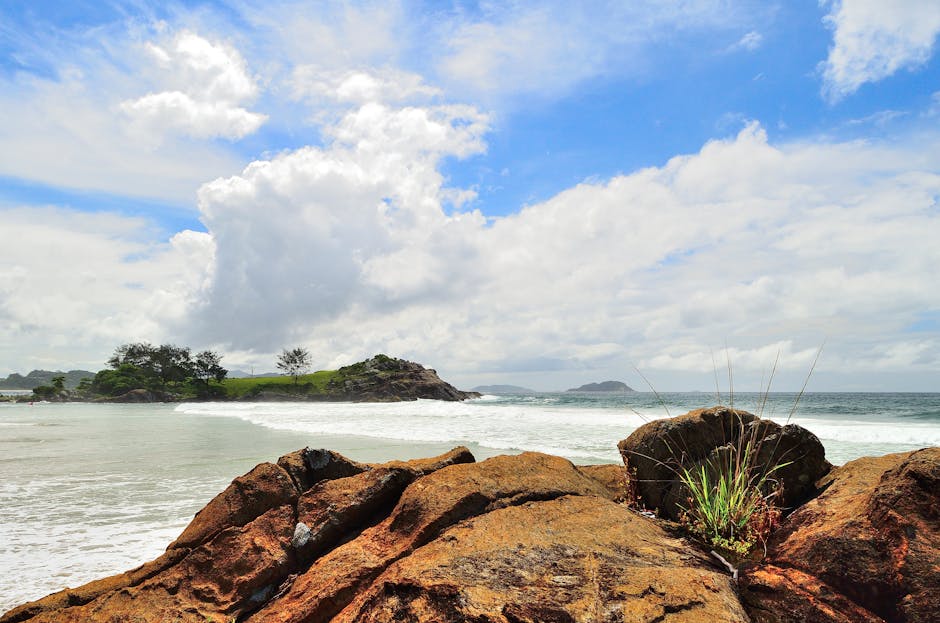
Noronha is divided into the Mar de Dentro (facing Brazil) and the Mar de Fora (facing Africa). In April, this distinction becomes the most important factor in planning your day. The Mar de Dentro is where the famous beaches like Sancho and Porcos are located. This side is sheltered from the prevailing trade winds but is the primary recipient of the North Swell. In April, this side becomes increasingly calm, making it the ‘go-to’ for snorkeling and boat tours as the month progresses.
Conversely, the Mar de Fora is more rugged and exposed. Sites like Sueste are fantastic for seeing turtles and rays in the shallows, but the water can get a bit choppy if the southeasterly trades pick up early. During April, if you wake up and see whitecaps on the Mar de Dentro, it’s a sign that a late-season swell is hitting, and you should grab your board. If the water looks like a lake, grab your mask and head straight to Baía do Sancho before the afternoon clouds roll in.
Logistics of a Tropical Transition
Traveling to Noronha in April requires a bit more flexibility than the peak summer months. Because it’s a shoulder season, you might find better rates on pousadas (local guesthouses), but you also have to pack for high humidity. Technical fabrics that dry quickly are your best friend here. It’s the kind of weather where you’ll be sweating one minute, soaked by a warm rain the next, and perfectly dry ten minutes later.
From a gear perspective, if you are a surfer, a 4/3mm suit is overkill; a simple rash guard or a 1mm top is more than enough. For divers, the water temperature remains a consistent 27-28°C (80-82°F), so a 3mm shorty or even just swimwear is standard. The island’s infrastructure is well-equipped for these shifts. Buggy rentals are essential regardless of the weather, as they allow you to zip between the different beaches to find the best conditions as they change throughout the day.

The Wildlife Calendar
April is a significant month for the island’s most famous residents: the sea turtles. It falls right in the middle of the nesting season (which runs from December to June). Visiting the TAMAR Project headquarters is a must this time of year. You might have the opportunity to witness a ‘tartarugada’—the opening of a nest or the monitoring of hatchlings. Because the beaches are quieter in April, the atmosphere feels much more intimate and connected to these natural cycles.
Birdwatchers also find April rewarding. The increased rainfall triggers nesting behavior in many of the island’s endemic species. The red-footed boobies and frigatebirds are particularly active around the cliffs of the Mirante das Agulhas. The island feels alive, vibrant, and slightly wilder than it does during the manicured dryness of October.
Choosing Your Adventure: The Verdict
If you are an absolute beginner surfer, April is arguably better than January. The waves are less punishing, the crowds are thinner, and the atmosphere in the water is relaxed. For expert surfers, it’s a gamble, but one that often pays off with empty, perfect peaks for those patient enough to track the charts. For divers, while August and September offer the absolute peak of visibility, April provides a lush, quiet alternative where the boat rides are peaceful and the dive sites are uncrowded.
Ultimately, April in Fernando de Noronha is for the traveler who appreciates the nuances of nature. It’s for the person who doesn’t mind a little rain if it means having the world’s most beautiful beach almost entirely to themselves. It’s a month of rewards for the observant. Whether you’re watching the sun set behind the Morro do Pico after a rainstorm or surfacing from a dive to find the island shrouded in a misty, tropical cloud forest glow, April delivers a version of Noronha that feels authentic and deeply soulful.