
Step Into the Colorful World of June Festivals
If you find yourself in brazil during the month of june, you are in for a treat that rivals Carnival in spirit, though it trades the sequins and samba for straw hats and accordions. This is the season of festa junina, a month-long celebration rooted in rural traditions, honoring saints like Saint John (são joão), Saint Anthony, and Saint Peter. For a visitor, walking into a quermesse (church fair) or a massive Arraiá (the party venue) for the first time is a sensory explosion. You’ll smell the sweet scent of corn-based treats, hear the fast-paced rhythm of Forró, and see a kaleidoscope of colors that define the ‘Caipira’ aesthetic.
The term ‘Caipira’ refers to the rural, country folk of Brazil’s interior. While the word was once used dismissively, today it represents a proud cultural heritage celebrated with joy and humor. Dressing the part isn’t just about fashion; it’s about participating in a collective performance of history and lightheartedness. If you show up in your regular street clothes, you’ll still be welcome, but you’ll miss out on half the fun. Putting together a Caipira outfit is an icebreaker—it shows locals you’re embracing their culture, and it’s the quickest way to get pulled into a square dance.
The Core Elements of the Caipira Wardrobe
The foundation of any Festa Junina outfit is the check pattern, known locally as xadrez. Whether it’s a flannel shirt or a cotton dress, the bigger and bolder the plaid, the better. This isn’t the subtle, minimalist plaid you might see in a corporate office. Think vibrant reds, yellows, greens, and blues, often mixed together in ways that defy standard color theory. The goal is to look rustic, lived-in, and cheerful. For men, a button-down flannel is the easiest entry point. For women, it can be a shirt tied at the waist or a full-blown dress adorned with lace and ribbons.
One of the most charming aspects of these outfits is the ‘patched’ look. Traditionally, Caipira clothing was associated with rural life where clothes were mended and reused. To mimic this, people sew or pin colorful fabric scraps onto their jeans or jackets. You don’t actually need to tear your clothes; most Brazilian markets sell adhesive patches shaped like hearts, stars, or simple squares specifically for the season. These patches often feature floral prints or polka dots, adding to the visual delightful chaos that defines the festival style.
Headwear: The Iconic Straw Hat
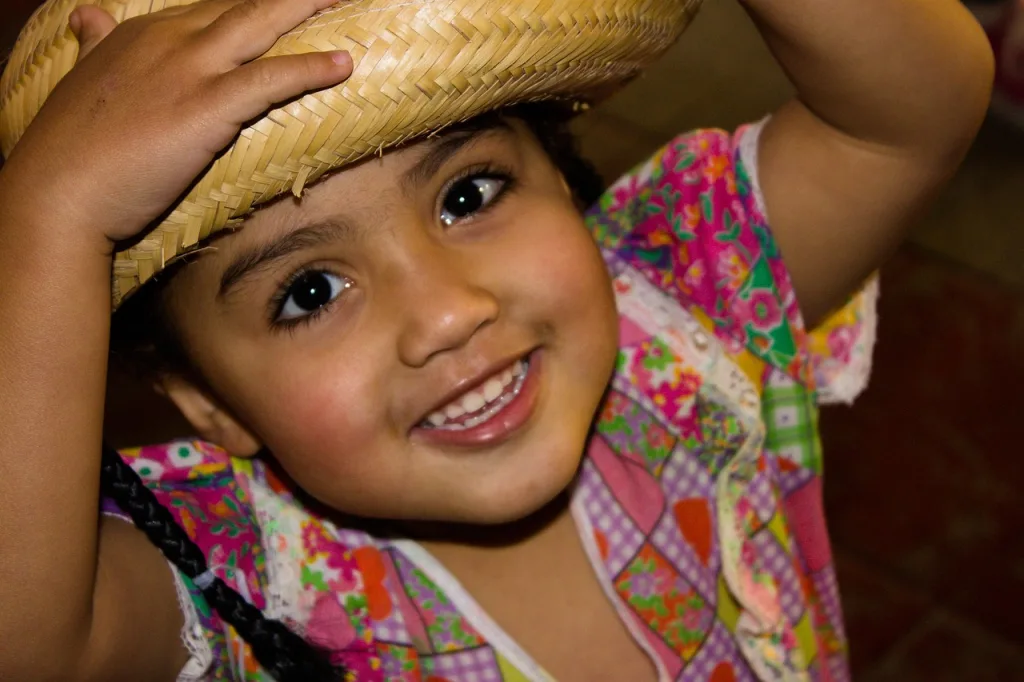
No Festa Junina look is complete without a chapéu de palha (straw hat). This is perhaps the most non-negotiable accessory. In the Brazilian countryside, these hats are essential tools for protection against the sun, but during the festivals, they become symbols of the celebration. You’ll find them in various styles—from the classic wide-brimmed version to miniature versions that women pin into their hair with colorful ribbons. Some people like to ‘customize’ their hats by fraying the edges or sticking a small cornflower into the band. It’s an inexpensive purchase that you can find at any street corner or grocery store in June, and it immediately elevates your ‘costume’ to an authentic ensemble.
The Feminine Aesthetic: Ruffles, Ribbons, and Layers
For women, the vestido caipira (country dress) is a masterpiece of maximalism. These dresses are characterized by layers of ruffles, often using a mix of different fabrics like calico (a floral printed cotton known as chita) and lace. The silhouette is typically a fitted bodice with a very full skirt, which is perfect for the spinning movements of the quadrilha (square dance). The more lace and ribbons you add, the more festive the dress becomes. Many locals go to great lengths to have custom dresses made, but for a tourist, a simple floral dress paired with a plaid shirt tied over it works perfectly well.
Footwear for women usually leans toward comfort because you’ll be on your feet on uneven ground—either grass, dirt, or cobblestones. Leather boots (think ‘cowgirl’ style) are a popular choice, but a pair of simple black boots or even clean sneakers will do. If you want to go the extra mile, pair your shoes with white socks that have lace ruffles peeking out from the top. It adds to the youthful, playful ‘country girl’ vibe that is the hallmark of the Festa Junina character.
The Quadrilha Bride
A unique figure you’ll see at many parties is the ‘Noiva’ (The Bride). In every traditional quadrilha dance, there is a comedic skit involving a shotgun wedding. The bride wears a white Caipira-style dress, often with short skirts and plenty of lace, along with a veil and a bouquet of wildflowers. If you’re feeling bold and want to be the center of attention, dressing as the Caipira Bride is a fantastic way to lean into the theatrical side of the festival. Just be prepared to be ‘married’ off to a random ‘groom’ during the dance performances!
The Masculine Aesthetic: Flannel, Denim, and Scarf
For men, the look is considerably simpler but no less specific. The ‘Uniform’ consists of a plaid shirt, denim jeans, and a pair of boots. However, the secret is in the styling. The shirt is often tucked in, and many men wear a colorful handkerchief or scarf tied around their neck—similar to a scout’s scarf or a cowboy’s necktie. This adds a pop of color and ties the look together. Unlike modern fashion trends that favor a slim fit, the Caipira look embraces a more relaxed, rugged silhouette that suggests a hard day’s work in the fields followed by a long night of dancing.
Don’t forget the suspenders. A pair of clip-on suspenders over a plaid shirt is a classic ‘Matuto’ (another term for countryman) look. It’s practical for dancing and gives off an old-world charm. If you really want to lean into the character, you can tuck your pant legs into your boots or roll them up slightly. The idea is to look like you’ve just stepped off a farm in the interior of Minas Gerais or the Northeast, ready to enjoy the biggest party of the year.

Grooming and Makeup: The Finishing Touches
To truly sell the Caipira look, you have to attend to the details of your face and hair. For women, the classic hairstyle is maria-chiquinha (pigtails). Whether they are braided or left loose, they are almost always tied with colorful ribbons that match the dress. Makeup is equally playful. The signature look involves heavy blush on the cheeks with tiny black dots drawn on top to mimic freckles. It’s meant to look innocent and rustic. A bright red or pink lipstick finishes the face, making the overall appearance pop against the colorful clothes.
For men, the ‘grooming’ is equally theatrical. If you don’t already have a beard or mustache, it’s tradition to draw one using an eyeliner pencil. A thin, penciled-in mustache or a bit of ‘stubble’ created with dots helps complete the persona. Some men even black out one of their front teeth using special non-toxic makeup to look like a ‘gap-toothed’ country bumpkin. It’s all in the spirit of ‘brincadeira’ (playfulness). The goal isn’t to look cool or fashionable in the modern sense; it’s to look like a character in a folk tale.
Adapting to Regional Climates
Brazil is a massive country, and June weather varies wildly depending on where you are. If you’re in the Northeast, in cities like Caruaru or Campina Grande (which host the world’s largest São João festivals), it will be warm or pleasantly cool at night. Light cotton fabrics are your best friend here. However, if you are in the South or Southeast (like São Paulo or Curitiba), June is the middle of winter. Temperatures can drop significantly once the sun goes down, and since most Festas Juninas are held outdoors, you need to plan for the cold.
Layering is key for the colder regions. You can wear thermal leggings under your skirt or jeans. A heavy denim jacket or a leather coat fits the aesthetic perfectly while keeping you warm. Many people also opt for thick wool scarves in plaid patterns. The ‘Quentão’ (a hot ginger and spice infused mulled wine or cachaça) will help keep your internal temperature up, but don’t rely on it alone. Always check the forecast and remember that being cold will definitely ruin your ability to enjoy the Forró music.
Where to Buy Your Caipira Gear
If you arrive in Brazil in June without a stitch of plaid, don’t worry. The country transforms into a giant Festa Junina shop. Major supermarkets often have a dedicated aisle for straw hats, cheap plaid shirts, and pre-made dresses. However, for a more authentic and high-quality selection, head to local street markets (feiras). In São Paulo, places like 25 de Março are legendary for their costume supplies, though they can be overwhelming. Most neighborhood ‘Lojas de Variedades’ (variety stores) will have everything you need for a few Reais.
For those who want a more sustainable or unique look, thrift stores (brechós) are gold mines for vintage flannel and denim. You can buy a basic shirt and then head to a craft store (armarinho) to buy ribbons, lace, and patches to customize it yourself. This DIY approach is very much in the spirit of the festival. It turns the preparation into part of the celebration, especially if you’re doing it with friends over a glass of batida.
The Spirit of the Celebration
At the end of the day, the most important thing you wear to a Festa Junina is a sense of humor. These festivals are about community, heritage, and the joy of the harvest. When you put on that straw hat and draw freckles on your face, you are stepping out of your everyday identity and into a tradition that has spanned generations. It’s a time to eat corn cake, dance the quadrilha, and celebrate the simple pleasures of life.
Whether you’re in a small village or a sprawling metropolis, the sight of thousands of people dressed in plaid and denim, laughing under a sky full of colorful flags (bandeirinhas), is something you won’t soon forget. Don’t be afraid to look ‘silly’—in the world of the Caipira, the sillier you look, the better you’re doing it. So grab your xadrez, tie your ribbons, and get ready to shout ‘Olha a cobra!’ (Look out for the snake!) during the dance. It’s all part of the magic of June in Brazil.