
Why water in Bonito looks unreal
Walk into any travel brochure about Bonito, in Mato Grosso do Sul, and you’ll meet water that looks like polished glass. Locals joke that the rivers aren’t water so much as windows into another world. That effect isn’t fairy dust. The stunning clarity is a combination of geology, local stewardship and seasonal weather patterns—especially the dry season, when everything lines up to make the rivers look almost impossibly transparent.
Karst landscapes and underground filters
Start with the ground beneath your feet. Bonito sits on carbonate rocks—limestone and dolomite—where water doesn’t just flow on the surface, it moves through a honeycomb of cavities and fissures carved over millennia. Rainfall percolates through soil and rock, getting naturally filtered as it passes through layers of calcite and sand. What comes out of springs and into rivers like the Sucuri and the Baía Formosa is water that’s been cleaned at a geological scale. That subterranean filtration removes the usual suspects that make rivers cloudy: suspended sediments and loose organic particles.
Dry season: less rain, more visibility
When the dry months arrive—roughly May through September—two simple things happen that matter a lot to a snorkeler or photographer. First, there’s less surface runoff. Heavy rains wash soil, leaves and fine sediment into streams; when the rain stops, those inputs drop dramatically. Second, river flow decreases. Slower-moving water stirs up fewer sediments from the riverbed and from banks, so suspended particles settle out instead of staying mixed in the water column. The combined effect is greater light penetration, which makes the water appear bluer and the aquatic life sharply defined against the riverbed.
Sunlight, plankton and seasonal clarity
Clear water in Bonito isn’t just about what’s missing—it’s also about light. With less turbidity, sunlight penetrates deeper, improving visibility for human eyes and cameras. However, the biological side of clarity shifts with the seasons too. In wetter months, nutrient pulses from runoff can boost
microscopic algae and plankton. These tiny organisms reduce clarity even though they’re invisible to the naked eye. During the dry season, lower nutrient inputs and reduced turbulence limit plankton blooms, so the water remains more transparent and the colors more vivid.
Why springs and underground rivers help
Many of Bonito’s signature waterways are spring-fed. Springs release water that has spent time underground—filtered, cooled and buffered by minerals. These springs are a steady, clean source that dilutes any surface inputs and keeps temperatures relatively consistent. In some cases local aquifers maintain flows even when surface feeders run low, so water levels might fall but clarity improves. That’s why snorkeling tours often focus on spring-fed stretches during the dry season: you’re literally gliding above water that has been through a natural treatment plant for years.
Specific places that shine in the dry months
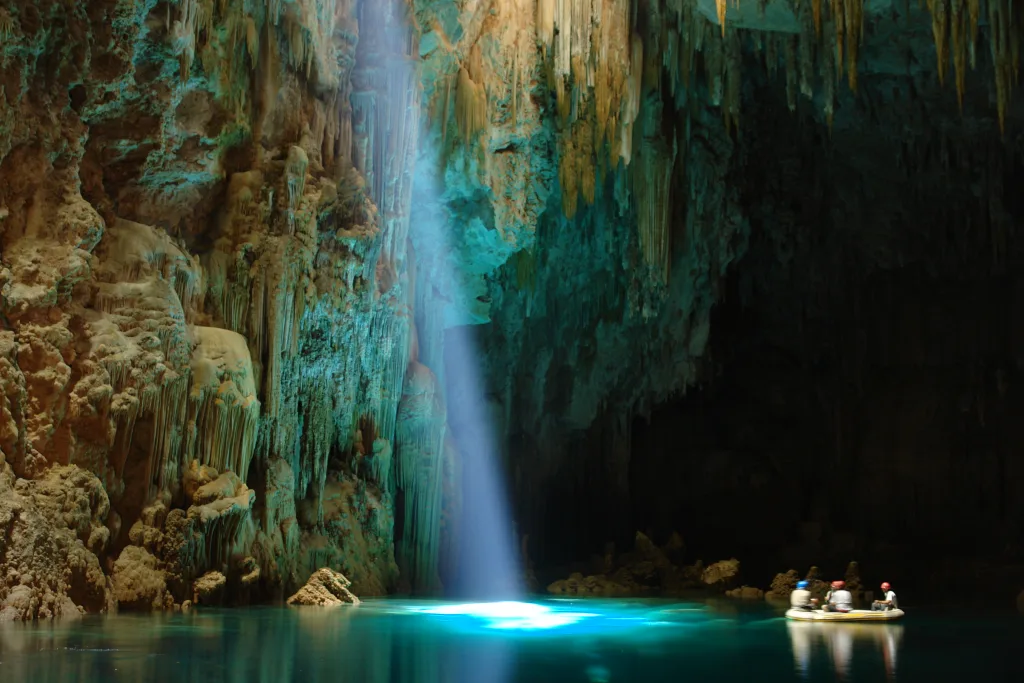
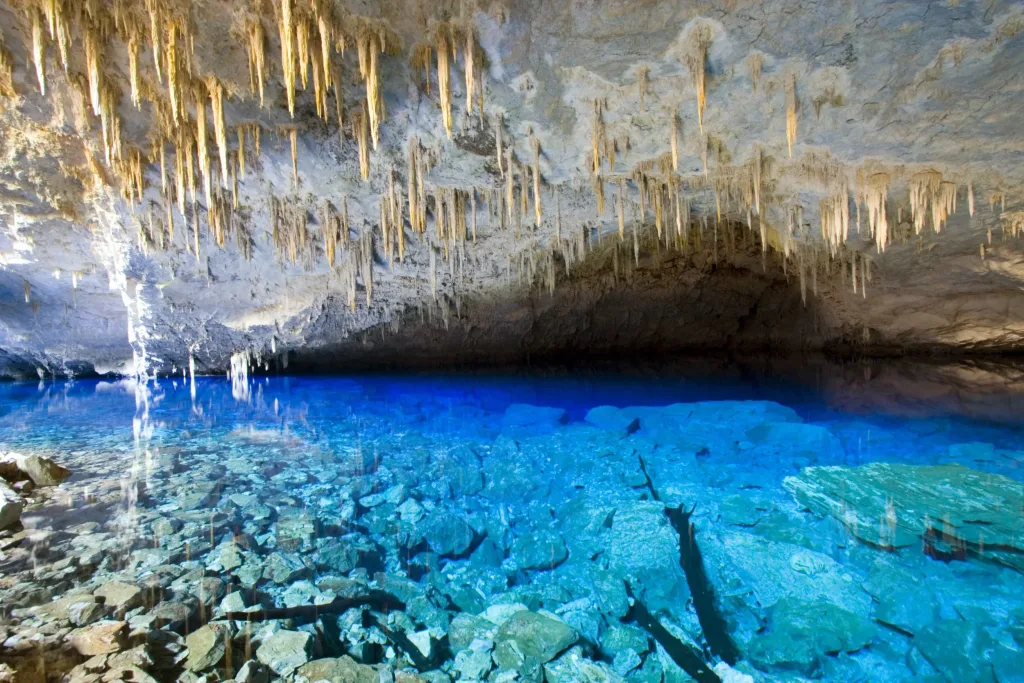
Not every spot in Bonito behaves the same, but several sites are renowned for exceptional clarity during the dry season. Rio Sucuri consistently ranks among the clearest rivers in Brazil; guided snorkeling there becomes almost cinematic when the river’s level drops and sunlight strikes at the right angle. Rio da Prata, another gem, benefits from wide sandy bottoms and abundant springs—ideal for seeing schools of fish from a distance. Lagoa Misteriosa, a deep sinkhole near Bonito and Jardim, reveals intense blue hues when surface ripples are minimal. Abismo Anhumas, a dramatic cave-sink with vertical descent and an underground lake, offers diving experiences that photographers covet when airborne dust and surface runoff are low.
The role of conservation and tour regulation
Clarity isn’t solely a natural gift; it’s a managed resource. Bonito’s local economy depends on ecotourism, and that incentivizes strict rules. Tour operators enforce quotas, require visitors to rinse off soaps, sunscreens and insect repellents before entering the water, and forbid feeding or chasing fish. Trails are maintained to minimize erosion, and motorized boats are limited or banned in many sensitive stretches. Those policies reduce pollution and sedimentation year-round, but they become especially meaningful in the dry months because there’s less natural dilution—bad behavior would show up immediately in water clarity.
How the dry season changes the experience
For visitors the dry season translates to different sensations. The air is typically drier and cooler at night, mornings can be crisp, and the midday sun feels strong. Rivers are lower and visibility is often at its peak; fish, submerged plants and rock textures appear with remarkable detail. Photographers revel in reflections and long sightlines. Snorkelers notice that their breath and bubbles are the main distractions in an otherwise glass-like environment. Caves and sinkholes can look like polished bowls of color as direct sunlight meets deep, mineral-rich water.
Trade-offs: what you might miss outside the dry months
Clarity is only one way to measure a good visit. The rainy season brings lush vegetation, swollen waterfalls and a burst of insect and bird activity that can be ecologically dramatic. Waterfalls that trickle in dry months cascade spectacularly after heavy rains, and the surrounding forest regains the deep, saturated greens of the wet season. The rainier months also expand access to some rivers, letting expedition-style tours explore side channels that are unreachable when flows are low. If your priority is maximum visibility, the dry season is ideal; if you want explosive biodiversity and dramatic waterfalls, plan for the shoulder of the rainy season instead.
Practical tips for visiting during the dry season
Plan early: popular snorkeling and diving tours limit numbers daily, and the clearest weeks fill fast. Book your Rio Sucuri and Rio da Prata tours several weeks ahead if you’re visiting between June and August. Hydration matters more than you think—less humidity makes the sun feel stronger, and you’ll cover ground between sites. Bring polarized sunglasses for scouting scenes before you enter, and use a good-quality underwater camera housing or action camera for photos; the extra clarity rewards careful composition.
Respectful behavior that keeps water clear
Tour operators will brief you, but a few simple habits protect these systems: shower before entering freshwater sites, avoid any lotions or sunscreen that aren’t explicitly approved, don’t touch or move stones and logs, and keep a safe distance from fish and aquatic plants. Don’t discard trash, even organic items that might decompose and alter nutrient balances. Local guides are proud stewards—listen to them. The clearer the water, the more visible the consequences of careless behavior.
Special gear and photography tips for glassy water
Clear water makes photography both easier and more demanding. With high visibility you can shoot from the surface and capture deep perspective, but reflections and contrast from bright sunlight can blow out highlights. Use a polarizing filter above water to reduce glare and bring out underwater color. Underwater, pick a lower ISO and shoot wide-angle to include foreground interest—sunned rock or a school of fish—to give images depth. For video, keep camera movement slow; in crystal-clear water, tiny motions and bubbles are obvious. And don’t forget to take handheld shots looking down from riverbanks: in dry season light the riverbed sometimes reads like a shallow reef, offering excellent composition possibilities even without submerging your camera.
Getting to Bonito and practical logistics
Bonito is accessible by road from Campo Grande, Mato Grosso do Sul’s capital, with the drive taking a few hours—enough for the landscape to transition from cerrado to the karst-dotted valleys that define the region. Small regional flights also connect at certain times of year; check current schedules and plan ground transfers in advance. Accommodations range from family-run pousadas to higher-end ecolodges; many operators offer package deals that combine lodging, meals and tours. In the dry season, book lodging early because demand surges with the promise of perfect visibility.
When the weather surprises you
No matter the forecast, remember that weather in the tropics shifts quickly. A dry season morning can be followed by an unexpected shower in the afternoon. Guides adapt routes to keep your experience safe and rewarding: if a sudden rain increases turbidity, they may move you to a spring-fed site where underground water maintains clarity. That adaptability is part of what makes Bonito well-run—local experts know which stretches hold their transparency under changing conditions and which don’t.
Local culture and why locals care about clarity
For many people in Bonito, clean rivers are identity and income. Small businesses—guides, pousadas, boat operators, artisans—depend on repeat visitors who come for pristine waters. That fuels community-based conservation: residents help monitor trails, report illegal dumping, and collaborate with researchers on sustainable management. When you visit, you’re not just paying for scenery; you’re supporting a network of families and small enterprises that protect those rivers because their livelihoods depend on them.
Choosing your priorities: clarity, adventure, or biodiversity?
Visitors often ask what to prioritize. If your goal is crystalline visibility and photography, plan for the core dry months and pick spring-fed rivers or sinkholes that favor low turbidity. If you want lush landscapes and dramatic waterfalls, go during or just after the rains. Many travelers balance both by visiting in the shoulder months: late April or early October often provide a compromise—good clarity with greener surroundings. Whatever you choose, respect the rules; the clearer the water, the more any careless action visibly alters the scene.
Small changes that make a big difference
Finally, consider small behaviors that help preserve transparency: choose locally owned tours that reinvest in conservation, travel with reusable water bottles, and avoid single-use plastics. Tell your guide you want to learn about their conservation work—many operators will be pleased to share how fees and quotas fund river maintenance. Visitors who leave with a sense of stewardship are the ones who make future clear-water seasons possible.
Where clarity becomes memory
Some photographs stay in the memory not for dramatic sunrises but for the quiet, glassy moments: a school of golden tetras frozen in a perfect column, a long-finned fish hovering over a bed of white sand, the way afternoon light fractures through a thin curtain of cascading water. Those scenes are often easiest to catch in Bonito’s dry months. The water isn’t just clearer; the whole place seems to offer a different kind of attention. You notice textures, small behaviors and subtle color shifts. That’s the reward: not only seeing the world beneath the surface, but seeing it with an intimacy that’s uncommon anywhere else in Brazil.